

Key Points
- A clear client-facing escalation path builds trust and ensures predictable issue resolution.
- Define roles, triggers, and response times for each support tier.
- Use an escalation matrix to map issue severity to response levels.
- Automate escalations to speed responses and maintain SLA compliance.
- Include full issue history and context in every escalation handoff.
- Train teams regularly on technical and communication escalation skills.
- Track metrics like resolution time and escalation rate to improve processes.
Building a practical client-facing escalation path is essential for maintaining trust and service quality. When issues can’t be resolved at the first level, clients need to know exactly what happens next and when they’ll hear back. Without a clear escalation workflow, frustrated clients may resort to escalating through informal channels or bypass your process entirely. This can damage your client relationships and make clients lose confidence in your ability to handle complex problems.
Why client escalation management matters
Client escalation management creates predictability for both your team and your clients. It defines who handles what, sets clear response time expectations and ensures critical issues get the attention they deserve. Whether you’re an MSP managing multiple client relationships or an internal IT team supporting business units, the right escalation matrix turns potential service failures into opportunities to demonstrate expertise and reliability.
What is escalation in information technology?
Escalation in information technology is the process of moving an unresolved issue to a higher level of support or management when initial attempts fail to provide a solution. It’s not just about passing problems up the chain — it’s about ensuring the right expertise, authority and resources are applied to resolve client issues efficiently. Good escalation preserves the client relationship while mobilizing internal resources to solve complex problems.
The cost of a broken escalation process
When client escalation management breaks down, the costs can multiply quickly. Clients lose confidence when they don’t know who’s working on their problem or when they’ll get an update. Internal teams waste time on unclear handoffs, duplicate work and missed communications. For MSPs, broken escalations can lead to contract reviews or client churn. For internal IT, they create friction with business units and undermine the department’s credibility as a reliable service provider.
Core elements of an effective escalation process
The client escalation management process requires a clear structure, defined roles and consistent execution. The best systems are simple enough for frontline staff to follow under pressure but comprehensive enough to handle complex scenarios. They also balance speed with thoroughness, ensuring issues move quickly without losing important context along the way.
What is the escalation process in tech support?
In tech support, escalations should follow a structured workflow that defines when, how and to whom unresolved issues are transferred for additional expertise or authority. It typically includes trigger criteria that determine when escalation is needed, clear handoff procedures that preserve context and defined response time commitments for each level. The process should be transparent to clients so they understand what’s happening and when they can expect updates.
What is an escalation workflow?
An escalation workflow is the step-by-step sequence that guides how issues move through different support tiers. It defines the criteria for escalation, the information that must be passed along and the responsibilities at each level. A good escalation workflow includes automated notifications, clear documentation requirements and feedback loops that help improve the process over time.
Key components of an effective escalation workflow include:
- Clear trigger criteria for when escalation is required.
- Standardized handoff procedures that preserve all relevant context.
- Defined response time commitments for each escalation tier.
- Automated notifications to keep clients informed of progress.
What is an escalation matrix?
An escalation matrix is a visual framework that maps different types of issues to their corresponding escalation paths and timelines. It typically shows issue severity levels, the corresponding support tiers and the maximum response times for each combination. The matrix serves as a quick reference guide for support staff and helps ensure consistent handling of similar issues across the team.
How MSPs can build a reliable escalation path
MSPs face unique challenges in client escalation management because they serve multiple clients with different expectations and service level agreements (SLAs). Building a reliable escalation path requires balancing standardized processes with client-specific requirements. The goal is to create consistency in how escalations are handled while maintaining the flexibility to meet individual client needs.
Define roles, triggers and response tiers
Start by clearly defining who handles escalations at each level and what triggers the move from one tier to the next. Level 1 support typically handles standard requests and known issues. Level 2 takes complex technical problems that require specialized knowledge. Level 3 involves vendor coordination, custom development or issues that affect multiple clients. Management escalation addresses service level breaches, client relationship issues, or problems that require policy decisions.
Build your escalation matrix (with examples)
Your escalation matrix should map issue types and severity levels to specific response procedures and timelines. For example, a critical server outage affecting multiple users escalates immediately to Level 2 with a 15-minute response commitment. A software configuration question might stay at Level 1 with a 4-hour response window. Password resets and standard requests typically don’t require escalation unless they involve security concerns or VIP users.
Optimize for fast MSP response time
Fast MSP response time depends on having the right information available when escalations occur. This means capturing detailed problem descriptions, troubleshooting steps already attempted and relevant system information during the initial contact. When issues escalate, the receiving technician should have everything needed to continue working without starting over.
Escalation workflow best practices
Escalation workflows balance structure with flexibility, ensuring consistent handling while adapting to unique situations. The best practices focus on communication, documentation and continuous improvement based on real-world experience.
Make it transparent and client-facing
Transparency builds trust and reduces client anxiety during escalations. Clients should understand what escalation means, who will be working on their issue and when they can expect updates. Consider providing a simple explanation of your escalation tiers and what each level handles. This helps clients understand why their issue is moving to a different team and what expertise is being applied to solve it.
Automate what you can: Escalation SLAs and notifications
Automation ensures escalations happen consistently and on time, even during busy periods or staff changes. Automated escalation rules can trigger based on time elapsed, issue type or client priority level. Notifications can go to both internal teams and clients, ensuring everyone stays informed without manual intervention.
Consider automating these key escalation elements:
- Time-based escalation triggers that activate when SLAs are approaching.
- Notification sequences that keep clients updated on progress and next steps.
- Escalation routing that considers technician expertise and current availability.
- Documentation requirements that ensure proper context is captured and transferred.
Train internal teams to handle escalations effectively
Escalation handling requires different skills than standard support work. Team members need to understand how to assess complex problems quickly, communicate with frustrated clients and coordinate with multiple internal resources. Regular training should cover both technical escalation procedures and the soft skills needed to manage difficult situations professionally.
Performance metrics for measuring success
Measuring escalation performance helps identify areas for improvement and demonstrates value to clients and management. Key metrics include escalation rate (percentage of tickets that require escalation), average time to escalate, resolution time by escalation level and client satisfaction scores for escalated issues. These metrics help identify patterns that might indicate training needs, process improvements or resource allocation adjustments.
Build escalation workflows that actually work
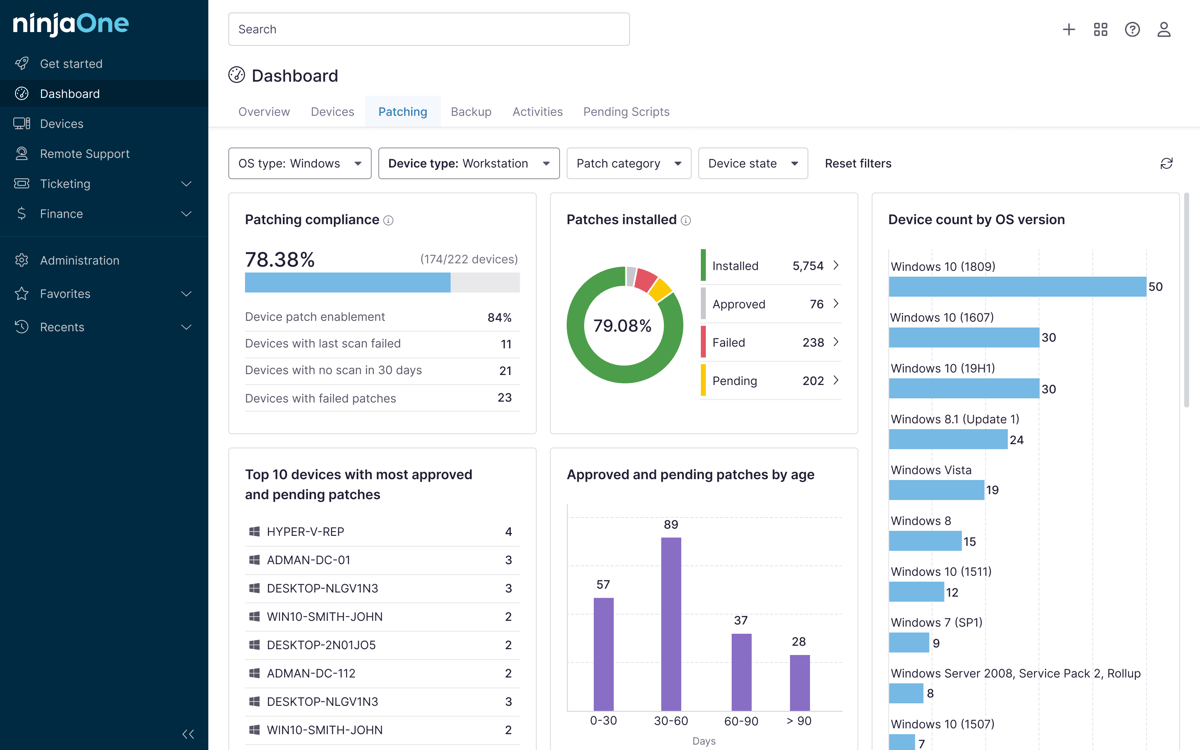
NinjaOne’s integrated ticketing and remote access platform gives you the tools to handle client escalations smoothly. Automated escalation rules, real-time notifications and complete ticket history ensure nothing falls through the cracks when issues need specialized attention.
Whether you’re an MSP managing multiple client SLAs or an internal IT team supporting business-critical operations, NinjaOne helps you build reliable escalation processes that clients can trust. Try it now for free!