
Key Points
- Standardize the Lifecycle: Build a lean asset lifecycle policy that defines how SMBs plan, acquire, operate, maintain, and dispose of IT assets.
- Centralize Asset Visibility: Maintain a unified asset inventory with lifecycle triggers and SOPs to improve visibility and ensure consistent onboarding/offboarding.
- Automate Critical Processes: Use patch automation, warranty tracking, and aged-asset alerts to boost compliance and reduce manual oversight.
- Leverage RMM, UEM & PowerShell: Deploy automation tools to monitor device health, enforce configurations, and identify assets approaching end-of-life.
- Ensure Secure, Sustainable Disposal: Follow data-sanitization standards (NIST 800-88, HIPAA, GDPR) and environmentally responsible e-waste practices during decommissioning.
Asset lifecycle management refers to the responsible, policy-based handling of client devices and software from acquisition to disposal. It can foster long-term sustainability and enable small-to-medium-sized business (SMBs) clients to maximize IT tools, lower costs, and improve their security posture.
This article explains best practices for developing an IT asset lifecycle management policy and automating alerts for aged assets.
Evaluate and manage asset policy and procedures
Follow this policy framework to effectively manage asset lifecycle standards for SMBs.
Lifecycle stages & policy basics
From acquisition to decommission, model your asset lifecycle policy according to these key stages:
A. Planning
Start by taking inventory of all IT-relevant assets, setting refresh points, and creating sustainable workflows for asset procurement/disposal.
- Categorize assets into desktops, mobile devices, modems, network devices (switches, APs, firewalls), SaaS licenses, and virtual machines and classify them based on importance.
- Set upgrade schedules to maximize productivity and avoid device fatigue.
- Create standard operating procedures for asset onboarding/offboarding/recycling.
B. Acquisition
Manage asset procurement process and standardize provisioning to optimize your resources.
- Buy extended warranties and service contracts to ensure high-quality support for business-critical assets.
- Document expenses for efficient tracking.
- Use zero-touch provisioning or standardized imaging (e.g., Autopilot, Intune, vendor imaging tools) to streamline device setup and configuration.
- Source assets from reputable vendors and brands for sustainability.
C. Operation
Track asset performance, health, and update history throughout the asset lifecycle.
- Automate critical patch schedules across your environment.
- Regularly plan updates to keep your security posture robust.
- Leverage Unified Endpoint Management (UEM) platforms to centralize IT asset lifecycle management.
- Proactively monitor and set up real-time alerts to detect security gaps early.
D. Maintenance
Monitor device health post-provisioning to ensure quality and sustainability.
- Enhance hotfixes with warranty-provided support.
- Properly schedule vital firmware patches for seamless compatibility.
- Automate routine system upkeep with a reusable script library.
- Set notifications for warranty expiration, compliance drift, and performance issues.
- Run diagnostics remotely with endpoint management solutions.
E. Disposal/Replacement
Create formal SOPs for sunsetting assets and erasing company data.
- Follow applicable standards and regulations to sanitize endpoints (e.g., NIST 800-88, HIPAA, GDPR).
- Encrypt data for storage using Microsoft tools like BitLocker to ensure data protection.
- Use certified disposal protocols like wiping drives, degaussing devices, or shredding paper assets.
- Comply with environmental safety laws while disposing of e-waste.
🎥 Catch the video How to Establish a Lean Asset Lifecycle Policy for SMB Clients and see how the five lifecycle stages are presented.
Essential policy components for SMB-focused MSPs
Ensure your policies include these core features to meet client needs:
| Element | Description |
| Asset Registry | Shared spreadsheet or RMM-integrated asset tracking system (e.g., Asset ID, type, warranty status, etc.) that highlights the need for IT asset lifecycle management |
| Lifecycle Triggers | Automated ticket generation for assets nearing end-of-life (EOL) to reduce human error |
| Role Clarity | Assigned responsibilities for efficient IT asset policy management |
| Security Disposal | Verified practices for data privacy (e.g., deletion, encryption, etc.) once a device has been decommissioned. |
| Quarterly Reviews | Inventoried assets, planned refresh points, age checks, and standardized disposal methods per asset type |
Automate touchpoints via PowerShell
Here’s how to detect yet-to-be-refreshed assets in your inventory via PowerShell.
Use Cases: Find aged assets within a CSV file.
Prerequisites: Windows 10/11 operating system, Administrator privileges
- List all assets in a .csv file and save it locally. Add a column that contains the asset’s purchase date in MM/DD/YY.
- Press Win + R, type powershell, and press Ctrl + Shift + Enter.
- Run the following:
cd “<FilePath>“
Where <FilePath> is the file location of your CSV (e.g., C:\Users\YourName\Documents).
- Run the following to list all assets older than four years:
$thresholdDate = (Get-Date).AddYears(-4)
Import-Csv “AssetRegistry.csv” |
Where-Object { [datetime]$_.”PurchaseDate” -le $thresholdDate } |
ForEach-Object { Write-Host “Asset
(_.AssetID) needs review for refresh” }
- Run the following to export all aged assets to a new CSV file (Optional):
Import-Csv “AssetRegistry.csv” |
Where-Object { [datetime]$_.”PurchaseDate”-le $thresholdDate } |
Export-Csv “AgingAssets.csv” -NoTypeInformation
- Use Task Scheduler to run the script regularly.
Things to look out for
| Risks | Potential Consequences | How to avoid it |
| Incomplete asset inventory | Undermined security posture, budget errors | Use automated RMM tools and add expenditures to QBRs. |
| Asset warranty ignored | Lack of OEM support | Consolidate warranty data into one sheet and set expiration alerts. |
| Patches applied manually | Security vulnerabilities | Automate your patch schedule organization-wide. |
| No alert system | Endpoint compliance drift | Add system reports that flag near-warranty assets, performance degradation, and compliance issues. |
| No SOP for asset disposal | Data loss, incomplete lifecycle management | Craft formal procedures for retiring assets and encrypting relevant business data. |
| Unstandardized provisioning | Inconsistent setups, overwhelmed support desk | Align system setups for device assets. |
Quick-Start Guide
NinjaOne provides the tools and automation to implement a lean asset lifecycle policy, helping SMBs optimize IT operations, reduce costs, and improve efficiency.
NinjaOne’s platform is designed to streamline IT lifecycle management. Here’s how it supports each key capability:
1. IT Asset Management (ITAM)
- Auto-discover and track all hardware, software, and cloud assets.
- Monitor warranties, depreciation, and lifecycle stages from procurement to retirement.
- Centralized dashboard for inventory, utilization, and compliance.
2. Patch Management
- Automate patch deployments across all devices to keep systems secure.
- Test updates in ring deployments to reduce downtime.
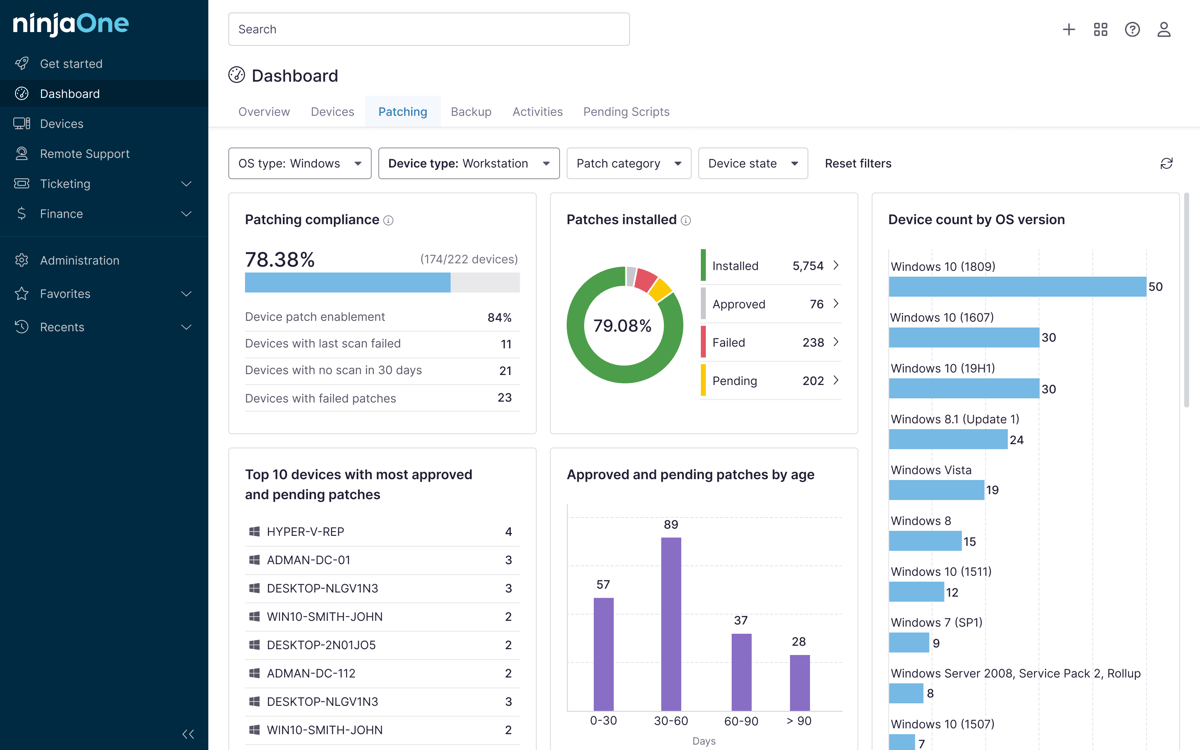
- Generate compliance reports for audits.
3. Endpoint Management
- Deploy agents, scripts, and configurations consistently.
- Remotely manage devices (reboots, installs, troubleshooting).
- Enforce security and configuration policies fleet-wide.
4. Custom Reporting
- Identify underused assets (e.g., unused licenses, old hardware).
- Analyze costs and optimize procurement.
- Track asset ages, warranties, and retirement timelines.
5. Automation
- Schedule routine tasks (patches, backups, updates).
- Auto-retire outdated hardware or licenses.
- Receive real-time alerts for expiring licenses or failures.
6. Integration
- Connect with PSA platforms.
- Manage assets across AWS, Azure, Google Cloud, and more.
- Use APIs to customize workflows with third-party tools.
Best practices for sustainable asset policies
Balance cost-efficiency, sustainability, and versatility with the key points on asset lifecycle management.
Keep it lean
Focus on business-critical assets and other major tools to streamline your IT asset management policy template. Doing this simplifies decision-making for SMB clients and manages overhead, which benefits smaller start-ups.
Align with SMB budgets
A recent Forbes analysis found that SMBs often invest ten times more than enterprises before seeing sustainable returns. Your IT asset management policy should focus on cost-effective solutions that offer clear ROI.
Engage your clients
Engaging with SMBs is crucial for collaboration and success. Clients can’t appreciate the value of lifecycle control without your insights, so include the topic in your quarterly business reviews or sit-downs as a potential service you can provide.
Use RMM for visibility
Client-facing dashboards can include relevant, real-time data (e.g., asset performance, OS versions, system health) to enhance transparency and introduce remote RMM options like NinjaOne. This helps simplify management for your non-technical business counterparts.
Be flexible with asset lifecycle management
The tech market constantly evolves to meet consumer and compliance needs. Consider integrating modern services, like lifecycle extensions, into your IT asset lifecycle management policy to mitigate upgrade costs and control e-waste.
NinjaOne platform integration ideas
NinjaOne offers a lightweight solution to various aspects of lifecycle management:
- Security: Integrate with endpoint protection services to improve ticket remediation and vulnerability visibility.
- Single sign-on: NinjaOne supports SSO/SCIM integrations, improving security while centralizing user access configurations.
- PSA and ticketing: NinjaOne offers its own Professional Service Automation (PSA) with billing, ticketing, and documentation, and it integrates with other management platforms.
- Documentation: NinjaOne stores user access details and procedures to give technicians full context.
- Automation: NinjaOne offers lightweight, hands-free deployment, alerting, and scripting across your fleet with remote access.
- Analytics: NinjaOne’s consolidated platform boasts QBR-ready endpoint metrics you can use to track non-compliant devices.
Centralize asset lifecycle management with specialized dashboards
A lean asset lifecycle policy involves proper planning, documented acquisition, and tracked usage while taking advantage of warranty support before eventual disposal. Securely automate the hardest parts of asset management with RMM solutions that scale with SMB clients.
Have questions about IT asset management? Visit the NinjaOne IT Asset Management FAQ for answers to common questions.
Related topics: