Your organization’s contact database represents years of relationship building, customer acquisition efforts, and strategic networking investments. When Google Workspace serves as your primary contact management platform, you’re placing this critical business asset in a cloud infrastructure that, while robust, isn’t immune to data loss scenarios that could negatively impact your operations.
Learn how to backup Google Workspace contacts to safeguard essential business information, prevent accidental data loss, and ensure quick recovery when needed.
Ensure every contact is recoverable with comprehensive SaaS data protection.
Google Contacts’ hidden data loss risks
Google Workspace contact management operates through a complex synchronization architecture that creates multiple vulnerability points often invisible to end users. The platform’s distributed nature means your contact data exists across various Google servers, with synchronization dependencies that can fail during infrastructure updates, network disruptions or account-level security incidents.
Account-level security gaps present particularly concerning risks. Here are the key vulnerability points you need to monitor:
- Admin permission changes can trigger bulk deletions or restrict access across entire departments.
- Compromised credentials may allow undetected, unauthorized edits to contact data.
Policy updates during routine maintenance can unintentionally block access to key contact info. - Staff turnover often leads to permission changes that break contact sync across systems.
- Unannounced security updates make it hard to anticipate when access disruptions will occur.
Why backup Google Workspace Contacts
Considering the diverse scenarios that can compromise your organizational data integrity, contact backup strategies are a must. Modern business operations need contact data to be accessible across platforms, devices and applications. This complex web of tools can create numerous failure points that backup systems must address.
Accidental bulk deletions
Administrative interfaces in Google Workspace provide powerful contact management capabilities that can inadvertently trigger large-scale deletions. API-level operations, particularly those involving automated scripts or third-party integrations, can execute bulk deletion commands that affect thousands of contacts simultaneously.
Permission cascade scenarios, where administrative changes propagate through organizational hierarchies, can compound these risks by affecting multiple user accounts simultaneously.
Sync conflicts across devices
Multi-device synchronization can cause inherent conflict resolution challenges when contact data diverges across platforms. Mobile applications, desktop clients and web interfaces may store different versions of contact information, leading to data corruption during synchronization attempts. Conflict resolution algorithms don’t always preserve the most accurate information, potentially overwriting recent updates with outdated data from offline devices.
Third-party app corruption
CRM systems, marketing automation platforms, and business applications that integrate with Google Contacts introduce additional corruption risks through API interactions. Data mapping errors during integration processes can corrupt contact fields, while permission scope issues may trigger unauthorized modifications. Integration failures often occur during software updates or configuration changes, making them difficult to predict and prevent.
Account migration needs
Enterprise scenarios frequently require contact data portability during merger and acquisition activities, vendor switching decisions, or compliance mandate implementations. Google Workspace’s native export capabilities may not preserve all custom fields, group structures, or metadata required for seamless migrations, making comprehensive backup systems essential for maintaining business continuity.
Reliable contact backup methods and tools
There are several ways to backup Google Workspace Contacts.
CSV export
CSV format exports provide basic contact data portability, even though this approach comes with significant technical constraints that can limit enterprise applicability.
Here’s how to work with CSV exports:
- Navigate to Google Contacts and select the contacts you want to export from your organization’s directory.
- Click the “Export” option and choose “Google CSV” format for the most complete data representation available in this format.
- Review the exported file immediately to identify any field mapping issues that may have occurred during the conversion process.
- Test the CSV file by importing it into a secondary system to verify that contact relationships and custom fields are transferred correctly.
vCard format
vCard format compliance offers superior enterprise contact management capabilities through standardized data structures that preserve complex contact information.
Follow these steps to implement vCard backups:
- Access Google Contacts through your web browser and select the contact groups you need to back up for your organization.
- Choose “Export” and select “vCard format” to maintain the highest level of data integrity during the backup process.
- Verify that the exported vCard file contains all custom fields, multiple contact methods, and relationship data that your organization relies on.
- Test the vCard import process with your secondary contact management systems to confirm cross-platform compatibility works as expected.
Automated backup services
Third-party backup services provide enterprise-grade solutions with robust API integration capabilities that support comprehensive contact data protection. These platforms address the gaps left by manual export methods while providing the reliability your organization needs for business continuity.
Professional backup services eliminate the human error factor that commonly affects manual backup processes, running consistently without requiring staff intervention, even during busy periods or when key personnel are unavailable.
Multi-platform sync solutions
Enterprise synchronization tools deliver real-time alternatives to backup Google Workspace Contacts through continuous data replication across multiple platforms. These solutions provide conflict resolution algorithms that intelligently merge contact updates, comprehensive audit trails for tracking data changes and administrative controls that enforce organizational backup policies.
Contact backup difficulties that create headaches
Most contact backup projects fail before they start, not because of strategy, but because of execution. API limits, messy authentication flows, and brittle integrations turn a simple backup into a technical headache. The result? No meaningful protection for critical contact data.
Duplicate contact handling
Contact databases inevitably accumulate duplicate entries that complicate backup and restoration processes. Effective duplicate management requires:
- Sophisticated matching algorithms that identify similar contacts
- Intelligent merge strategies that preserve the most complete information
- Automated deduplication processes that maintain data quality
- Manual review capabilities for handling complex duplicate scenarios
Custom field preservation
Custom fields are essential to enterprise contact management, capturing data tied to internal workflows, segmentation, or compliance tracking. These fields often use non-standard formats or custom data types that don’t map cleanly to default export schemas. Backup systems must not only preserve field values but also maintain schema integrity, including data types, validation rules, and relational dependencies, to avoid data loss or misalignment during recovery.
Contact group structures
Contact groups define operational logic within the organization, separating internal teams, external partners, and key customer segments. These structures often include nested hierarchies with inherited permissions and role-based access controls.
Effective backup solutions must capture the full group architecture, including parent-child relationships, access rights and associated metadata to ensure accurate reassembly and uninterrupted workflows post-restoration.
Photo and attachment sync
Contact images and file attachments often carry important context or sensitive data. Backup tools need to manage binary data without hitting size limits, balance compression with image quality, and maintain access controls throughout the restore process.
Maintaining contact data integrity during recovery
Ensuring data integrity during contact restoration is critical to avoid introducing corrupted or incomplete records into your organization’s contact database. Effective backup systems should include automated field validation, duplicate detection, and relationship consistency checks to flag issues before restoration completes.
Integrity checks must confirm that restored contacts retain correct formatting, fully populated fields, and accurate metadata associations. When errors or conflicts occur, rollback mechanisms act as a safeguard, preventing compromised data from overwriting existing records.
Secure your Google contacts, calendars, and more from a single dashboard with NinjaOne.
Complete IT protection with NinjaOne
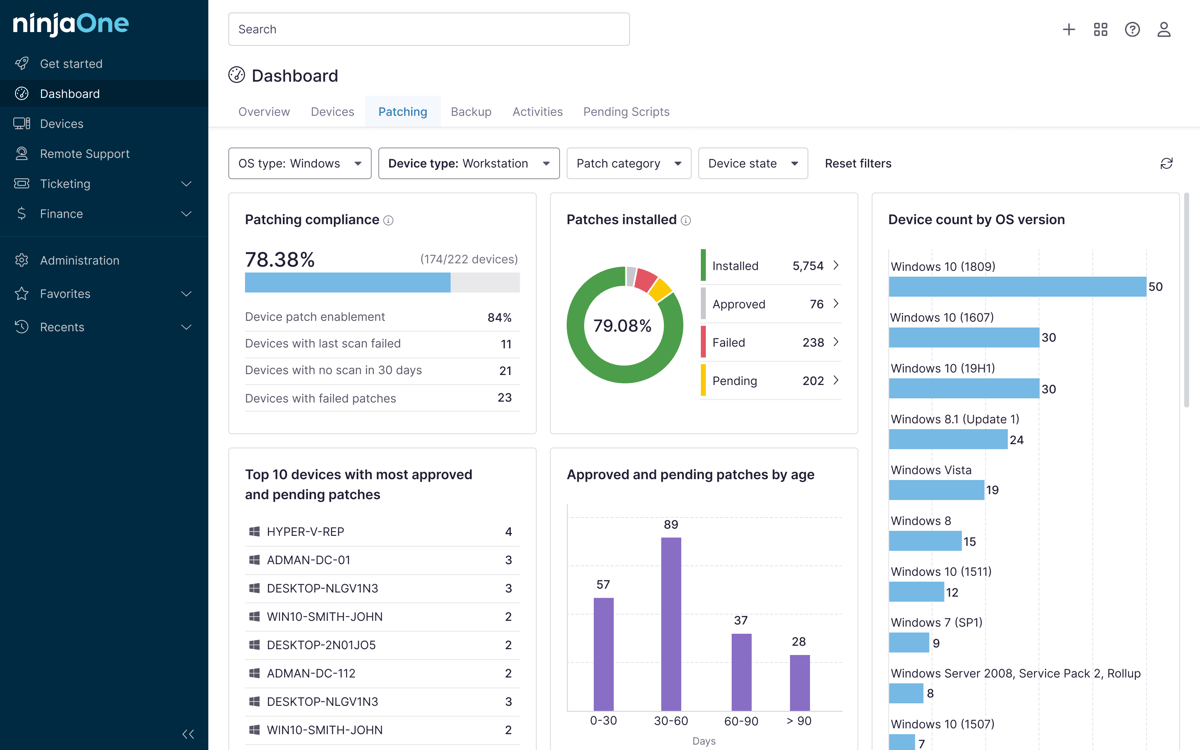
NinjaOne’s Remote Monitoring and Management (RMM) platform goes beyond device monitoring. It includes automated backup and recovery for Google Workspace contacts, with centralized policy control and built-in compliance safeguards.
Manage protection for every endpoint and application from one place. Start your free trial today!