


Key Points
- To evaluate endpoint security services effectively, MSPs should prioritize solutions that provide strong monitoring, reliable threat detection, streamlined response workflows, and client-ready reporting.
- Endpoint security software agents should be lightweight, reliable, and easy to manage, while providing consistent visibility into device health, policy status, and security coverage.
- The best endpoint security solutions support MSP service delivery through multi-tenant management, automation, integrations, and reporting that help demonstrate value to clients.
Managed Service Providers (MSPs) supporting enterprise clients need tools and networks that help detect endpoint risk and provide client-ready reporting. This means antivirus and basic monitoring aren’t enough to make a difference, especially with the threats we have today.
Understanding what to look for in endpoint security is essential, as MSPs need solutions that provide advanced threat detection, risk visibility, and actionable reporting to protect their clients effectively.
This article will discuss how MSPs should evaluate endpoint security services as part of a managed service offering.
Why MSPs need endpoint security
MSPs are responsible for securing multiple client environments with different users, risk profiles, devices, and compliance requirements. Endpoint security helps protect hardware from varying threats like malware and suspicious activity.
As workforces become more distributed, maintaining visibility across managed endpoints becomes increasingly important. Endpoint security monitoring ensures MSPs can identify threats early and respond to incidents before they impact business operations.
Endpoint security also helps reduce client risk while delivering a proactive security service by providing centralized visibility and control.
What to look for in endpoint security
Understanding what to look for in endpoint security starts with evaluating how well a solution supports security outcomes and operational efficiency.
MSPs should look for capabilities that support continuous monitoring, threat detection, response workflows, and reporting, not just basic threat prevention.
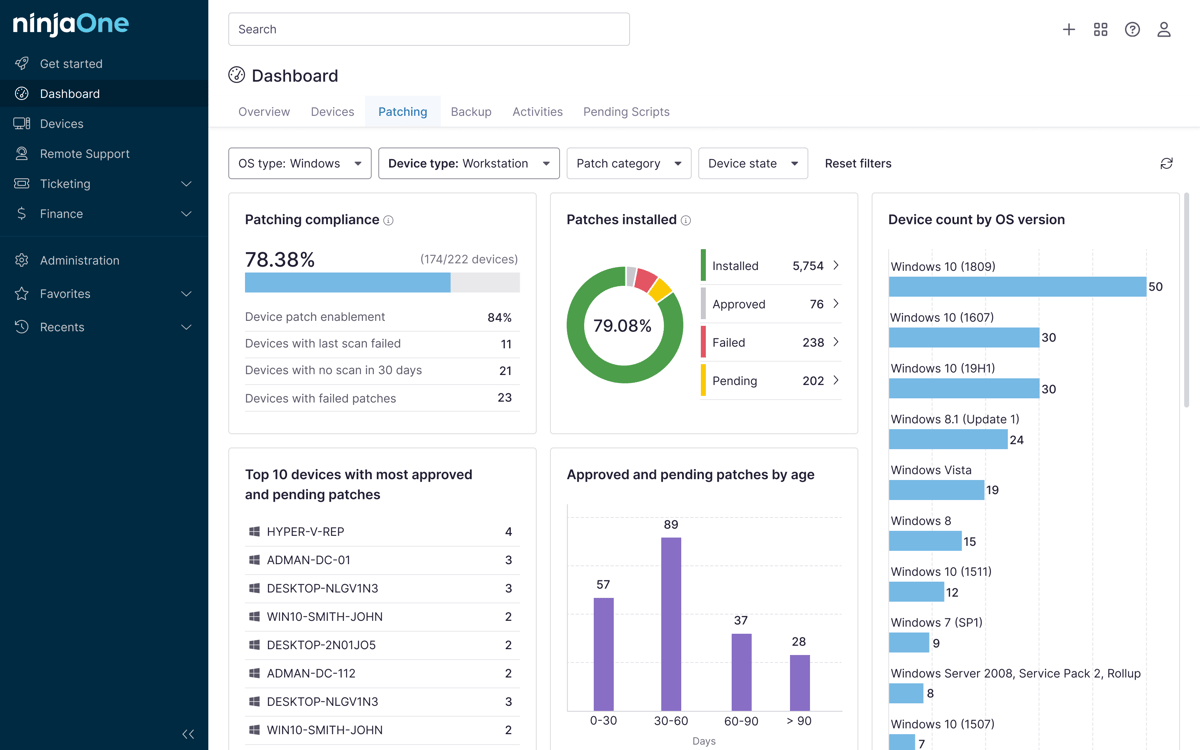
A strong endpoint security solution should provide visibility into vulnerabilities and integrate with tools used to manage client environments.
Multi-tenant management and compliance reporting are also important to consider, especially for MSPs that need to scale security services across multiple customers.
Endpoint security software agents
Endpoint security software agents collect device telemetry and enable response actions, among other responsibilities. Since these agents operate directly on managed devices, their reliability has an impact on overall security effectiveness.
MSPs should evaluate if agents are lightweight and capable of providing consistent visibility across different operating systems and device types. They should also support remote updates and clear reporting on agent health.
Strong visibility into inactive or missing agents helps MSPs identify coverage gaps before they become security risks.
Managed security services evaluation criteria
Endpoint security should support the MSP’s broader service delivery model. MSPs should consider how security alerts are prioritized and resolved within the current operational workflows when reviewing managed security services evaluation criteria.
Solutions that support multi-client management and integration with RMM, PSA, and documentation platforms can improve efficiency and reduce response times. MSPs should also evaluate how security responsibilities are shared between provider and client teams.
How MSPs should check endpoint security
Deploying endpoint security is only the first step, as MSPs should regularly validate that security controls are functional and provide coverage across managed environments.
This includes confirming that all endpoints are protected, policies are properly enforced, and critical alerts are regularly reviewed. Regular reviews should include vulnerability visibility and identification of unmanaged or disconnected devices.
MSPs can identify gaps and demonstrate the effectiveness of their security services by consistently checking endpoint security performance.
Choosing endpoint security that supports MSP success
MSPs should evaluate endpoint security based on how well it supports monitoring and client service delivery, among others. The best fit is one that helps MSPs maintain visibility and prove value across enterprise client environments, rather than the tool with the most features.
Related topics: