Immutable protection for workstations, servers, and SaaS
Quickly and securely back up all your Microsoft 365 and Google Workspace data – wherever it lives.
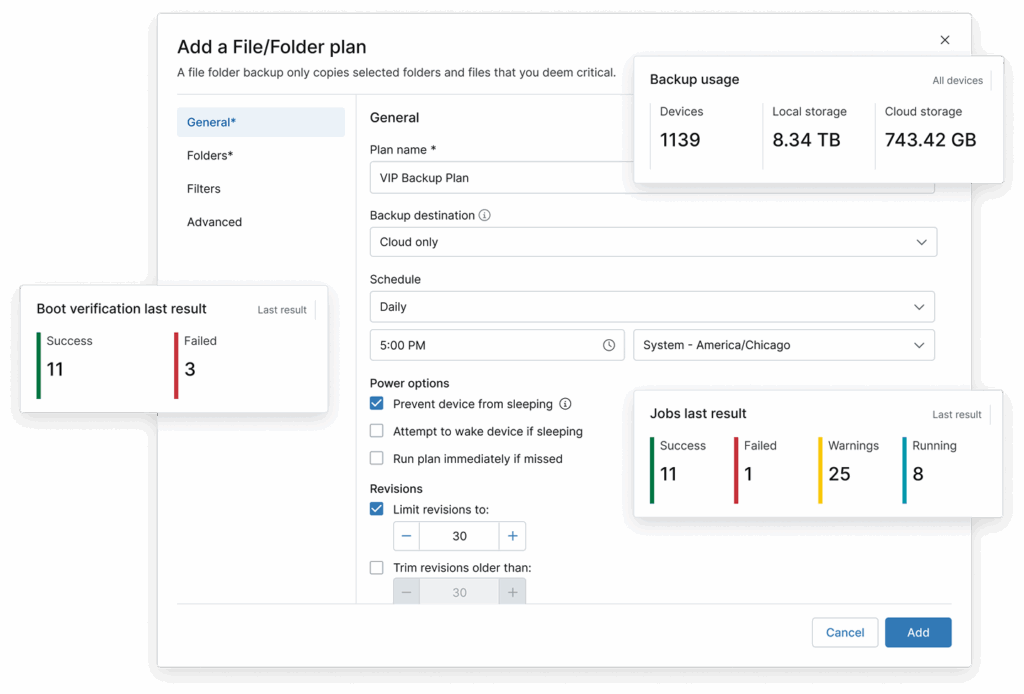
Backup and recovery for any scenario
Direct-to-cloud backup
NinjaOne delivers fast, direct-to-cloud backup for Windows, Mac, and SaaS workloads like Microsoft 365 and Google Workspace. All data is stored in reliable, immutable form and redundantly across secure data centers for rapid recovery.
Hybrid
Local only
Store backups for endpoints and servers exclusively on your own hardware for complete control over data location. Note that SaaS workloads remain securely stored in NinjaOne’s immutable cloud.
Customers love NinjaOne
saved time on manual tasks through automation
replaced 3-4 tools with NinjaOne

Kansas City Unifies IT and Gets Super Upgrade with NinjaOne

Carahsoft
Carahsoft Achieves 100% Security Compliance

Flash
Flash Revs Up Profitability with NinjaOne

Rare
Rare Saves $100K Annually with NinjaOne
Features and Solutions

Smaller backups
After the initial backup, NinjaOne captures only incremental changes for endpoints and new or modified items for SaaS workloads like Microsoft 365 and Google Workspace saving time and storage.

Complete flexibility
Choose what, when, and how long to back up across endpoints, servers, and SaaS data.

Set and forget

Bare-metal restore
Recover endpoints fast by downloading a full image backup from the cloud or restoring from local storage with the Image Restore Manager.

File- and item-level restore
Restore individual files, folders, or SaaS items from Microsoft 365 and Google Workspace directly to the original location or another NinjaOne-managed endpoint — with one-click simplicity.

Discover value in 5 minutes.
Simplify your IT cloud patch management

“We use NinjaOne Backup to protect our clients’ critical business data. From planning to deployment, we found Ninja backup to be easier and more intuitive than our previous solution. Ninja backup is a ‘set and forget’ solution – with just a few clicks we can rely on Ninja to protect client data without spending hours per day babysitting the solution.”
Alan Parkin
“NinjaOne Backup has provided our technicians with an intuitive backup solution that allows them to focus more on supporting our clients and less on unreliable and disjointed backup systems.”
NinjaOne Integrations











Rated #1 on G2
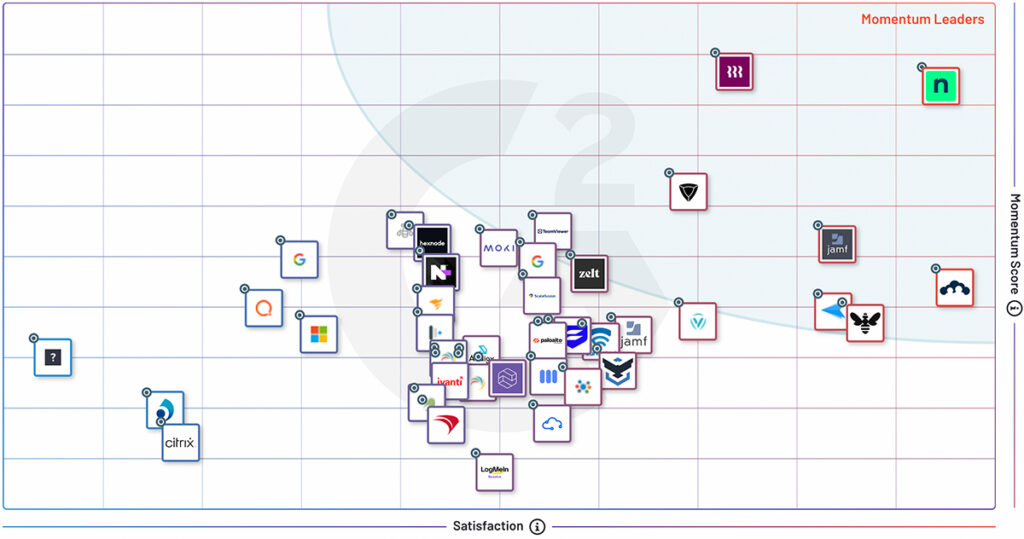
G2’s No.1-Rated Online Backup Software
Keep your data safe with automated backups
Customers grant NinjaOne Backup a G2 Score of 92 and a Momentum Score of 91 in G2’s Fall 2025 Report. Both scores are a nod to the direction NinjaOne’s Unified Backup solution is heading and a major step forward in unified data protection for customers.
“It’s so easy to manage because everything is in one place. Being able to remediate backup issues and monitor our backups from one place instead of switching back and forth between platforms enhanced our overall efficiency.”
Joseph Pafundi,
Level 2 Configuration Engineer



| NinjaOne | Average Ratings | |
| Likelihood to Recommend | 9.6 | 8.6 |
| Product Going in the Right Direction? | 9.9 | 8.6 |
| Ease of Admin | 9.4 | 8.9 |
| Ease of Doing Business With | 9.7 | 9.0 |
| Quality of Support | 9.4 | 8.7 |
| Ease of Setup | 9.5 | 8.9 |
| Ease of Use | 9.4 | 8.9 |
Resources
FAQs
How do I backup my files online?
NinjaOne Backup automatically backs up all your files online. When changes are made to a file, Ninja detects that change and backs up the changed file.
Is online backup safe? How do you securely backup data?
With NinjaOne Backup all data is encrypted in-motion and at-rest via secure AES 256-bit end-to-end encryption. Ninja’s security practices adhere to and exceed the strictest standards for data protection compliance practices.
What is a disadvantage of online backup services?
What is full data backup?
A full data backup is the process of creating one or more copies of all organizational data in one backup operation. A full backup is always required when a new endpoint is first backed up.
Is it backup or back up?
Typically people in the industry refer to it as “backup.” We typically throw our car in reverse when we want to “back up.”
How would you prepare for a backup and recovery plan?
NinjaOne Backup enables you to automate your backup plans, customize backups by devices, and restore files from the same screens. Customize backup plans to meet your data protection needs through schedules, file type and location filters, user permissions, network throttling, and revision management. With NinjaOne Backup, backup planning is easy and intuitive!
How Does NinjaOne’s Backup Software Work?
With NinjaOne Backup you can automate your backup plans, customize backup modalities by device and restore files from the same screens. Filter backup plans by schedule or file type, user permissions, network throttling, and audit management to fit your unique business data protection needs. With NinjaOne Backup you can plan your backups easily and intuitively!
Benefits of NinjaOne’s backup?
NinjaOne’s backup offers fully customizable file/folder or image backup plans, multiple restore options, remediation tools, proactive alerting, ransomware disaster recovery, and more for all your endpoints. NinjaOne’s Data backup tool is the best choice for businesses that want to view backup data and ensure that all information is protected from a centralized management platform that’s easy to navigate. Partner with NinjaOne to meet all your data backup, ROI, and RTO goals. Take a look at the testimonials page to find why Ninja clients love NinjaOne’s backup solution.
Do I need NinjaOne’s Backup Software?
NinjaOne’s backup software is the top solution for businesses or MSPs who want to conduct Windows, Mac, and server backups, balance data protection and storage requirements with customizable file/folder or image backups, and unify IT management with backup from a single, centralized platform. With NinjaOne, IT teams and MSPs use Ninja’s incremental, block-level backup, single pane of glass management, and reliable restore options to safeguard critical data for cloud-only, local, or hybrid environments. Add NinjaOne to your stack of backup tools to create a stronger, more effective data backup and recovery solution.
How much does NinjaOne’s Backup Solution cost?
NinjaOne offers flexible, pay-per-device pricing for Ninja backup. With customizable monthly payment plans, Ninja ensures that you only pay for the IT tools you need for your team. To receive a custom quote for your backup solution, visit the pricing page or reach out today. Start protecting your data now by partnering with NinjaOne.