Key Points
- Defining cloud storage: Cloud storage is a model that enables users to store data in a cloud server managed by a CSP.
- Key benefits of using cloud storage: Organizations can easily scale storage on demand, access data from anywhere, rely on high availability, and automate backups without maintaining physical infrastructure.
- Potential challenges: Potential risks include reduced administrative control, latency, regulatory compliance issues, security exposure, vendor lock-in, and reliance on internet connectivity; these challenges can be mitigated with proper planning and adherence to best practices.
- Choosing the right cloud storage solution: Cloud storage comes in three main types—object, file, and block storage—and three deployment models—public, private, and hybrid—each designed for specific data structures, security requirements, and use cases. Understanding your needs can help you determine the best storage option for you.
What is cloud storage?
Cloud storage is a data storage model that allows organizations and individuals to store data in an off-site environment, belonging to a third-party cloud service provider (CSP).
When you place data in the cloud, you are storing information on someone else’s servers, and your computer can connect via the internet to access the data that you own. In contrast, traditional backup solutions rely on local storage, which is data stored on a physical device like a hard drive in your facility. Sometimes local storage is connected to the internet, and sometimes backups must be completed by manual data transfer.
How does cloud storage work?
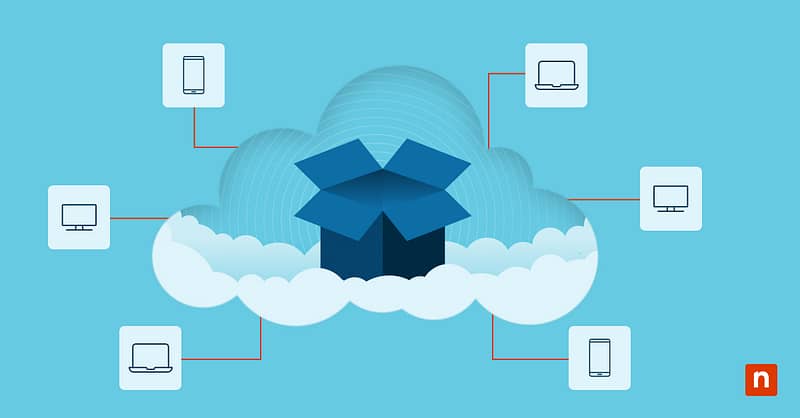
Cloud storage allows you to create files on your computer and save them to a virtual machine. Rather than taking up space on your own computer, you essentially rent space from a CSP. The CSP owns and maintains servers to host those virtual machines and to store the data you create. Any connections occur over the internet, so to upload, access, and download, you have to be able to connect to that virtual machine.
Different types and models of cloud storage
There are three main types and three different models of cloud storage. Each type and model has its own pros, cons, and use cases.
Types of cloud storage
The different types determine how your stored data is structured and accessed. The three types of storage are object, file, and block storage.
Object storage
This is a popular type of cloud storage and is the architecture offered by many well-known CSPs. Rather than organizing files, all data is identified with metadata.
Object storage works best for storing very large amounts of unstructured data that is intended to be accessed by many users. However, if you have a large amount of private or sensitive information that primarily resides in hierarchies, this likely isn’t the best option for your organization.
File storage
Better suited to smaller companies with less data to store, file storage uses hierarchies and file paths. This type of architecture focuses on making it easier for users to find their files, and it somewhat resembles a paper filing system.
Block storage
Block storage is great if you need automatic saving or quick backups. A block backup solution would involve a single comprehensive backup, with only changes saved to the cloud going forward. Basically, the blocks are pertinent pieces. The downside of block storage is that it tends not to be as efficient with resources.
Cloud storage models
Cloud storage models determine how a server’s infrastructure is managed and how users can access the data. Most cloud service providers offer public, private, and hybrid cloud storage models.
Public cloud storage
Most organizations use public cloud providers such as Google Cloud and Amazon Web Services. These providers offer storage space to varying customers, but to maximize the utility of all of their servers, they allow different organizations to share them. While this makes it much cheaper than private cloud storage, it also introduces additional security risks when you share a server.
Private cloud storage
While public cloud storage stores multiple companies’ data on shared servers, private cloud storage assigns a single server to your data. Because you have the server to yourself, the likelihood of a security incident is reduced. The weakest links you have to worry about are your access points and employees, rather than those of everyone else. This might be important to you if you work with PHI or have strict compliance requirements. However, private cloud storage can be substantially more expensive.
Hybrid cloud storage
When organizations create backups, it is recommended that they have three copies of the data (including the original) in two separate locations in case of a security incident or natural disaster. One location is typically the cloud, and the other location is generally a local hard drive or computer.
Why is cloud storage important?
Many companies use both cloud and local storage to ensure they have multiple copies of important or sensitive data in case of a disaster. For example, if ransomware infects your local network and encrypts all your data, rather than paying a ransom, you could take steps to lock out the attacker and then resume operations by downloading copies of your files from the cloud.
Alternatively, if one data center or server is attacked, a good cloud backup solution will ensure that your data is replicated across multiple servers, minimizing your risk of permanent data loss. There are other important benefits to cloud storage, such as facilitating collaboration and remote work.
Safeguard critical data with NinjaOne’s reliable cloud-based backup.
What are the benefits of cloud storage?
Flexibility
Whether a company needs one server or ten, CSPs provide the data centers and server space needed to store data or host applications and websites. As long as you have a secure, consistent internet connection, there are no limits on when you can access the data, and you can do so from any device.
Scalability
CSPs typically control far more servers than the average business can afford to maintain and run. So, the most cost-effective solution for a growing business is to pay periodically for cloud storage space and then renegotiate the agreement once it needs more space. This is much easier and cheaper than upgrading and setting up new servers every time one runs out of space.
Availability
Although the availability of cloud storage space depends on your budget, it’s very challenging to use more storage space than what is available. If one CSP can’t support all of an organization’s storage needs, companies will often create multi-cloud environments so that data can be shared and stored in the cloud without going over the capacity of each CSP.
Security
Although you typically have at least some responsibility for your data, cloud storage is set up with basic security protocols, and CSPs will sometimes provide a private cloud option, which allows you to have your own designated server that is not shared by other organizations.
Backup capability
There are plenty of cloud-compatible automated backup solutions that make it a breeze to consistently back up your data. Because your data is stored across multiple servers, the odds of your backups failing are low, and the download process is usually fast and easy.
Use cases for cloud storage
Many organizations use cloud storage for easier collaboration, faster recovery, and file management and syncing. These help improve the overall operations for application management, data management, and business continuity.
Some example use cases for cloud storage also include:
- Analytics and data lakes: Cloud-based data lakes built on object storage provide scalable, cost-effective, and highly available storage, enabling faster, more targeted analytics across diverse data workloads.
- Backup and disaster recovery: Cloud storage simplifies these processes by providing low-cost, durable, and massively scalable storage with automated tiering and long-term retention.
- Software development: Cloud storage accelerates software development by eliminating costly, complex on-prem storage while offering flexible, pay-as-you-go scalability for test and development environments.
- Data migration: Hybrid, edge, and data transfer services make it easier to move large volumes of data to the cloud while addressing performance, security, and operational concerns.
- Compliance: Cloud compliance controls and shared responsibility models help organizations securely store sensitive data while meeting global regulatory and governance requirements.
- Cloud-native application storage: Cloud storage supports microservices-based, cloud-native applications by managing shared data and state across flexible, loosely coupled components.
- Archiving: Cloud archival storage replaces traditional tape and disk systems with durable, secure, and easily accessible solutions that support long-term retention and advanced analytics.
- Database storage: High-performance block storage enables scalable, low-latency transactional databases that maintain optimal performance as data volumes grow.
- ML and IoT: Cloud storage enables efficient data ingestion, processing, and analysis for ML, AI, and IoT workloads, helping organizations generate insights and innovate faster.
Potential challenges of using cloud storage
Cloud storage isn’t a foolproof solution. Users may still encounter challenges; however, such challenges can be mitigated. Some of these potential challenges include:
- Lack of administrative control as cloud storage servers are managed by a CSP.
- Increased latency for larger organizations, which can result in slower performance.
- Regulatory issues such as data storage locations and handling, must comply with strict industry and regional regulations.
- Vulnerability to attacks as data transmitted and stored in shared cloud environments is more exposed to cyber threats.
- Unexpected downtime or poor internet connectivity, as access to cloud-stored data depends on provider uptime and network availability.
- Vendor lock-in can limit flexibility to move data between cloud providers.
- A lack of insights into third-party systems limits visibility into usage, performance, and cost metrics.
Find out how NinjaOne Backup adds an extra layer of protection to your cloud storage.
NinjaOne backup solutions provide data security in the cloud
Should you ever need to download your backups, having multiple copies in multiple locations may prove indispensable. However, more storage will cost you more money, so compare cloud storage pricing and how much storage is available across providers. Most CSPs operate under the shared responsibility model of cloud security, which means that while the CSP is responsible for securing its physical servers and internal network, users must secure their data and any contents of their folders.
Because you must connect to the cloud via the internet to access your data, cloud solutions are fundamentally vulnerable in a way that local storage solutions are not, so access controls and encryption should be on your radar. With local storage, disconnecting the device from the internet is enough to keep attackers from accessing the data on the machine. However, the cloud is constantly web-facing, so you have to stay on top of things like patching vulnerabilities, checking for updates regularly, and monitoring traffic and any suspicious access attempts.
You can mitigate some security risks with private or hybrid cloud storage, but NinjaOne’s cloud-first backup solutions handle both cloud-based and local backups. Because these backups are automated, you won’t have to babysit your backups and can instead focus on current projects or other security risks. The need for reliable backups isn’t going anywhere, but having a set-and-forget solution in place can buy you some peace of mind.
For a quick recap of how cloud storage supports flexibility, scalability, and security in modern IT environments, watch our video: The Real Benefits of Cloud Services.