Key Points
- Network interface configuration validations pinpoint causes of connectivity issues to speed up troubleshooting and remediation workflows.
- Structured checklists keep systems aligned with your intended network design by verifying IP settings, subnet masks, gateways, DNS, and interface health.
- Regular performance checks help catch silent network degradation before it impacts user workflows, minimizing escalations.
- Security validation ensures firewall profiles, wireless settings, and potential exposure paths align with your environment’s intended network design.
- Checklists create repeatable processes, improve onboarding and handoffs, and reduce configuration drift across environments.
- Run interface reviews after provisioning, during investigations, before applying significant changes, and as part of regular maintenance to maintain stable network baselines.
Network interfaces allow devices to connect and communicate over a network, but even minor misconfigurations can cause connectivity issues or performance degradation. A strong network interface configuration checklist is essential to validate connectivity and maintain environment reliability in a structured manner.
The importance of network interface configuration validation
Misconfigurations can disrupt protocol stack operation, affecting routing and DNS resolution, and introducing performance bottlenecks across the environment.
Interface configurations ensure reliable and secure communication between devices and networks. When designed properly, interfaces support consistent performance, reduce troubleshooting effort, and minimize operational risks, strengthening your overall network performance management strategy.
Components of network interface configuration checklists
A complete, structured network interface validation should go through multiple configuration layers that determine connectivity, performance, and security. Misconfigurations in these areas cause misalignment in your network design, resulting in performance or security issues that masquerade as a higher-level problem.
Core connectivity settings
When reviewing network interface configurations, you should first confirm the status of the following foundational elements:
- IP addressing: IP configuration should match the documented network design to confirm that devices operate as intended.
- Subnet assignment: Subnet masks must be accurate and consistent for proper local routing.
- DNS server settings: Confirm DNS correctness and reachability to verify that name resolution works reliably and that DNS servers operate within their intended boundaries.
- Gateway configuration: Validate gateway accuracy and avoid multiple configurations, unless necessary, to ensure traffic follows its intended route outside the subnet.
- Interface status: Verify that your interface is enabled and healthy to surface potential failure points before it causes severe performance degradation.
Problems in this area can cause intermittent connectivity and routing confusion that often escalate unnecessarily due to poor interface layer assumptions.
Performance-related reviews
Not all interface issues are easily detected, as some introduce degradation that silently impacts connectivity. Since these symptoms can resemble other issues, validating the following performance settings prevents prolonged troubleshooting:
- Link speed and duplex configuration: Ensure the interface and connected switch use matching speed and duplex settings to prevent transmission errors and packet loss, which can contribute to network congestion.
- MTU consistency: Validate whether your environment’s packet sizing aligns with traffic expectations across the network to avoid fragmentation.
- Interface errors: Look for elevated CRC errors, packet drops, or collisions to identify configuration mismatches before they affect user workflows.
Naming and role clarity
Clear interface naming conventions reduce ambiguity across systems, which minimizes human errors during incident response and accelerates knowledge transfers. Clear and consistent naming also prevents accidental misconfigurations, improves troubleshooting precision, supports automation, and streamlines documentation.
Security-related network interface configuration checks
Validating security controls ensures your interface operates within your environment’s defined trust boundaries. Misaligned security controls can allow systems to operate outside their intended protection model.
Security-focused reviews should confirm the following:
- Unintended exposure paths: Keep an eye out for secondary or misconfigured interfaces that can bypass firewall and segmentation controls.
- Firewall and filtering alignment: Ensure an interface’s firewall profile matches its network’s trust level (for example, domain, private, or public) to minimize exposure.
- Wireless profile correctness: Verify that wireless configurations only connect to approved SSIDs and that essential security protocols are in place.
Enforce consistency via network interface configuration checklists
Without checklists, technicians are left to accomplish tasks without proper documentation, leaving runbooks incomplete and workflows inconsistent. Simply put, checklists guide technicians to consistently apply complex procedures across systems, ensuring easy access to accurate information so no crucial action remains overlooked.
Create a repeatable review process
Technicians have unique ways of approaching validation processes, which can lead to the normalization of deviance across an environment. A structured validation workflow allows you to establish a standard validation sequence, promoting uniformity across systems and sites.
Reduce reliance on individual expertise
When validation workflow knowledge is only known to a select few, this knowledge gets constrained within information silos. This increases the duration of workflows in an environment, as technicians need lengthy back-and-forths to verify configurations effectively.
Having a documented checklist captures essential knowledge and makes it accessible across technicians. Through this, even less experienced team members are equipped to ensure configurations align with existing network configuration standards.
Improves onboarding and handoff
It’s vital for all administrators and staff to work in cohesion despite changes, such as handoffs and role changes. Clearly discussing validation checklists within onboardings provides a shared baseline that fosters consistent technician reviews.
Considerations for network interface configuration validations
After applying your desired network interface configuration across your environment, it’s now time to ensure these controls remain consistent over time through continuous reviews. However, deciding mindlessly on a rapid review cadence can lead to high operational costs, while an infrequent one can lead to stale configurations.
Running checks at the right moment shortens investigations and prevents unwanted disruptions. The following are sample scenarios where validation is especially valuable:
- After system provisioning: Prevent misconfigurations from becoming silently embedded within the network.
- During investigations: Conduct reviews during troubleshooting to narrow the investigation scope.
- Before major network changes: Run interface validations before network changes to establish a point of comparison after configuration.
- Incorporated in routine maintenance: Periodically review configurations to ensure continued alignment with the intended network design.
However, network interface configuration checklists shouldn’t replace continuous monitoring. Reviews only remain effective when aligned with existing standards and supported by clear documentation of your intended configuration.
Support network interface configuration checklists with NinjaOne
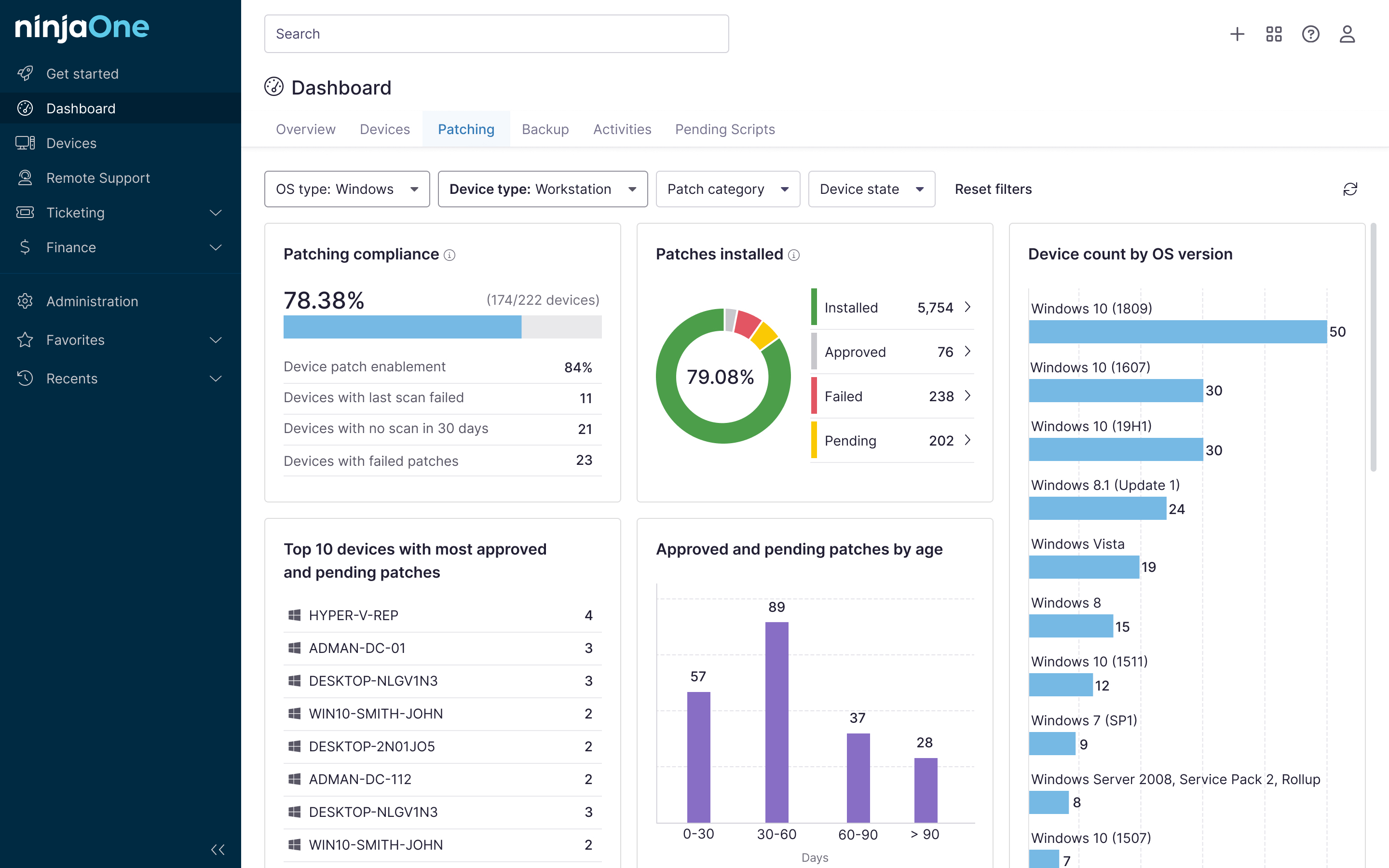
NinjaOne supports configuration validation workflows by offering centralized visibility and automated, at-scale deployment capabilities in a single platform. Centralized monitoring and policy-driven workflows allow you to detect drifts early, ensuring the uniform enforcement of standards-aligned configuration across managed devices.
- Unified endpoint monitoring: Gain comprehensive visibility into all managed devices, including network interface details and hardware specifications, such as MAC addresses and IP configurations.
- Network Management System (NMS): Monitor network devices, including routers and switches, with SNMP v1, v2, and v3 support, allowing you to track bandwidth usage and network activity across interfaces in your environment.
- Automation workflows: Leverage NinjaOne’s policy-driven management to apply consistent configuration policies and rapidly deploy remediation scripts to preserve compliance.
- Real-time monitoring and alerts: Foster proactive monitoring and remediation by setting custom alerts and routing them directly to the appropriate technicians.
- Security features: Identify potential gaps and weak spots of your network interface configurations through interface security checks and vulnerability scans.
Reduce issues by aligning with interface configuration standards
Network problems, including connectivity and performance issues, usually stem from misconfigured network interfaces. A structured checklist helps you ensure interface settings align with network management best practices. This reduces troubleshooting time and maintains reliable network operations, strengthening alignment with compliance requirements.
Related topics: