Key Points
- Network configuration drift occurs when devices move away from approved baselines over time.
- Manual changes and inconsistent updates are the primary causes of configuration drift.
- Drift reduces network stability and increases operational unpredictability.
- Unmanaged drift weakens security controls and reintroduces risk.
- Continuous monitoring is required to detect configuration deviations early.
- Defined baselines and controlled change processes are essential for drift management.
Networks keep evolving with device patching, policy adjustments, temporary fixes, and new configuration requirements. Each change seems isolated, but the cumulative effects can silently shift systems away from their intended design. This gradual shift, called network configuration drift, only becomes apparent once security falters, security gaps emerge, or compliance reviews show inconsistencies.
To maintain a resilient and predictable network environment, it’s crucial to understand how drift develops and why it poses operational and security risks. Keep reading to learn more.
What configuration drift is
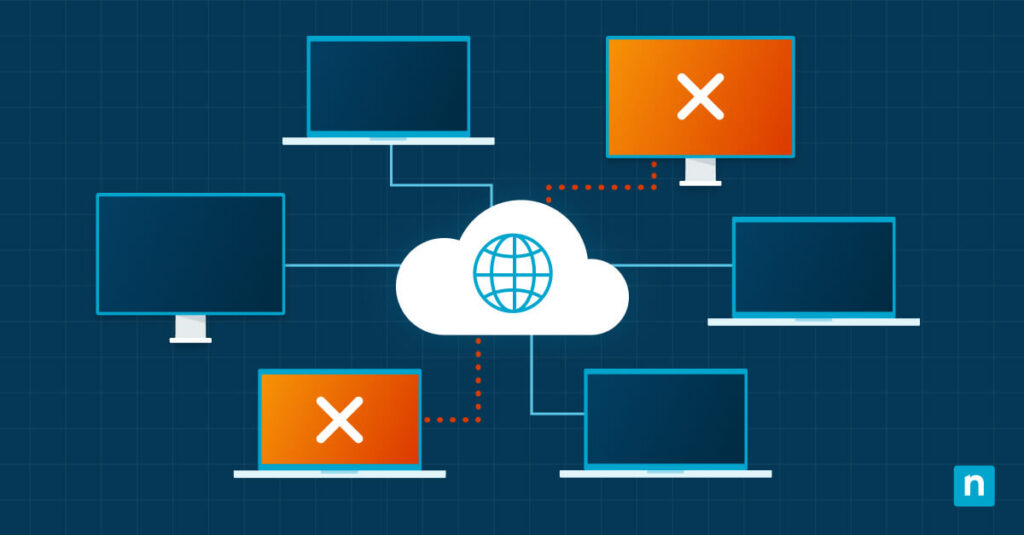
Configuration drift happens when the state of network devices in the real world diverges over time from the configuration that was originally approved and documented. Rather than through a single disruptive event, this often develops quietly through routine changes.
Configuration drift typically involves:
- Devices operating outside their defined standard configurations
- Similar systems with changes that get applied differently over time
- Supposedly temporary adjustments that stay indefinitely
Drift tends to happen incrementally rather than appearing as a sudden, visible change.
Why network configurations drift over time
Without deliberate oversight, small adjustments within evolving network environments accumulate and drift. It’s rarely intentional, but it does result from practical decisions made under operational pressure.
See some common drivers of configuration drift below:
- Manual changes made during network troubleshooting or incident resolution
- Emergency changes implemented outside formal approval workflows
- Inconsistently applied updates across similar devices
- Lack of routine validation against established standards
Environments that begin in a hardened and well-documented state will also gradually diverge if teams don’t maintain ongoing validation.
The operational impact of drift
Operational consistency will start to erode as configuration differences accumulate. Environments that seem stable can behave differently on various devices, which can complicate routine management.
Configuration drift can lead to:
- Similar systems responding differently under identical conditions
- Extended troubleshooting cycles due to hidden configuration variance
- Greater likelihood of incidents and service interruptions
When configurations are inconsistent, confidence in predictable network performance declines.
Security risks introduced by configuration drift
Aside from performance and stability, configuration drift can also impact an organization’s security posture in subtle but profound ways. Controls that were once reliable may no longer function as intended.
Security exposures that result from unmanaged drift include:
- Previously mitigated security vulnerabilities becoming accessible again
- Security tools relying on assumptions that are no longer valid
- Informal exceptions that aren’t formally reviewed or documented
When configuration standards are not continuously enforced, the overall security posture slowly weakens without immediate visibility.
Drift versus intentional change
Change is always expected as a necessity in maintaining any network environment. Risk only emerges when adjustments are made without accurate documentation or follow-through. This allows environments to diverge from their intended design.
Below are some situation examples where routine changes turn into configuration drift:
- Modifications are implemented without being formally recorded.
- Approved standards are not updated to reflect new realities.
- There’s a lack of verification to confirm system alignment.
Configuration drift, therefore, is a result of unmanaged change, not deliberate organizational improvement.
Detecting and managing drift
Divergence is unavoidable without structured insight, so organizations need to establish a reference point and continuously measure real-world configurations against it to maintain alignment.
Effective network configuration management to counter drift should include:
- Well-documented and defined configuration baselines
- Ongoing comparison of live systems against the defined desired state
- Alert notifications when unauthorized or unexpected changes occur
Without clear visibility into configuration variance, meaningful control isn’t possible.
Limitations and scope considerations
Configuration drift management should go hand in hand with broader governance practices, as its effectiveness depends on clear standards and shared understanding.
It’s important to consider the following when implementing drift management:
- It complements but doesn’t replace formal change management processes.
- Teams must align on what constitutes an approved and accurate configuration state.
- Controls should allow for necessary operational flexibility.
Enforcement that’s too strict can introduce friction and risk, just as the absence of oversight can hinder consistency.
Common misconceptions
Many organizations underestimate configuration drift because it rarely shows itself as a striking failure. It’s important to dispel a few assumptions that create a false sense of control and allow drift to set in quietly.
Drift only affects large environments
Smaller networks are just as susceptible to configuration variance, especially when resources are limited and documentation is informal.
One audit prevents drift
An audit can capture configuration state at a single point in time, but environments will keep evolving immediately afterward. So without ongoing validation, divergence will surely reappear.
Automation eliminates drift automatically
Automation only reduces manual inconsistency; it doesn’t enforce governance on its own. Automated processes must always be monitored, validated, and aligned with approved baselines to prevent introducing new forms of drift.
NinjaOne integration
Visibility and enforceable standards are necessary to maintain consistent configurations. A platform like NinjaOne that centralizes monitoring and policy control can make detecting and responding to drift much easier.
| NinjaOne capability | How it supports drift management |
| Desired state definition | Enables teams to establish clear, documented configuration baselines across endpoints and network devices |
| Continuous monitoring | Provides ongoing visibility into configuration changes rather than relying on periodic checks |
| Drift detection | Identifies deviations from approved standards in near real time |
| Policy enforcement | Supports consistent application of approved settings across managed systems |
| Centralized visibility | Consolidates configuration status into a single view to simplify oversight and reporting |
By combining baseline definition with continuous monitoring, organizations can reduce unnoticed drift and maintain alignment as their environments evolve.
Controlling drift to preserve stability and security
Organizations should see configuration drift as a controllable risk, not a side effect of growth. With clearly defined standards, constant validation, and proper documentation, teams can successfully preserve operational predictability and strengthen security.
Related topics: