Key points
- MSPs managing iOS and Android devices across multiple clients need a multi-tenant MDM platform that centralizes control while keeping each client’s devices and data isolated.
- Core MDM capabilities for MSPs include zero-touch enrollment, remote security policy enforcement, app management, patch compliance, and remote access or troubleshooting.
- Mobile application management is often more appropriate than full device control, especially when balancing employer security needs against employee privacy.
- Mixed Android and iOS environments require flexible, per-client policies to account for differences in OS behavior, device compatibility, and user expectations.
- MDM must be integrated with RMM, remote access, network monitoring, and helpdesk tools to manage the full scope of client infrastructure at scale.
Cross-platform mobile device management (MDM) solutions that target Android and iOS devices unify and streamline IT support workflows. These critical tools ensure that end-user mobile devices are managed, secure, and fit-for-purpose, and must cover both company-issued devices and personal devices used for work purposes (bring your own device, or BYOD).
This guide details how managed service providers (MSPs) can leverage MDM across client environments, bringing oversight and security to all of their clients’ devices, while maintaining isolation and privacy.
How MSPs should approach managing iOS and Android devices
Managing mobile devices for multiple companies requires a top-down approach to planning. Otherwise, ad-hoc tools and processes will lead to gaps in oversight, responsibility, and security — and a poor customer experience.
Before creating a strategy that meets your MSP goals and clients’ requirements, you should decide on the following:
- Which is the right MDM platform based on what you and your clients need
- Whether other tools like network monitoring and cybersecurity are required (and can be readily integrated)
- Establish consistent baseline policies, and check that your MDM supports implementing them
- Assess how configurations will need to be adjusted for each operating system and client environment
The outcomes of managing iPhones and Android devices across client environments are the same as a single environment. The difference is the tools you will use, and the need for centralized management while maintaining isolation between these environments.
When planning and implementing the mobile MDM solution and services you will offer your clients, you should carefully consider the following essential MDM features and deployment factors.
Device enrollment
Android and iOS devices must be enrolled in MDM before they can be managed using it. This can be done manually by adding the devices to Apple Business Manager or Android Enterprise.
You can also automate this using zero-touch deployment so that when devices are first powered on, they enroll themselves in your MDM platform and are then automatically configured. This saves your team from having to unbox each device, configure it, and ship it out again — a big time saver when you’re managing devices for multiple clients.
You should make sure you verify devices are being correctly enrolled to prevent unmanaged devices from reaching users, and to discourage theft.
Security policies and remote configuration
Your MDM solution should allow you to remotely enforce security policies (such as strong passwords, biometric authentication, and device encryption) so that sensitive data is protected in the field.
Other common configuration options, like connections to file shares, should also be remotely deployed to ensure users always have access to the resources they need.
Application an update management
App management is a core feature of MDM, allowing you to curate what apps are installed on mobile devices. You can also restrict what apps end-users are allowed to install themselves.
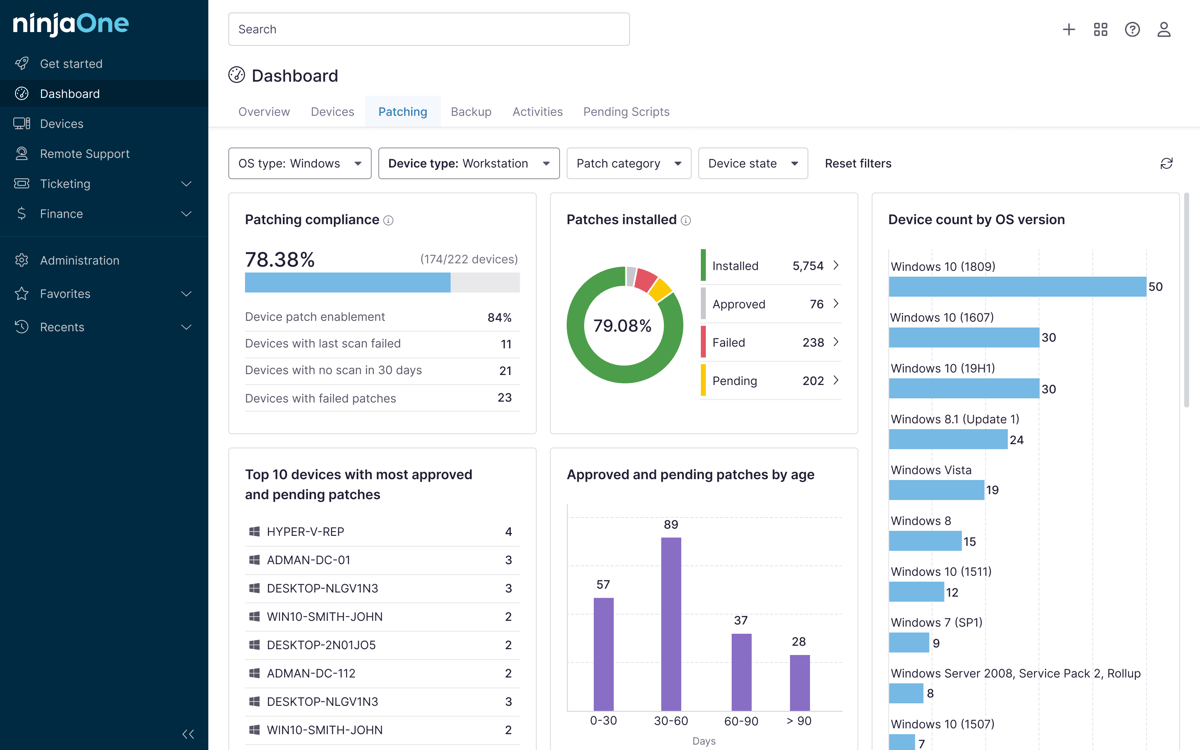
A core responsibility of MSPs managing mobile device fleets is maintaining their security. Patch compliance should be enabled by MDM, allowing you to test and deploy software updates.
Monitoring, reporting, and compliance
The effectiveness of device management technologies and processes needs to be proven and demonstrable. Remote monitoring allows you to track device health and status, and preempt many issues.
Formatting the resulting data into reports allows you to demonstrate competence to your clients and also provides evidence that your clients can use to prove compliance during audits.
Remote management and access
MDM will usually grant the ability to lock or wipe Android and iOS devices remotely, protecting data in the event of loss or theft. You should also evaluate whether you can re-provision devices remotely, as devices won’t need to be shipped back to you from clients’ sites or the remote workers’ locations.
MDM will typically provide troubleshooting information, but remote access isn’t included in all platforms. If you need to directly control end-user devices (a boon for remote support), consider an MDM that specifically includes this functionality, and that integrates with remote monitoring and management (RMM) tools that allow you to remotely support and control other endpoints like workstations and servers.
Managing smartphone and mobile device fleets as a service
Offering mobile device management as a service is essential for MSPs: organizations expect that a comprehensive IT management service will include it.
Attempting this without the correct tools will, however, lead to poor service that may turn away clients. Single-tenant MDM tools are poorly optimized for MSP use cases and do not offer features to isolate access to client devices and data — a major security and compliance issue. You should choose a multi-tenant MDM that:
- Centralizes control of client devices
- Enables ongoing remote monitoring and maintenance
- Provides a complete toolchain for managing mobile device lifecycles, from onboarding to retirement
Businesses rely on Android and iOS devices for critical work tasks, making consistency and reliability essential.
BYOD considerations for MSPs offering managed device services
BYOD, the system in which staff use their personal devices for work purposes has several advantages: businesses save on having to purchase their own hardware, and it makes remote work more straightforward.
However, it adds complexity to MDM, especially for MSPs that manage multiple clients and must manage expectations and balance privacy concerns. Users, justifiably, do not want to give up complete control of the devices they own to their employer.
If your clients leverage BYOD, make sure you can provide MDM with a ‘light touch’. This may involve avoiding enabling certain restrictive features, and allowing end-users to un-enroll from MDM.
Mobile application management is an alternative to MDM that only manages specific apps, allowing their contents to be secured and controlled without affecting the broader device, and is popular for BYOD scenarios.
Cloud-based SaaS productivity platforms are also popular for remote workforces and BYOD. Environments like Microsoft 365 and Google Workspace can be tightly controlled and accessed from any device (with the added advantage that the data is not solely stored on the device). MSPs can then back up the contents of these cloud services to ensure critical data is protected.
Common challenges in mixed Android and iOS mobile environments
When managing Android and iOS devices across client environments you need to account for inconsistencies: outdated devices that no longer receive OS updates are a common issue (and may prevent MDM enrollment depending on compatibility). Different organizations’ staff may also have different expectations about privacy and how their devices are managed, and differences between OS behaviours need to be accounted for.
While, ideally, you will minimize the number of templates and policies, one size rarely fits all. To meet client requirements, you must use a flexible MDM solution that can be adapted to each of your clients’ specific use cases. Manual workarounds should be avoided, and exceptions documented, to avoid confusion.
Effectively manage client devices and infrastructure with NinjaOne
When growth opportunities arrive, your MSP needs to be ready to seize them. At the same time, available capacity should not be left unused. This requires careful optimization with streamlined workflows that allow you to scale your team while new clients are onboarding. MDM is key to this, but it is only part of an effective IT support apparatus.
Alongside mobile devices, IT teams will also deal with servers, workstations, networking infrastructure, cloud resources, and SaaS services — requiring RMM, remote access, network monitoring, security monitoring, and additional management and backup tools. Helpdesk is also key, allowing users to report issues and providing a vital collaboration platform for your team.
Using separate tools for this drags down teams and creates information siloes that hinder scalability and onboarding new team members. NinjaOne MDM is part of a comprehensive IT management platform that brings together all of these tools and adds powerful automation and integration with popular security and IT management platforms, giving MSPs everything they need to manage their clients’ devices and infrastructure.
Quick-Start Guide
How MSPs Manage iPhones and Android Devices Across Client Environments
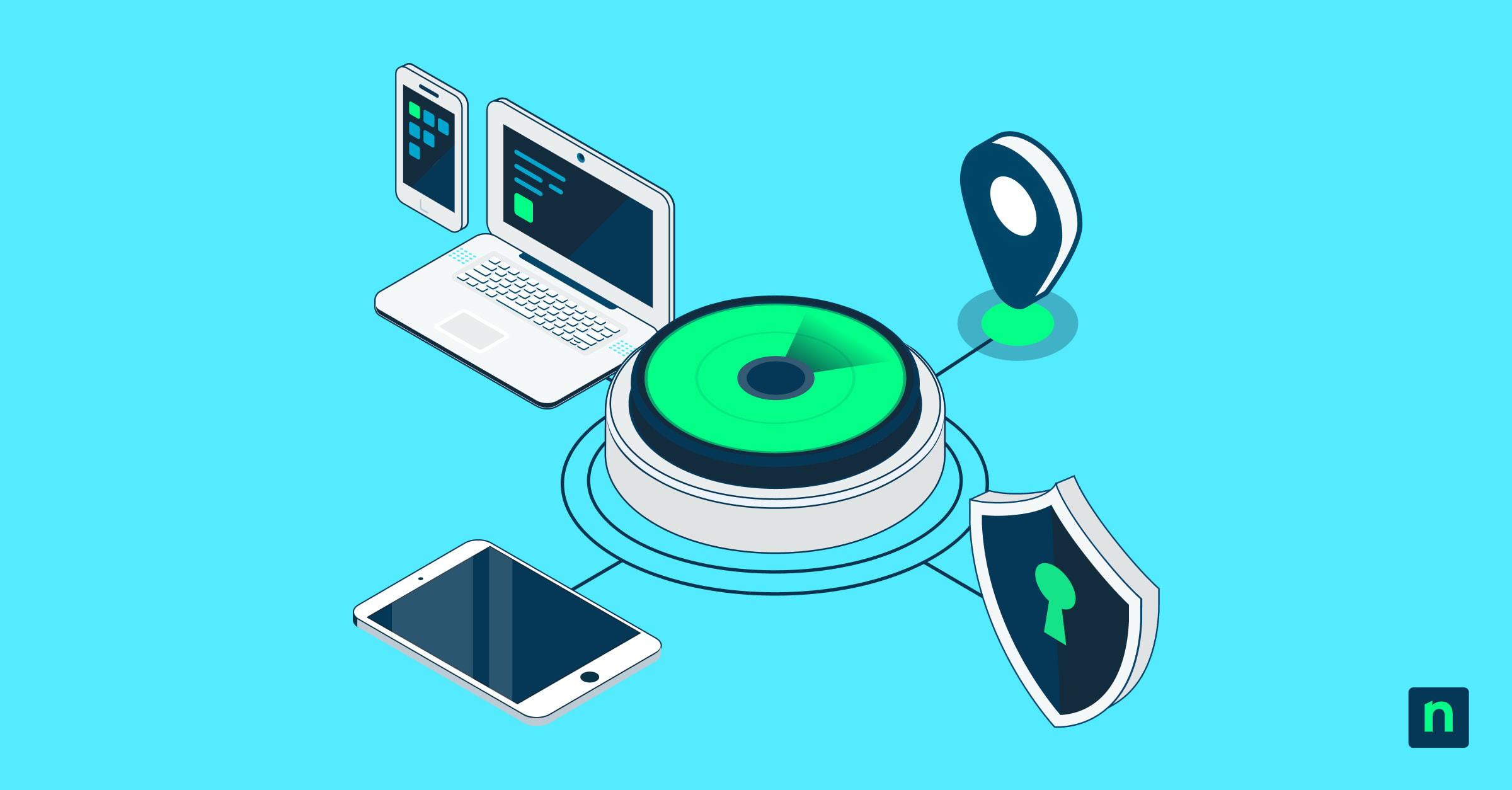
1. Supports iOS & Android – Manage iPhones, iPads, and Android devices (v8.0+) from one dashboard
2. App Management – Deploy, configure, and remove apps from Google Play and Apple App Store
3. Security Policies – Enforce passcodes, encryption, restrictions, and prevent jailbreaking/rooting
4. Remote Access – View device screens and troubleshoot issues remotely
5. Location Tracking – Track device GPS for asset management and loss prevention
6. Flexible Enrollment – Support company-owned, personally-owned (BYOD), and zero-touch enrollment
7. Multi-Tenant – Manage devices across multiple clients and organizations
8. Compliance Control – Monitor device compliance and enforce corporate policies