
Key points
- M365 Backup and vs. Archiving: Backup protects against data loss, while archiving ensures long-term compliance.
- M365 Backup Features Are Limited: Tools like Recycle Bins and versioning don’t provide full point-in-time restores.
- M365 Archiving Focuses on Retention: Purview retention policies, eDiscovery, and In-Place Archive preserve data for audits and legal needs.
- Archiving Does Not Protect Against Ransomware or Data Corruption: Archived data cannot restore clean versions after attacks or accidental damage—only backup solutions provide full recovery capabilities.
- Both Backup and Archiving Aare Required for SMBs: Backup alone doesn’t meet legal-retention requirements, and archiving alone doesn’t ensure recoverability after data loss.
- Explaining Backup vs. Archiving Clearly: Using visuals, scenarios, and business outcomes builds trust and prevents scope disputes.
A common misconception in safeguarding business-critical data is that Microsoft 365’s archiving tools are the same thing as backup. This misunderstanding can create compliance risks, data loss, and misplaced confidence in recovery capabilities, putting you in a prime position to star in your own IT Horror Story.
For MSPs, clearing up this confusion around M365 (or the old Office 365) backup and archiving is essential. Here’s a recap:
- Archiving is about long-term retention and compliance.
- Backup is about disaster recovery, ransomware protection, and quick restoration.
By explaining this difference in plain language, you prevent scope disputes and confusion, align services with compliance and continuity requirements, and position yourself as a trusted advisor who makes Microsoft 365’s native features easier to understand.
📌 Prerequisites:
Before you explain this topic to clients, make sure you have the following:
- A practical understanding of Microsoft 365’s built-in archiving tools (In-Place Archive, Purview retention, eDiscovery)
- Familiarity with Microsoft 365’s backup limitations (Recycle Bin, point-in-time restore, short recovery windows)
- A clear understanding of client Recovery Time Objective (RTO) and Recovery Point Objective (RPO) expectations (Explore RTO vs. RPO for more details)
- Awareness of compliance frameworks relevant to SMBs (HIPAA, SOX, GDPR, CCPA, and emerging state privacy laws; CMMC 2.0 for defense-adjacent clients)
- A simple, client-facing reporting template (like a one-page comparison chart)
Access and manage a centralized backup with NinjaOne
Step 1: Understand M365 archiving capabilities
You can’t differentiate what you don’t understand. The first step in differentiating backup vs. archive is knowing what M365 archiving does.
A simple way to understand it is as a “filing cabinet” for long-term record-keeping. Archiving ensures that important data isn’t accidentally deleted (or maliciously deleted by a threat actor) and can be easily retrieved for audits or legal needs.
The three most common features you’ll run into are as follows:
- Purview retention policies: Purview is Microsoft’s unified data governance and compliance platform, included at various M365 licensing tiers.
- eDiscovery: This lets you search and export data if there’s an investigation or legal request.
- In-Place Archive (Exchange Online): This provides extra space for older emails so they don’t crowd the main inbox.
Why this matters
Archiving makes sure information is preserved for compliance, but it doesn’t help if files get corrupted, encrypted by ransomware, or deleted by mistake. That’s where backup comes in.
Deliverable
A plain-language way to explain this to clients, such as this example: “Archiving keeps data safe for audits and compliance, but it’s not the same as backup. Backup is what protects you from ransomware or accidental deletions.”
Step 2: Learn what M365 Backup really does (and doesn’t)
Once you understand archiving, the next step is knowing what M365 backup actually covers. Many clients assume Microsoft takes care of everything, but that’s not the case.
Microsoft gives you some basic safety nets, such as the following:
- Recycle Bin: From the Recycle Bin, you can restore deleted files or emails but only for a limited time (30–93 days, depending on the service). SharePoint’s Recycle Bin retains deleted items for up to 93 days across two stages; Exchange Online retains deleted items for 14–30 days depending on the item type and admin configuration.
- Versioning: This allows users to roll back to earlier versions of a file, which is helpful when unintended changes occur or data becomes corrupted.
- Deleted user data: When an account is deleted, Microsoft 365 retains mailbox data for 30 days by default. OneDrive files can be retained for up to 93 days with admin configuration. Longer retention requires applying a litigation hold or Purview retention policy before deletion.
Why this matters
These features are useful, but they’re not a complete backup strategy. They don’t protect you from ransomware that encrypts thousands of files, or let you roll back all data to a specific point in time. That’s why MSPs often recommend third-party SaaS Backup tools like NinjaOne SaaS backup to cover the gaps.
Deliverable
A simple gap analysis you can share with clients, such as this example: “Microsoft 365’s built-in backup features are like seatbelts. They protect you in everyday mishaps, but they won’t save you in a major crash. That’s why businesses still need a full backup solution.”
Step 3: Compare archiving and backup side by side
Now that you’ve defined both backup and archiving, it’s time to put them next to each other. Clients often understand differences faster when they can see them in a simple table or chart. Here’s an example:
| Feature | Archiving | Backup |
| Purpose | Compliance, legal hold | Recovery, business continuity |
| Access | Searchable archive | Recoverable copy |
| Retention | Long-term (years) | Restore points (snapshots) |
| Use Case | Audits, lawsuits | Ransomware, user error |
Why this matters
A visual comparison makes the difference between backup and archive messages stick. Clients can see at a glance that the two serve different purposes.
Deliverable
A chart like the one above for use in QBRs, onboarding, or client training.
Step 4: Connect features to business outcomes
At this stage, the client knows what backup and archiving are. However, we must emphasize that technical details aren’t enough. You need to connect them to business value. Take the example below:
- Archiving: “This ensures compliance during audits or lawsuits.”
- Backup: “This allows recovery after ransomware or accidental deletion.”
Why this matters
Clients don’t buy technology; they buy outcomes. By linking features to real-world benefits, you make the value clear and avoid confusion.
Deliverable
A short outcomes summary that translates IT functions into plain business terms. We’ve written a guide, “Backup and Archiving for Secure Legal Documentation,” for more information.
Step 5: Show real-world scenarios where both are needed
The final step is showing how M365 backup and archiving work together in everyday business situations. Clients often don’t grasp the difference until they see it applied to their own industry. Use stories or scenarios they can relate to, such as the following:
- Healthcare SMB: Archive for HIPAA compliance and backup for ransomware protection.
- A clinic must keep patient records for years under HIPAA data backup requirements. Archiving ensures no email or file is deleted too soon and everything is discoverable in an audit.
- However, if ransomware hits and encrypts every SharePoint document, only a true backup lets them roll back to a clean copy.
- Accounting firm: Archive for 7-year retention and backup for staff error recovery.
- Some accountants apply a 7-year retention approach as a conservative precaution since the IRS statute of limitations extends to 7 years in specific cases such as bad debt deductions. The standard audit window is 3 years, but many firms retain longer to be safe.
- Archiving enforces that retention policy, ensuring no data is prematurely purged.
- At the same time, if a junior associate deletes the wrong client folder, backup provides a fast, full restore.
- Manufacturing company: Archive for industry certification audits and backup for operational continuity (such as with a business continuity plan).
- Manufacturers often face ISO audits requiring proof of documentation and communications. Archiving ensures they can hand over records on demand. For a more comprehensive discussion, read this guide on how to become ISO certified.
- If a disgruntled employee deletes design files, backup ensures production lines aren’t delayed.
- Law firm: Archive for legal holds and backup for case continuity
- Archiving ensures that client communications and case files remain untouched during litigation.
- Backup protects against downtime if the firm suffers a cyberattack, ensuring lawyers don’t lose access to critical case evidence.
Why this matters
These examples make it clear that archiving alone isn’t enough; it protects compliance but not business continuity. Clients can see that both tools work together to keep them safe, compliant, and operational.
Deliverable
Scenario-based talking points you can customize for each client vertical; use these in QBRs, onboarding, or sales conversations, making the distinction practical and memorable.
(Optional) Step 6: Use automation to show clients the gaps
One of the best ways to explain the difference between M365 backup and archiving is to show clients their own data retention setup. You can use automation to make this step easier.
For example, you can export Microsoft 365 retention policies with PowerShell:
Get-RetentionCompliancePolicy | Export-Csv "M365_RetentionPolicies.csv" -NoTypeInformation
This PowerShell cmdlet generates a CSV report of all Microsoft 365 retention compliance policies managed through Purview. To run this command, the appropriate Microsoft Purview/Compliance PowerShell modules must be installed and loaded, and you must be connected to the service.
Automate backup and archiving with from a centralized IT operations platform
Best practices summary for M365 backup vs. archive strategies
| Component | What to Do | Why This Matters | Example in Practice |
| Define archiving | Explain that archiving is Microsoft 365’s way of keeping data for compliance and legal reasons. | Clients often confuse archiving with backup. Setting the record straight avoids service disputes later. | “Archiving keeps old emails and files available for audits, but it won’t help if ransomware locks up your SharePoint site.” |
| Define backup | Describe backup as the “safety net” that lets you roll back or restore data after loss or corruption. Be clear about Microsoft’s built-in limits. | SMBs assume Microsoft backs up everything. Showing the gaps helps justify why MSPs provide third-party SaaS backup. | “Microsoft 365 has a Recycle Bin, but that only lasts 30–93 days. Our backup solution can restore files from any point in the last year.” |
| Provide a side-by-side comparison | Provide a simple table showing the different purposes of backup vs. archiving | Visuals help decision-makers (especially non-technical owners) grasp the difference quickly. | During a QBR, show a slide with the comparison so the client can immediately see why both services exist. |
| Map to business outcomes | Translate technical functions into outcomes clients care about, such as compliance, audits, continuity, and peace of mind. | Business owners don’t care about “RPO” or “retention tags”. They care about passing audits, staying online, and avoiding fines. | “Archiving keeps you compliant with HIPAA; backup gets you back online fast after ransomware.” |
| Use vertical scenarios | Tailor examples to the client’s industry, such as healthcare, accounting, legal, manufacturing, etc. | Industry-specific scenarios build credibility and make the message relatable. | For a CPA firm: “IRS rules sometimes require you to keep tax records for 7 years. Archiving enforces that. But if staff accidentally delete QuickBooks files, backup saves you.” |
How NinjaOne can help reinforce the message between archiving vs backup
Explaining M365 backup and archiving doesn’t stop with a one-time conversation; it’s something you should reinforce in ongoing reporting and client reviews. NinjaOne gives MSPs the tools to do this consistently, as discussed below.
Host templates in NinjaOne Documentation
While NinjaOne Documentation isn’t designed to serve as a general file repository, it can help reinforce your client messaging when used appropriately. For example, you can include links or references to your backup vs. archiving comparison chart within documentation tied to the client’s managed environment. This ensures that technicians and account managers can access consistent, contextual explanations when discussing backup and archiving practices during service delivery or reviews, without misusing docs for unrelated storage.
Track compliance requirements
NinjaOne’s automated backup reporting and audit trails make it easy to prove recoverability and testing frequency. This gives MSPs a concrete way to show clients how their backup policies strengthen overall compliance posture, complementing (not duplicating) their Microsoft 365 archiving setup.
Build QBR dashboards
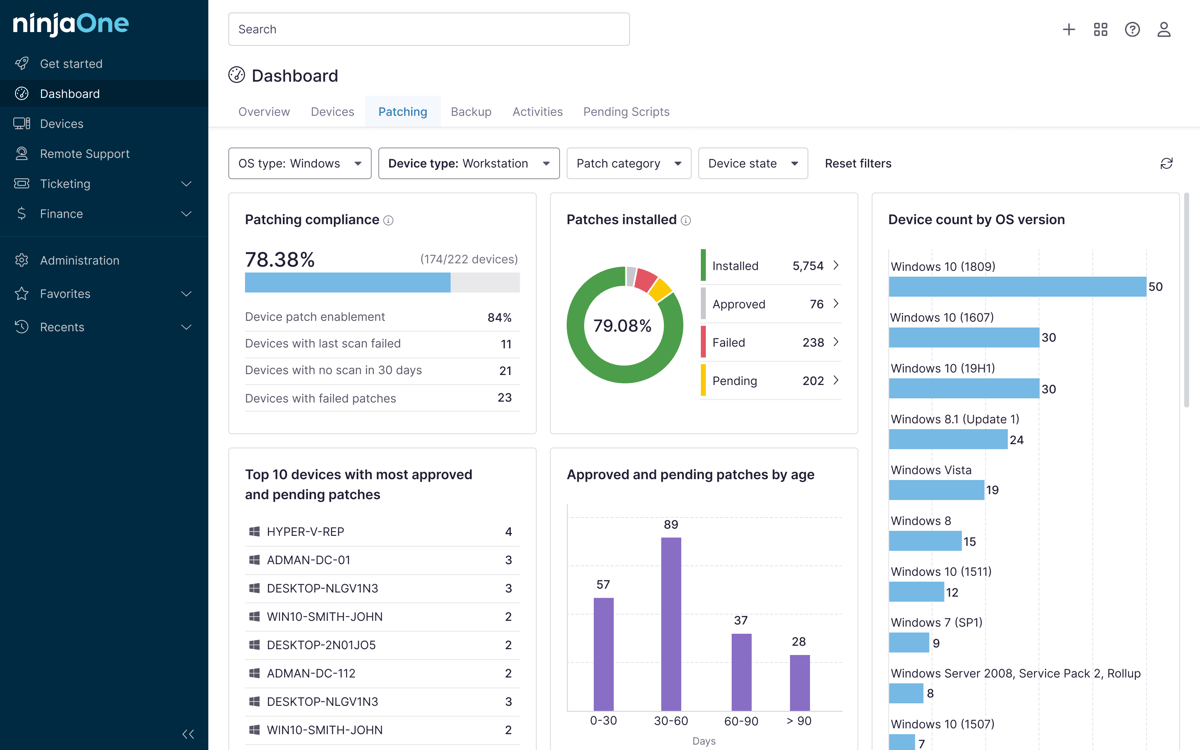
Use NinjaOne’s dashboards and reporting to visualize how your clients’ data is being protected. You can display backup coverage metrics such as protected workloads and backup success rates. To provide full context, complement these reports by summarizing Microsoft 365 archiving policies (which can be managed or exported from Microsoft 365 itself). Together, these insights help clients understand that backups are designed to ensure recoverability, while archiving is intended for long-term data retention.
Automated alerts and tasks
NinjaOne SaaS Backup can automatically flag failed backup jobs, helping MSPs prove one of the most important distinctions between archiving and backup: recoverability.
While Microsoft 365 archiving ensures data is stored for long-term retention, NinjaOne’s automated alerts, task assignments, and reporting workflows demonstrate how backup actively protects data availability and enables rapid recovery.
Explaining the difference between backup and archive
Explaining the difference between backup and archive is crucial in maintaining customer trust and reducing miscommunication. When talking with clients, the most important message is simple: M365 backup and archiving are not the same thing, and one can’t replace the other. Archiving is built for compliance and audits, while backup is built for recovery and business continuity. Microsoft 365 gives you some basic tools, but they have limits.
Without proper backup, clients risk losing critical data to ransomware, corruption, or human error. Without archiving, they risk falling short on legal or regulatory requirements.
Related topics: