


Key Points
- ITOM automates workflows, optimizes IT resources, and resolves issues to improve service delivery and operational efficiency.
- Core functions of ITOM include network operations, help desk and support services, server and device management, and backup and disaster recovery planning.
- Key benefits of ITOM are improved system availability, cost reduction, effective risk management, and continuous alignment of IT with business goals.
Modern IT operations management (ITOM) demands an integrated, service-centric approach. Looking to maximize your IT agility and efficiency? Here are a few best practices to get you started.
What is IT operations management (ITOM)?
ITOM is a type of Information Technology Service Management (ITSM) that primarily addresses issue remediation processes, improves workflows and service performance, and optimizes resource use. The goal of ITOM is, in part, to effectively manage an organization’s IT infrastructure and resources through the automation of relatively simple and routine tasks.
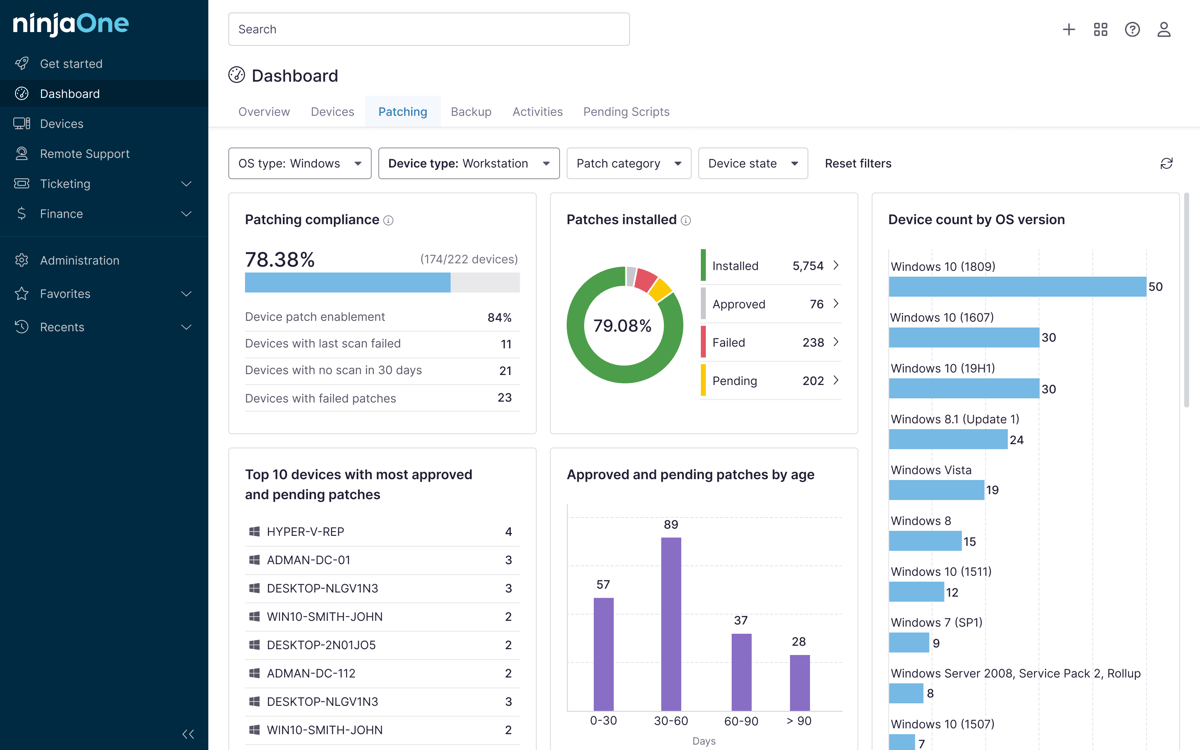
Several solutions are available to implement IOTM effectively. These solutions offer IT professionals a way to monitor the environment in which they work, helping them detect problems with infrastructure or endpoints early. IOT solutions also offer IT and security professionals a simple way to deploy assistance with devices or software patches quickly and remotely, saving time and resources.
🥷 Drive technician efficiency with an all-around IT operations management software solution.
ITOM vs ITOps
ITOM cannot be implemented with solutions alone; this is where IT Operations (ITOps) come in. ITOps pertains to the people, roles, and day-to-day tasks responsible for delivering the key goals of ITOM. The team’s key responsibilities involve managing and maintaining the organization’s IT infrastructure and services to ensure business continuity and reduce or eliminate downtime. ITOps also holds the key to issue resolutions, security, and compliance.
What do ITOM tasks consist of?
As a business expands, its technology needs, including software and other assets, will often expand in kind. IT operations managers take on the responsibility for this ever-expanding array of services and solutions. Their main priority is ensuring that all of these services and applications are stable and available for use by their stakeholders. To this end, IT managers and IT professionals typically perform management tasks in three key service areas:
1. IT infrastructure/ IT network operations
IT network infrastructure includes all the hardware and devices necessary to provide internal and external communications, data storage, and data management for the organization. Tasks that fall under this category include:
- All networking functions related to communications
- Management of internal telephone/VoIP system
- Providing remote access for authorized users and managing access control protocols
- Internal and external telecommunication management
- Port management for safe outside server access
- Regulating traffic via firewalls and maintaining network security
- Discovering and resolving any issues related to network resources
2. IT support operations and help desk
ITOM includes the management of help desk services and your standard tech support roles. These tasks include service calls, ticketing, troubleshooting, and request fulfillment. IT operations managers are also responsible for managing and testing backups, communicating information about incidents and network outages, controlling system access/licenses/user accounts, and implementing a disaster recovery/continuity plan for the business.
Tasks include:
- Data center and facility management
- Help desk management/Network operations center (NOC)
- Provisioning of users and accounts
- Conducting audits and testing
- Backup management
- Ensuring maximum uptime/network stability
- Creating disaster recovery plans/business continuity
3. Device and server management
In addition to administering network infrastructure throughout the organization, IT operations teams are also typically responsible for managing network endpoints such as servers and devices. Tasks include:
- Maintaining, patching, and upgrading servers and any cloud-based infrastructure
- Storage and network management
- File server and email setup, and account authorization
- Provisioning IT assets, including devices issued to users
- Management of the organization-approved devices and BYOD
- Ensuring that applications have access to the hardware resources they need to operate
What are the benefits of IT operations management (ITOM)
There are advantages to utilizing an ITOM solution in your environment that make ITOM important for an organization:
- Improved system availability and performance: Monitoring your environment allows you to be more proactive, which means you’re better able to ensure peak performance and uptime. Rather than waiting until something breaks, you can address issues as they start, saving time for both you and users.
- Enhanced IT service delivery and customer satisfaction: ITOM software can integrate with other systems you already use to enhance them and make your processes more efficient. This means you’ll be able to deliver better services more quickly, and you’ll be able to track issues effectively.
- Cost reduction and optimized resource allocation: ITOM pays for itself quickly. You can utilize it to assign resources more efficiently, particularly when a task that would normally require a technician to drive to the site can be done remotely. Over time, this saves both time and money.
- Effective risk management and compliance: ITOM’s data visibility and automated monitoring help you quickly detect suspicious activity and address it, reducing your risk of a security incident and keeping you compliant with regulations.
What are the challenges in IT operations management?
Many IT professionals struggle with the logistics and realities of implementing such an approach. This can lead to wasted time and confusion, which in turn leads to service outages, poor response times, financial losses, and damage to the company’s reputation.
Here are the most common challenges IT teams run into:
1. Lack of integrated IT operations management software and tools
Not incorporating a centralized IT solution into ITOM is a huge factor that can negatively impact the whole process.
Additionally, you should also understand that as the demand for cloud resources grows, so does the complexity involved in managing these resources. As organizations of all shapes and sizes continue to adopt new technologies such as cloud-based computing services (SaaS, PaaS, IaaS, etc.), virtualization, and the Internet of Things (IoT), IT organizations are challenged to evolve and adapt.
Modern software solutions can provide a clear, real-time view of a network and IT infrastructure health across diverse environments. That’s why there’s no reason to wrestle with detecting, diagnosing, and resolving service issues while fighting the clock or hoping for no catastrophic service outages.
2. Lack of visibility into IT architecture
Adaptation and agility require a high level of visibility into the IT architecture in order to provide quick response and remediation. Organizations still using legacy software systems with traditional on-premise hardware often deal with limited visibility into their own systems. This doesn’t help when information is spread across multiple systems, software, and team members, as is often the case in these situations. These obstacles should be remediated to provide IT operations with the proper controls and oversight to meet their strategic objectives.
3. Disparate tech and applications
Impaired visibility into the IT architecture is largely caused by the independent (and unintegrated) functioning of various technologies, tools, and processes. These days, a typical organization may have some applications running on-premise, some applications through SaaS, and a few other applications hosted entirely by a third-party provider. When these applications and solutions lack the ability to share information, they must be monitored separately. This introduces more room for human error and carries a greater cost in terms of money, time, and resources.
4. Poor scalability
Lack of visibility and limited control over disparate technology often mean IT managers hit a wall when it comes time to scale their operations. A difficult-to-manage environment is not conducive to introducing or maintaining a new service. Without a system for integrating data from various collection points, adding any new hardware, service, or solution can result in an even more fractured IT infrastructure. Let’s not forget the security vulnerabilities that often arise from all of these disparate tools and applications, either.
IT operations strategy and best practices
Looking to maximize your IT agility and really get a handle on ITOM? Here are a few best practices to get you started.
1. Automate routine tasks
Automation has become a hallmark feature that has helped many IT facets amplify productivity among organizations and enterprises. To keep up with this evolving trend, you need to utilize. An IT automation tool that can combine enterprise-class monitoring, event management, and operational analytics into a dashboard.
Remember that a centralized view allows you to evaluate the health and performance of your IT infrastructure while increasing resource availability and improving security. This approach in ITOM will allow you to use the fewest tools possible, which benefits both security and productivity.
2. Start proactive management
The break-fix model is obsolete; organizations can no longer operate under the traditional idea of calling IT only when something stops working. Adopting IT operations best practices starts with moving organizations away from the ad-hoc model of IT that can only fix problems once they’ve already happened and toward active monitoring and proactive maintenance.
3. Align IT management with service
How you look at your IT can be the difference between your business’s success and failure. Viewing IT operations in the old break-fix tech support light doesn’t allow you to fully take advantage of modern IT. Current ITOM methodology shifts focus away from managing applications and infrastructure in a silo and instead focuses on understanding IT in relation to your business goals. ITOM processes and workflows are often designed around service delivery and customer experience. This allows for a greater ROI on IT investments while raising customer satisfaction.
4. Create goals and plan for success
Effective ITOM requires that you clearly define roles within your IT team and hold everyone accountable. IT teams, especially those within small businesses, often struggle to understand their responsibilities and objectives. Automated ITOM processes, ticketing systems, and process-driven management allow IT professionals to make the best use of time and IT resources.
5. Partner with a trusted MSP provider
Small business owners often have to make hard choices when it comes to investing and managing expectations. Developing in-house IT teams can be extraordinarily expensive, and many ITOM goals discussed here can seem very cost-prohibitive. Managed services providers (MSPs) help solve this problem by giving businesses access to technology experts, hardware, and solutions that make IT Operations strategy easier to plan and execute — even on a budget.
To further support implementation, consider watching this video: ‘What is IT Operations Management (ITOM)? Overview & Best Practices’.
See why 20,000+ customers worldwide trust NinjaOne’s IT management software.
What are the emerging trends in ITOM?
ITOM continuously evolves like many other technological advancements in IT management. Here are some emerging trends that organizations may want to consider adopting in the near future:
- AIOps and predictive ITOM
It wasn’t that long ago that Artificial Intelligence was just a buzzword. Now, it’s everywhere, and even modern ITOM is already incorporating it into the process. Artificial Intelligence for IT operations, or AIOps, helps ITOps keep up with massive volumes of logs, alerts, and telemetry data generated by modern IT environments. This shift moves ITOM from reactive firefighting to predictive and proactive service assurance. AIOps in ITOM can:
-
- Detect anomalies in real-time
-
- Correlate alerts across systems to reduce noise
-
- Predict outages or capacity issues before they disrupt business
→ Read NinjaOne’s comprehensive overview of AIOps
- Hybrid and multi-cloud complexity
Running a mix of on-premises infrastructure, public cloud, and SaaS applications has become the norm for most organizations. This has made ITOM processes adapt capabilities that can provide end-to-end visibility and control across hybrid environments or ensure compatibility for multi-cloud management.
- Zero-trust security integration
Prioritizing security will never go out of fashion in terms of IT management. Zero-trust architectures have become the standard when security and operations converged. The integration of Zero-trust to IT management enabled ITOM to be tightly coupled to identity management, access controls, and device trust verification.
→ Check out our guide on implementing Zero-Trust security
- Compliance audit readiness
-
- Regulatory requirements such as GDPR, HIPAA, and industry-specific standards put pressure on IT teams to demonstrate operational control, patch management, and incident response. Modern ITOM tools now provide built-in reporting and dashboards to simplify audits, ensure IT processes meet compliance obligations, and are ready for surprise audits.
Why IT operations management (ITOM) is important
Ensuring high availability and reliability of IT services is essential for a business to run smoothly, but your team can only handle so much at once. To maximize your efficiency and productivity, mitigate risks, and minimize system downtime, you should integrate your work processes and systems with ITOM using robust software and tools. By automating routine tasks, consolidating platforms, and aligning ITOM with strategic business outcomes, IT leaders can transform IT operations into a driver of resilience and innovation.
Streamline and improve the IT service experience
IT Operations Management (ITOM) is a highly effective tool that helps with management, security, compliance, and support tasks, making it easier for service providers to be efficient and cost-effective. For efficient IT infrastructure management, consider NinjaOne’s IT Operations Management Software, which leverages powerful automation, machine management capabilities, and APIs to integrate smoothly into your pre-existing systems and facilitate proactive, effective IT support and services.
Ready to improve your visibility and automate your most time-consuming IT tasks? See how NinjaOne’s platform can make your team more effective.

Related topics: