
Key Points
- Pausing client backups doesn’t automatically delete existing recovery points; retention policies can silently delete historical data if left unmanaged.
- Define a clear data preservation plan that covers backup validation, retention adjustments, and archiving for every backup pause.
- Archiving moves recovery points out of active backup cycles, making it one of the most reliable ways to preserve historical data long term.
- Scenarios like offboarding, service tier changes, temporary suspensions, and cost management each require a different mix of retention and archiving workflows.
- Pause client backups safely by validating existing backups, reviewing retention settings, archiving critical data, pausing backups, and periodically monitoring archived data.
Scenarios like offboarding, cost reduction, or service changes may require MSPs to pause backup processes. While suspending backup operations is typically straightforward, minimizing data loss requires careful planning.
This guide will walk you through key areas around retention and archiving to help you pause client backups safely.
Understanding what happens when backups are paused
After pausing, recovery points stored in your repository or cloud storage remain restorable. While temporarily suspending backup jobs prevents capturing fresh data, the system will keep enforcing existing retention policies.
This is where the risk of data loss lies, as this can cause historical data to get silently deleted when it exceeds its defined retention period.
The importance of retention policies when pausing backups
When backups run normally, retention policies foster healthy data rotation as old recovery points are replaced by new ones. However, pausing backups causes that rotation to stop, risking recovery points from being purged over time.
Pausing backups without adjusting retention periods leaves you with nothing to restore from. In this light, it’s important to carefully plan data retention or archiving policies to match the length of your backup suspension period.
Archive client backup data before stopping future backups
Archiving is one of the most reliable ways to preserve backup data. At its core, archiving means moving backup data into a dedicated repository, preventing it from being purged when its retention period lapses.
A good archiving workflow should:
- Relocate data from hot storage to cold storage, immutable object storage, or a dedicated archive vault.
- Maintain archived data so it’s restorable, even if the original backup data is purged.
- Prevent accidental deletion by transferring data under archive retention rules.
Archiving ensures that even if you permanently suspend a backup job, your client’s historical data remains available to support compliance or future restore requests.
Considerations before pausing or stopping client backups
Before pausing client backups, it’s important to know the risks involved and the scenarios that require them.
Risks associated with pausing or stopping client backups
The moment a backup job stops running, your client becomes exposed to a wide array of risks. The main risks you should be aware of are the following:
- Recovery points can become stale, and retention policies may delete existing backups if not archived.
- Anything created, modified, or received after the pause sits unprotected until backups resume.
- Data recoverability can decrease over time as software versions change, encryption keys rotate, and credentials expire.
Temporary backup suspensions should be paired with a data preservation plan, including existing backup validation, adjusted retention periods, and archived critical data before the job stops running.
Common scenarios that require a backup job suspension
Over-engineering a simple pause leads to unnecessary overhead and wasted resources. On the other hand, under-protecting a critical dataset risks it from being lost completely.
By right-sizing your approach, you preserve historical data at the level required for the situation, helping you keep costs proportional to the pause duration.
Here are sample scenarios where you need to pause or stop client backups:
| Scenario | What’s happening | Recommended approach |
| Client offboarding | A client is leaving the service permanently, stopping backups permanently. | This requires full archiving accompanied by a formal data handover or destruction certificate. |
| Service tier changes | A client is moving between plans, switching products, or changing their backup scope. | Stop the old configuration without losing existing recovery points and extend their retention period as needed. |
| Temporary suspension of backup services | Temporary suspension usually occurs for seasonal contracts or paused engagements. | Keep existing data intact during the gap by extending retention for short suspensions and archiving critical recovery points for longer ones. |
| Storage cost management | A client reduces their backup volume to control costs. | Move data to cold-tier archiving before proceeding to purge low-priority data. |
Each scenario shifts the balance between how long the pause will last, whether backups will resume, and what compliance or recovery obligations remain in effect. Mapping those variables helps you find the right combination between retention adjustments, archiving, and monitoring.
How to pause client backups safely: A five-step process
The following steps protect backups before, during, and after a suspension to preserve historical data regardless of the suspension’s duration.
Step 1: Validate existing backups
Before pausing a client’s backup, verify the backup to surface skipped files or partial runs that could indicate incomplete backup jobs. You should also perform a test restore or a recovery point integrity check to confirm if the data is healthy. Doing this ensures that the backup you’re about to archive works as expected.
Step 2: Review your client’s backup retention settings
Begin by reviewing your client’s existing retention rules and map out when each recovery point will expire. If the pause will overlap your current retention window, extend it before pausing to prevent silent data expirations.
Step 3: Archive critical data
Archive all important data you want to keep beyond your existing retention window. Prioritize critical recovery points, such as the most recent full backup and those that support compliance requirements.
Store archived data in a separate storage outside of active backup cycles; for example, a cold, immutable storage. Archiving all important data before pausing is your safeguard against losing critical client historical data due to accidental wipes.
Step 4: Pause or disable backup jobs
After validating backup data, adjusting retention periods, and archiving critical historical data, you can safely suspend your client’s backup. Ensure that pausing the job doesn’t automatically trigger a cleanup, as some systems wipe all associated data when backups are paused.
Keep a clear documentation of all steps taken and the rationale behind them. Maintaining a clear record helps with client communication and future troubleshooting jobs.
Step 5: Monitor stored and archived data
Set alerts for upcoming expirations so no data accidentally lapses its retention period, and periodically verify that archived data remains accessible and restorable. Continuous monitoring ensures that migrations, credential changes, and subsequent updates don’t break access to both stored and archived data.
Pause client backups safely using the right approach
Temporarily suspending backups doesn’t remove existing data points, but mismanaged retention policies can lead to unexpected data loss. To avoid this, you should validate backups, review retention settings, and archive critical datasets before halting backup processes.
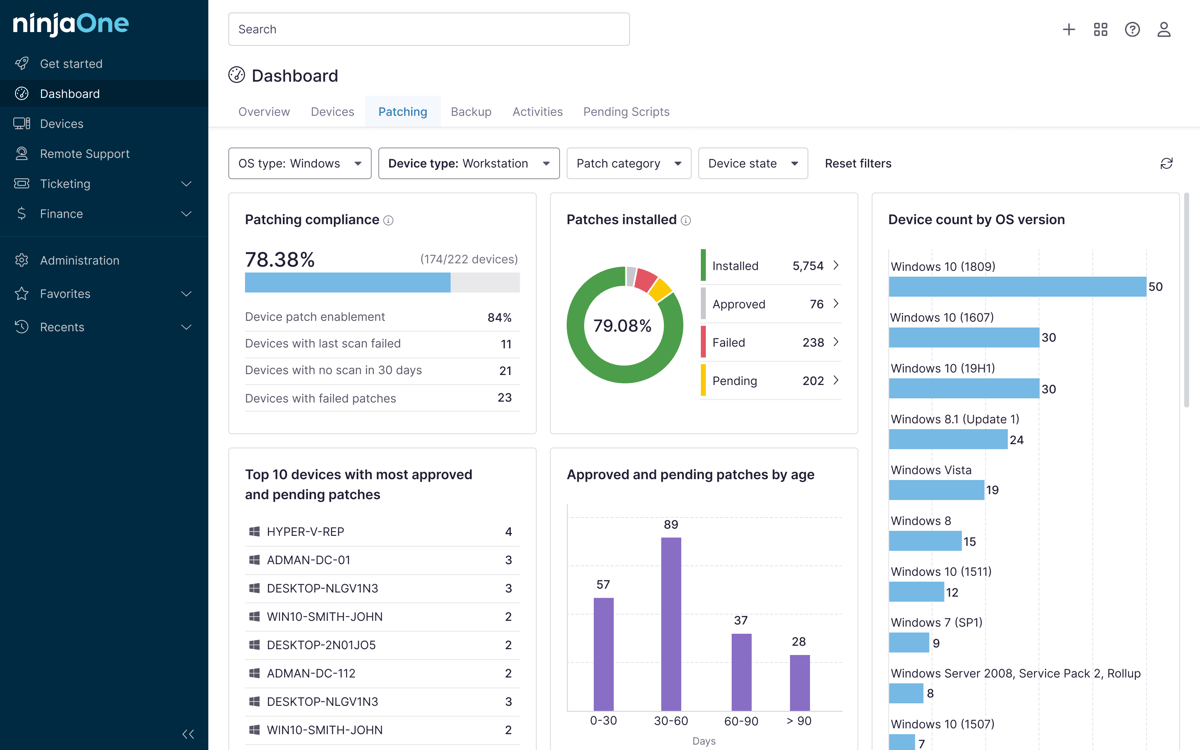
The NinjaOne dashboard streamlines this process by allowing you to toggle the backup status of a specific client or device. This action temporarily halts backups while preserving all existing backup data and settings, allowing for safe maintenance or troubleshooting without data loss.
Related topics: