
Key Points
- Identify your system type and session capacity. Use mstsc.exe /admin to connect without consuming extra sessions or licenses.
- Sign out inactive users via Task Manager and apply Group Policy limits to prevent “too many users” errors.
- Enable NLA and verify RDS licensing when using Windows-native RDP. Use NinjaOne to automate audits, cleanups, and alerts or leverage NinjaOne Remote to access devices without relying on RDP session limits.
Remote desktop disconnected errors typically occur when the host has reached its maximum session limit or when disconnected sessions are not reclaimed. On Windows clients, Stock Keeping Units (SKUs) support only one interactive session at a time.
On Windows Server without Remote Desktop Services (RDS), two sessions are available. RDS adds multi-user capability when properly licensed. This article will guide you through the process of resolving this common issue.
Fixing “Remote Desktop Disconnected: Limited Remote Desktop Session”
To resolve the disconnection issue, you must confirm the host’s session model, enter without consuming another session, enumerate the sessions, set timeouts, stabilize connectivity, and then run RDS-specific checks.
📌 Prerequisites:
- Local Administrator or equivalent rights on target machines
- Access to PowerShell, Task Manager, and built-in RDP tools
- If using RDS, access to RD Session Host, RD Licensing, and Collections configuration
- A maintenance window or end-user coordination to sign out active sessions
Step 1: Confirm the host’s session model and license posture
📌 Use Case: Before connecting or ending sessions, identify the type of system you’re dealing with and the number of remote users it legally supports.
- Press Win, type Settings, then navigate System > About.
- Check Edition.
- Open Server Manager if it’s a Windows Server.
- Click Manage → Add Roles and Features and verify if Remote Desktop Services is listed.
- If RDS is listed, press Win + R, type licmgr.exe, and press Enter.
- Write down the following:
- System type (Client / Server / RDS)
- Licensing mode and CAL count
Note: Installing Remote Desktop Services does not mean RD Licensing is installed locally. If the RD Licensing role is missing, licmgr.exe will not be available, and licensing must be checked on the configured licensing server.
Step 2: Enter without consuming another session
📌 Use Case: Sometimes you need to check a server without using up another RDS license or kicking someone off.
- Press Win + R.
- Copy and paste the following into the prompt, then press Enter:
- mstsc.exe /admin
- Enter the server name or IP address and connect.
Step 3: Free sessions
📌 Use Case: When users report “session locked” or “can’t log in,” you may need to find and close inactive or disconnected sessions.
- Press Ctrl+Alt+Del and select Task Manager.
- Click the Users tab to see who’s logged in.
- Review the Status column carefully:
- Active → The user is currently logged in and working. Do not sign out unless coordinated.
- Disconnected → The user is no longer connected, but their session is still consuming a slot.
- Idle time (if shown) → Long idle durations may indicate an abandoned session.
- If a session shows Disconnected:
- Right-click the user name
- Select Sign Out
⚠️ Important: Always confirm with the user or check your ticketing system before signing out a session labeled Active. Forced sign-out may result in lost unsaved work.
Step 4: Set timeouts and single session limits
📌 Use Case: Idle sessions waste server resources and can cause “too many users” errors. Setting timeouts and limits keeps things running smoothly.
- Press Win + R, type gpedit.msc, then press Enter.
- Navigate to:
- Computer Configuration > Administrative Templates > Windows Components > Remote Desktop Services > Remote Desktop Session Host > Session Time Limits
- Double-click Set time limit for disconnected sessions and enable it.
- Double-click Set time limit for active but idle sessions and set a reasonable timeout.
- Afterward, go to:
- Remote Desktop Session Host > Connections
- Open Limit number of connections → enable and set a maximum.
- Open Restrict Remote Desktop Services users to a single session > set to Enabled.
- Click Apply > OK and close the editor.
Step 5: Stabilize connectivity and validate security configuration
📌 Use Case: Bad network connections or outdated security settings usually cause intermittent RDP drops or authentication errors.
- Press Win, type Control Panel, then press Enter.
- Navigate System > Remote Settings.
- Under Remote Desktop, check Allow connections only from computers running Remote Desktop with Network Level Authentication (NLA).
Afterward, follow the steps below:
- Press Win, type Settings, then press Enter.
- Go to Windows Update > Check for Updates.
If updated or done updating, verify your firewall isn’t blocking RDP:
- Open Control Panel > Windows Defender Firewall → Allow an app through firewall.
- Ensure Remote Desktop is checked for Private and Public networks.
Step 6: Run RDS-specific checks
📌 Use Case: For full Remote Desktop Services environments, periodic licensing and session-limit checks prevent lockouts.
- On the RDS server, open Server Manager.
- Click Remote Desktop Services > Overview.
- Confirm that the RD Session Host, Connection Broker, and Licensing Server roles show as green/healthy.
- Afterward, open the RD Licensing Diagnoser by pressing Win + R and typing lsdiag.msc, then pressing Enter.
- Check for errors. If they appear:
- Ensure the Licensing Server is activated.
- Re-install or re-register the CALs as needed.
- Review collection settings:
- In Server Manager > Remote Desktop Services > Collections
- Check session limits and timeouts match policy.$
Note: These checks apply to full Remote Desktop Services deployments. For standalone RD Session Host servers, validate licensing directly on the RD Licensing Server and review Session Host licensing settings instead of using the RDS Overview page or Collections.
Best practices to follow when fixing the “Remote Desktop Disconnected” issue
The table below summarizes the best practices to follow when fixing the disconnection issue:
| Practice | Purpose | Value delivered |
| Connect with mstsc.exe /admin | Perform administrative or troubleshooting tasks | Recover without worsening capacity |
| Enforce timeouts via GPO | Recycle slots | Fewer stuck sessions and tickets |
| Single session per user | Predictability | Prevent parallel idle hoarding |
| Verify RDS licensing | Compliance and scale | Supported and compliant multi-user capacity |
| Script detection and cleanup | Speed | Faster detection and documented remediation |
NinjaOne helps fix the “Remote Desktop Disconnected” issue
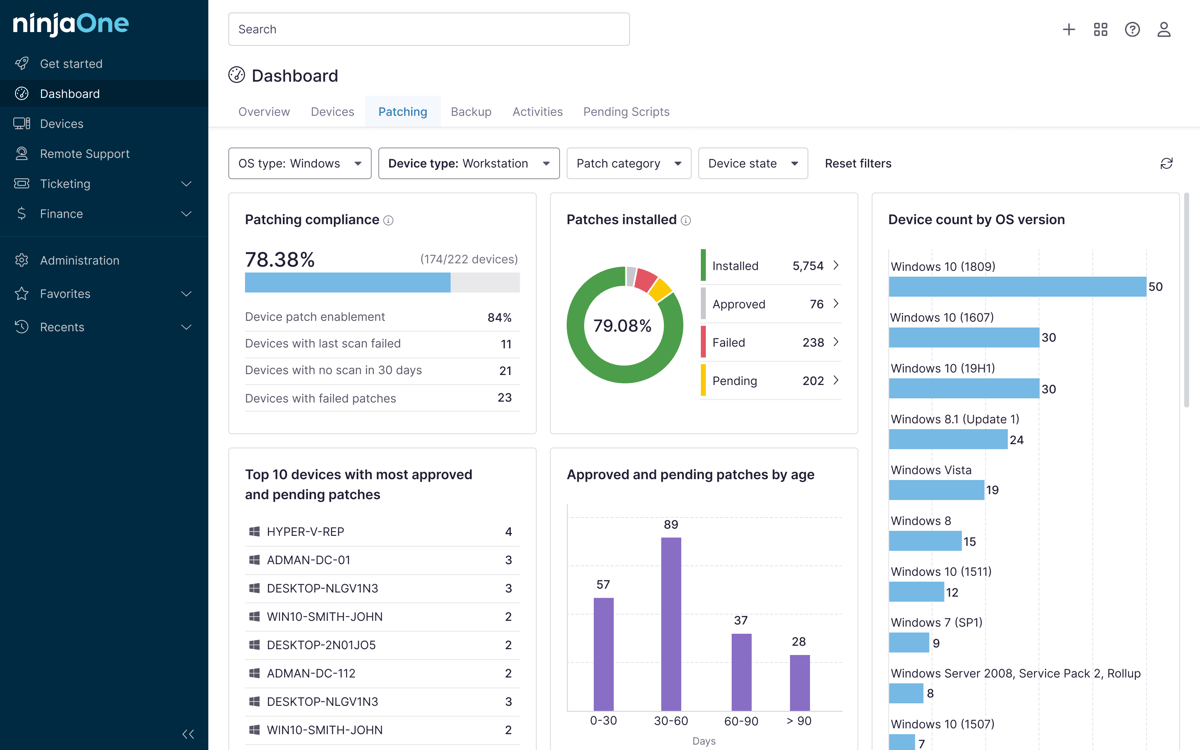
You can use NinjaOne to deploy custom scripts to device groups, schedule periodic checks, and attach script output and actions to documentation. Alerts or tickets can then be generated based on script results, such as detecting excessive disconnected RDP sessions or potential session exhaustion scenarios
Reclaim servers by fixing a common disconnection issue
Limited desktop session errors are typically caused by exceeding the designed capacity, rather than a defect in the system. Respecting the host’s session model, entering through the console, freeing up slots, enforcing timeouts, and stabilizing the network path enables you to resolve incidents quickly and prevent repeats.
Related topics: