

Key Points
- Endpoint detection and response (EDR) cloud deployment improves scalability and remote visibility, while on-premise EDR better supports strict data control, air-gapped networks, and regulated environments.
- Choosing between cloud and on-premise EDR should be based on endpoint scale, compliance obligations, and total cost of ownership rather than hosting preference.
- On-premise EDR is not inherently more secure than cloud EDR, as security outcomes depend on configuration, monitoring, and governance regardless of hosting location.
- Hybrid EDR supports mixed enterprise environments but requires unified reporting and clear governance to avoid fragmented detection coverage and telemetry gaps.
- EDR total cost of ownership should account for licensing, infrastructure, staffing, storage, integrations, and migration effort beyond initial licensing fees.
The endpoint detection and response (EDR) deployment model that you choose will greatly affect the security posture of your organization, but this decision is usually made haphazardly. It’s crucial to weigh EDR cloud deployment against on-premise infrastructure because it shapes security operations center (SOC) operations, threat response time, compliance, and operational burden on internal teams in the long run.
This article discusses the tradeoffs between cloud-hosted and on-premise EDR architectures to give enterprise IT and security teams a framework for deciding based on their environment.
What EDR cloud deployment means
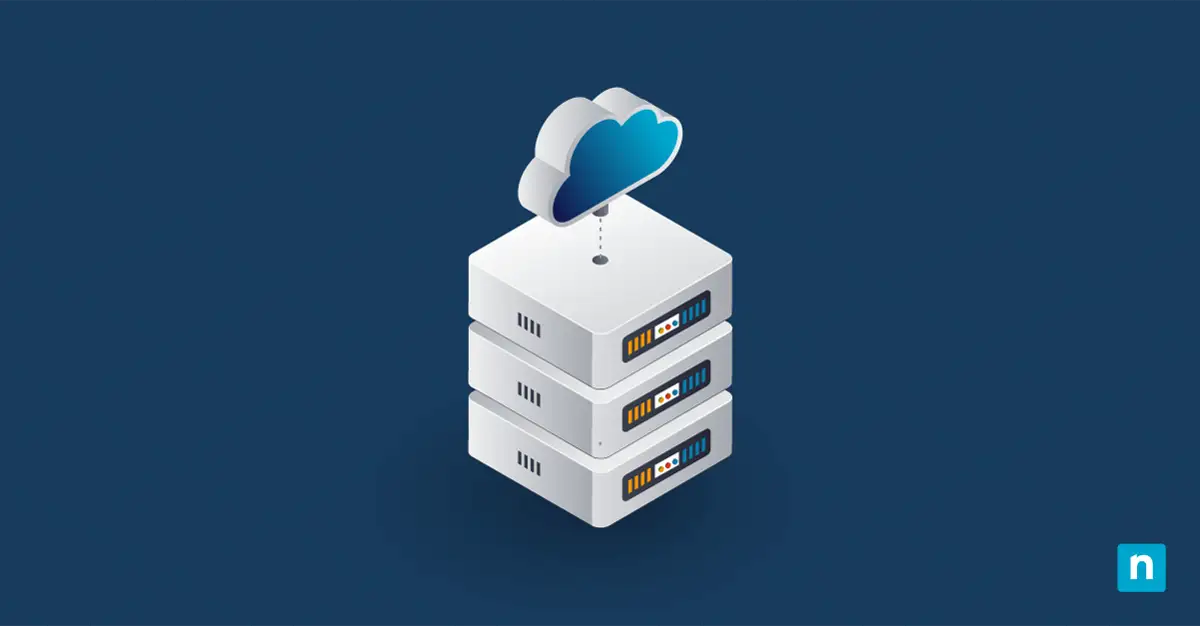
EDR cloud deployment shifts endpoint security into the cloud, where telemetry gets collected, analyzed, and acted on. Instead of relying on locally-hosted servers, endpoints run agents that redirect security data to a cloud-based console or analytics platform for easier management.
Most enterprise EDR cloud platforms can accommodate the following functionalities:
- Aggregating endpoint telemetry from across the organization into a single platform
- Running behavioral analysis on endpoint activity in the cloud
- Pushing threat intelligence updates to endpoints without manual intervention
- Remotely monitoring devices that operate outside the corporate network
- Supporting analyst workflows for reviewing and acting on alerts
- Letting security teams isolate or remediate endpoints remotely
- Surfacing security data through dashboards and reports
- Connecting with other cloud-native tools across the security and IT stack (for example, SIEM, SOAR, identity, and ticketing tools)
This model usually works well for organizations that need visibility for their users and devices that are spread across many locations.
How on-premise EDR differs
On the other hand, on-premise EDR is when the organization owns and operates the infrastructure behind its endpoint security program. Management servers, analytics systems, storage, and reporting tools are all run within company-controlled environments, giving security and IT teams direct oversight over their platform.
Organizations that tend to use this model usually have at least one of the following requirements:
- Keeping security data stored within local, internal systems
- Operating within private or air-gapped networks that can’t reach the public internet
- Meeting data residency obligations that restrict where endpoint telemetry can be processed or stored
- Maintaining custom infrastructure configurations
- Reducing or eliminating reliance on third-party cloud services
- Keeping direct control over when updates and system changes are rolled out
- Supporting environments that handle very sensitive or regulated workloads
However, this level of control comes with real tradeoffs. The organization owns every maintenance responsibility that comes with the infrastructure, so capacity planning, platform updates, backup procedures, high availability, and ongoing monitoring all fall on internal teams.
Cloud security vs on-prem security tradeoffs
Instead of asking which EDR deployment model is more secure, it’s better to evaluate which holds up better against your organization’s specific operational needs. Therefore, you should look at how each option performs across scalability, compliance obligations, visibility requirements, and the daily realities of running a security program.
To help you, here are some of the typical advantages of cloud EDR, centered on operational agility:
- Gets deployed faster with less work
- Scales more easily as endpoint counts grow or shift
- Extends consistent coverage to remote and hybrid workers
- Consolidates visibility across environments in different locations
- Receives threat intelligence and detection updates regularly
- Removes the overhead of managing local EDR infrastructure
- Connects more readily with other cloud-native security tools
In contrast, on-premise EDR offers these advantages:
- Keeps infrastructure management within the organization’s direct control
- Allows teams to determine exactly where endpoint data is stored and processed
- Supports environments that are isolated, restricted, or disconnected from the internet
- Accommodates deployment architectures tailored to specific internal requirements
- Avoids exposure to outages or availability issues on the vendor’s cloud side
- Satisfies regulatory or internal policies that mandate on-premise hosting
The real differentiator between the two models is how each one affects visibility, control, compliance, cost, and the operational workload your team can actually handle.
When hybrid EDR makes sense
Hybrid EDR can also be an option, as it brings together cloud and on-premise components into a single architecture. It’s a good compromise for enterprises navigating modernization while still carrying legacy infrastructure or operating under strict data controls.
It’s usually a practical option in situations where:
- Different business units have different visibility requirements, with some suited for cloud and others not
- Certain systems or environments must stay on-premises or fully isolated
- Legacy infrastructure is still in active use and cannot be realistically migrated in the near term
- Data residency rules differ across regions, making a single deployment model difficult to enforce consistently
- SOC teams need consolidated reporting across mixed environments
- Organizational changes like mergers or acquisitions introduced architectures that were never designed to coexist
The flexibility is beneficial, but it comes with much complexity. A hybrid model requires clear governance with clear ownership and consistently applied policies to avoid fragmented detection coverage, duplicated alerts, inconsistent telemetry, and reporting gaps.
Enterprise evaluation criteria
It’s important to follow a structured evaluation process when picking a deployment model to ensure the EDR infrastructure works well with your operations. Make sure to assess both cloud and on-premise options against concrete operational and security requirements that are specific to their environment.
Consider the following criteria below:
- The total number of endpoints being protected and how they are distributed geographically
- How well each deployment model covers remote workers and devices that operate outside the corporate network
- Data residency obligations and how long endpoint telemetry and logs need to be retained
- The current maturity of security operations workflows
- Integration requirements across SIEM, SOAR, extended detection and response (XDR), managed detection and response (MDR), and identity platforms
- Whether endpoints and management infrastructure depend on consistent internet connectivity or need to function across private networks
- How frequently detection logic and threat intelligence get updated
- Where telemetry gets stored, who can access it, and what controls govern that access
- The performance impact of the EDR agent on endpoint resources
- Who owns infrastructure maintenance, and how that responsibility is staffed internally
- What backup, disaster recovery, and availability commitments the deployment model requires
- How the platform supports compliance reporting and produces audit-ready evidence
- The full cost of ownership projected over time, including licensing, underlying infrastructure, staffing, ongoing maintenance, platform upgrades, telemetry storage, integration development, and any migration effort involved
Common challenges and mistakes
Some friction is expected when deploying or managing EDR at enterprise scale. These issues may stem from the deployment model itself or from how the decision was made. Recognizing both categories early can save you from doing considerable rework later.
Here are some challenges that come up regularly:
- Regulated or disconnected environments often cannot meet cloud EDR connectivity and data routing requirements
- On-premise infrastructure can become difficult to scale as the endpoint estate grows
- Misaligned telemetry between cloud-managed and on-premise systems complicates investigations and reporting
- Tightly controlled environments may fall behind on threat intelligence updates, weakening detection coverage
- Without a unified console, analysts end up managing separate tools and fragmented workflows
- Data residency obligations can restrict how and where cloud EDR telemetry is stored
- On-premise EDR places overwhelming operational demands on internal teams
- Unclear ownership between infrastructure, endpoint, and SOC teams creates responsibility gaps at the worst possible times
Minimize these challenges through well-defined architecture standards, clear deployment governance, deliberate integration planning, and periodic reviews of the EDR program.
Deployment mistakes also compound over time, especially when the initial decision was made without enough operational context:
- Choosing a deployment model based on preference rather than requirements
- Treating on-premise EDR as inherently more secure
- Expecting cloud EDR to eliminate security operations work
- Skipping a thorough review of data residency and retention requirements
- Underestimating on-premise maintenance costs
- Under-monitoring off-network endpoints in on-premise deployments
- Creating a hybrid EDR without unified reporting
- Skipping response workflow testing before rollout
- Framing the decision purely around the hosting location
- Excluding staffing, storage, and integration costs from the total cost of ownership
On-premise vs off-premise cloud EDR: How enterprise teams should evaluate both
Selecting between cloud, on-premise, or hybrid EDR comes down to how well each model fits your operating environment. It’s crucial to approach this decision with a clear picture of your endpoint scale, compliance obligations, integration requirements, and internal capacity to ensure your chosen model holds up over time. Just make sure to build your EDR program around honest assessments of what your organization can realistically support, maintain, and improve as threats and infrastructure requirements evolve.
Related topics: