Key Points
- CaaS simplifies container hosting and orchestration, but it doesn’t replace core compliance or governance responsibilities.
- MSPs must manage the full container lifecycle, including how workloads are built, updated, and retired, rather than focus only on deployment.
- Containers introduce distinct security and compliance considerations that require structured oversight and continuous control.
- CaaS operates as a hosting model within a shared responsibility framework, not as a standalone governance solution.
- CaaS should integrate with RMM, monitoring, and compliance workflows to support unified operations across hybrid environments.
Containers have become a common way to package and run applications because they are lightweight, portable, and easy to scale. Containers as a Service (CaaS) simplifies how containerized workloads are deployed and managed without requiring organizations to operate the underlying infrastructure.
For MSPs, CaaS affects service delivery, monitoring, and compliance. This guide explains where CaaS fits in an MSP portfolio and how CaaS regulations influence operational responsibilities.
What Containers as a Service actually is
CaaS is a cloud service that provides an environment where teams can deploy and operate containerized applications.
A container is a lightweight package that includes applications and everything they need to run (such as the runtime, required libraries, system tools, and configuration settings), so they work consistently across different systems and infrastructures.
CaaS provides a managed orchestration layer that acts as a control system for containers. It decides where they run, scales them up or down based on demand, restarts them if they fail, and keeps services connected. Teams focus on the application, while the platform handles how it runs.
A CaaS platform typically provides:
- Managed container orchestration (commonly Kubernetes)
- Automated deployment and scaling controls
- APIs and operational interfaces for development and infrastructure teams
- Abstracted compute, networking, and storage to reduce manual infrastructure management
Where CaaS fits in MSP service stacks
CaaS strengthens an MSP’s overall service offering by providing a scalable way to run and manage modern applications. Here’s how CaaS fits into core MSP offerings:
Managed cloud services
Provides a consistent way to run applications across public, private, or hybrid cloud environments.
Managed application hosting
Helps deliver stable performance with built-in scaling and consistent runtime environments.
DevOps and automation services
Supports automated build and deployment pipelines, allowing teams to release updates more reliably and frequently.
Modernization and migration services
Makes it easier to move legacy applications into containerized environments without rebuilding them from scratch.
Platform operations and SRE services
Simplifies day-2 operations through built-in orchestration, health monitoring, scaling controls, and lifecycle tools.
Clients rarely ask for container orchestration by name. They ask for reliable hosting, scalability, and modernization. Position CaaS within a broader cloud and application strategy to support those outcomes, rather than presenting it as a standalone technical platform.
Operational considerations for MSPs
For MSPs adopting CaaS, day-to-day operations change. The following areas require attention to avoid compromising SLAs or losing visibility.
Lifecycle management
While CaaS automates much of the orchestration, MSPs remain responsible for governing how containers are built, deployed, updated, and retired.
Security posture
Because containers are frequently updated and scaled, they require continuous security oversight. MSPs should implement image scanning, enforce signed and approved images, apply least-privilege access, and manage registries responsibly.
Monitoring and alerting
MSPs need clear visibility into cluster health and application behavior. Monitoring data should flow into existing dashboards so issues are caught early and handled through normal incident processes.
Integration with RMM and NOC workflows
CaaS platforms generate extensive telemetry. That data should flow into existing RMM tools and operational dashboards to maintain centralized visibility. This allows NOC teams to respond to incidents without switching between systems.
Defining service boundaries
CaaS environments operate under shared responsibility. Make it clear to clients which responsibilities belong to the MSP and which are handled by the platform provider.
CaaS and compliance
CaaS changes how compliance needs to be managed. Because containers behave differently from traditional servers, standard controls may need to be adjusted.
Immutable infrastructure expectations
Containers are designed to be replaced rather than modified in place. They can be updated or redeployed quickly, which means compliance processes must keep up with that speed.
Organizations should be able to trace what was deployed, when it changed, and who approved the change. This traceability should connect to versioned images and deployment pipelines.
Ephemeral workloads and audit retention
Container instances may only run for a short time, but audit evidence can’t disappear with them. Logs and security events should be captured and stored outside the container environment to meet retention requirements and support audits.
Shared responsibility model
In CaaS environments, infrastructure security is typically handled by the platform provider, while workload configuration, access management, and data protection remain the responsibility of the MSP and the client. Clear documentation of this division is necessary to prevent gaps in compliance coverage.
Limitations and scope considerations
Here are key limitations and boundaries of CaaS to help prevent unrealistic expectations and costly missteps.
CaaS is not a compliance framework
CaaS platforms automate orchestration but don’t enforce regulatory controls. Compliance still depends on defined policies and ongoing oversight.
CaaS doesn’t replace VM hosting for all workloads
Not every application fits a container model (for example, monolithic systems). In many customer environments, VMs will continue to play a necessary role.
CaaS requires expertise to secure and manage effectively
Platform automation doesn’t remove complexity. Containers introduce their own security, networking, and orchestration considerations. If you don’t have a clear understanding of these areas, operational risk increases.
Monitoring and backup must be integrated
Containerized workloads are distributed and often short-lived. Standard monitoring and backup tools may miss critical data. MSPs should integrate CaaS into existing observability systems and align backup strategies with how applications run inside containers.
Misconceptions MSPs should avoid
After understanding the limitations, it’s equally important to correct common misconceptions. The following assumptions can create unrealistic expectations.
“CaaS is a compliance solution.”
CaaS provides platform-level security features and orchestration automation, but it doesn’t enforce regulatory controls, validate configurations, or maintain audit trails. Compliance still depends on defined processes and oversight from both the MSP and the client.
“CaaS replaces endpoint and infrastructure governance.”
Containers still run on hosts, networks, and storage layers that require patching, monitoring, and controlled access. A secure CaaS environment depends on strong infrastructure governance underneath it.
“CaaS automatically manages risk.”
Automation within CaaS focuses on deployment and scaling. It doesn’t prevent configuration errors or guarantee secure workload settings. Risk management still requires policy enforcement and consistent monitoring.
“CaaS eliminates operational complexity.”
CaaS reduces manual server management, but it introduces distributed system behavior that needs to be understood. Networking models, orchestration logic, and lifecycle processes still require oversight.
“CaaS is only for cloud-native workloads.”
Although often associated with microservices, CaaS is not limited to cloud-native designs. Any application that can be reliably containerized and fits the operating model can run on the platform.
NinjaOne integration
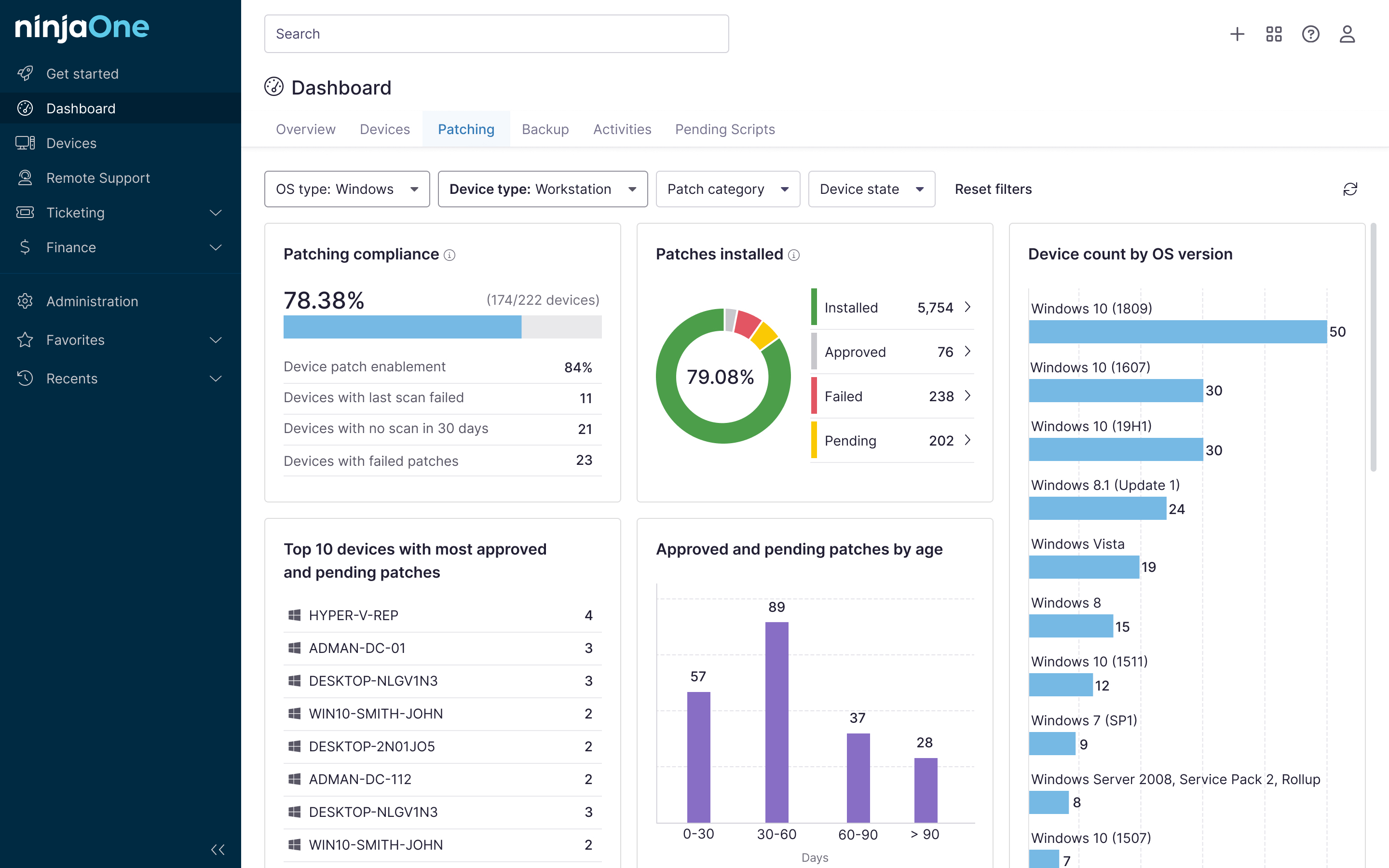
NinjaOne helps teams manage containerized workloads alongside traditional infrastructure. Here’s how:
| NinjaOne capability | How it helps |
| Centralized monitoring | Provides visibility across endpoints, servers, and cloud resources alongside containerized workloads, reducing monitoring silos. |
| Alerting and incident management | Aggregates alerts into a unified dashboard so teams can detect issues early and respond through existing workflows. |
| Documentation and ticketing workflows | Captures operational events and supports audit trails, helping maintain compliance records and SLA tracking. |
| Hybrid environment visibility | Enables correlation of container-related issues with underlying infrastructure, improving root cause analysis. |
Aligning platform practices with evolving CaaS regulations
Containers as a Service makes it easier to run and manage containerized applications. For MSPs, adopting CaaS is less about changing platforms and more about understanding how it fits into a broader service strategy that includes compliance, monitoring, security, and reporting. When used as part of a broader strategy, CaaS supports scalable services without creating confusion around responsibilities.
Related topics: