Key Points
- Risk Quantification: Quantify breach impact by modeling direct costs and indirect costs to capture total financial exposure.
- Cost Comparison Clarity: Compare preventive control spend to expected breach loss; invest when projected impact materially exceeds mitigation cost.
- Estimate Annualized Loss Expectancy (ALE): Estimate how much an incident could cost and how often it might occur in a year, using factors like asset criticality, exposure, and historical data to support the estimate.
- Governance Alignment: Align security budget to risk tolerance and governance thresholds; scale controls based on risk severity; reassess annually/after major changes.
- Recognize Limits and Misconceptions: Security reduces likelihood and impact but cannot eliminate risk; compliance minimums ≠ adequate protection.
- Use Operational Telemetry: Use endpoint posture, patch status, vulnerabilities, and exposure signals to prioritize fixes and evidence risk reduction.
Security budgets are often treated as a cost center, though they are best viewed as an investment. Cybersecurity spend is a risk management call: You’re deciding whether the price of prevention is worth it compared to a breach’s financial impact.
The global average cost of a breach is $4.4 million, according to Cost of a Data Breach Report 2025. Meanwhile, Gartner reported that security spending is increasing through 2024 to 2026. What does this mean to your organization? How do you evaluate cybersecurity investment vs breach cost? Where should budgets go?
To make a well-informed decision, you need a structured way to estimate breach impact, exposure likelihood, and your acceptable risk level. This guide presents approaches you can take to do that.
Understand the true cost of cyber attacks
The impact of a security breach goes beyond just fixing a technical issue. Your organization could incur expenses for:
- Incident response and forensic investigation
- Regulatory penalties and compliance fines
- Legal fees, settlements, and potential class actions
- Customer notification, support, and credit monitoring services
- Operational downtime and lost productivity
- Damage to brand trust and reputation
- Long-term revenue loss and higher customer churn
The sum of those can exceed the initial remediation spend, and costs often continue to compound over time. Take a hospitality and entertainment company that agreed to pay $45 million to settle class action lawsuits in January 2025, tied to a customer data theft that happened two years earlier. The total estimated financial impact was around $100 million, including the settlement and related response costs.
Direct vs indirect financial impact
Understanding direct and indirect costs is critical to making financial choices. Both of them affect your budget, though in different ways.
- Direct costs are clear, trackable expenses, such as incident recovery services and legal fees.
- Indirect costs are harder to pin to a single invoice, but they do as much damage to your bottom line, if not even more. These include:
- Customer churn
- Project delays
- Lost competitive advantage
- Higher insurance premiums
You should use a reliable risk model that accounts for both the obvious spend and the ripple effects that may come later.
Compare preventive investment to loss exposure
To make smarter security decisions, compare what you spend on prevention with what a breach is likely to cost. Most organizations should look at:
- Annual investment in cybersecurity controls: How much money is your organization spending on security tools and additional protective measures?
- Estimated Annualized Loss Expectancy (ALE): What is your expected yearly loss based on likely incidents?
- Likelihood of exploitation: How probable is an attack within your environment?
- Asset criticality and exposure: How important is the asset to your operations, and how accessible is it to potential attackers?
When the projected impact of a breach far outweighs the cost of prevention, then security spend is simply good financial judgment, not a discretionary line item.
Key risk factors in evaluating cybersecurity investment vs breach cost
Breach costs are never fixed. There are several variables that can cause it to swing dramatically, so your model should account for:
- Industry regulatory environment – More regulation usually means higher fines, legal fees, and mandatory notification costs.
- Data sensitivity and volume – As data volume and sensitivity increase, notification scope, remediation effort, and potential settlements also increase.
- Remote workforce exposure – More endpoints outside the office can raise the likelihood of compromise and the cost of containment.
- Third-party vendor integrations – Vendor risk can broaden the potential attack radius and add contractual, forensic, and recovery expenses
- Security posture maturity – Mature security controls can reduce the frequency of breaches, their impact, and losses due to downtime.
- Incident detection and response capability – Breach damage and costs can be reduced by faster detection and response, which minimizes dwell time.
When you understand how these risks apply to your environment, it’s easier to put the budget on the areas that actually reduce real-world exposure.
Move from reactive cost to proactive strategy
Reactive spending after a breach is usually way more expensive than putting strong controls in place upfront. Proactive investment helps you:
- Reduce incident frequency
- Detect and contain threats faster
- Strengthen your compliance posture
- Increase executive confidence
- Make budgeting more predictable
With the correct preventive approach, your organization can shift cybersecurity from being an emergency expense to a strategy that supports the business.
Align investment with governance and risk tolerance
Security budgets should reflect your organization’s stated risk tolerance, not individual preferences or the latest headline. To keep spending grounded in governance, organizations should:
- Set acceptable loss thresholds, so teams know what level of risk the business is willing to carry.
- Quantify potential exposure across systems, data, and business processes.
- Fund controls in proportion to risk severity, rather than spreading the budget evenly.
- Reassess regularly as threats change and as the environment evolves (changes in your vendors, workforce, and tech stack).
With structured governance in place, security investment stays tied to business priorities and risk reality, not urgency.
Common misconceptions about cybersecurity spending
- Misconception #1: Cybersecurity spending guarantees we won’t get breached.
- Reality: Investment lowers the likelihood of an incident and reduces impact when one happens, but it cannot eliminate risk entirely.
- Misconception #2: Security tools are too expensive for smaller organizations.
- Reality: The impact of a breach can be especially significant for smaller organizations. But this doesn’t necessarily mean that they need enterprise-level budgets to implement focused, high-value controls and achieve significant protection.
- Misconception #3: If we’re compliant, our spending is adequate.
- Reality: Compliance usually reflects minimum requirements. It doesn’t always match your real-world exposure, especially if your environment, data, or threat landscape changes faster than the standard.
How NinjaOne supports cybersecurity investment decisions
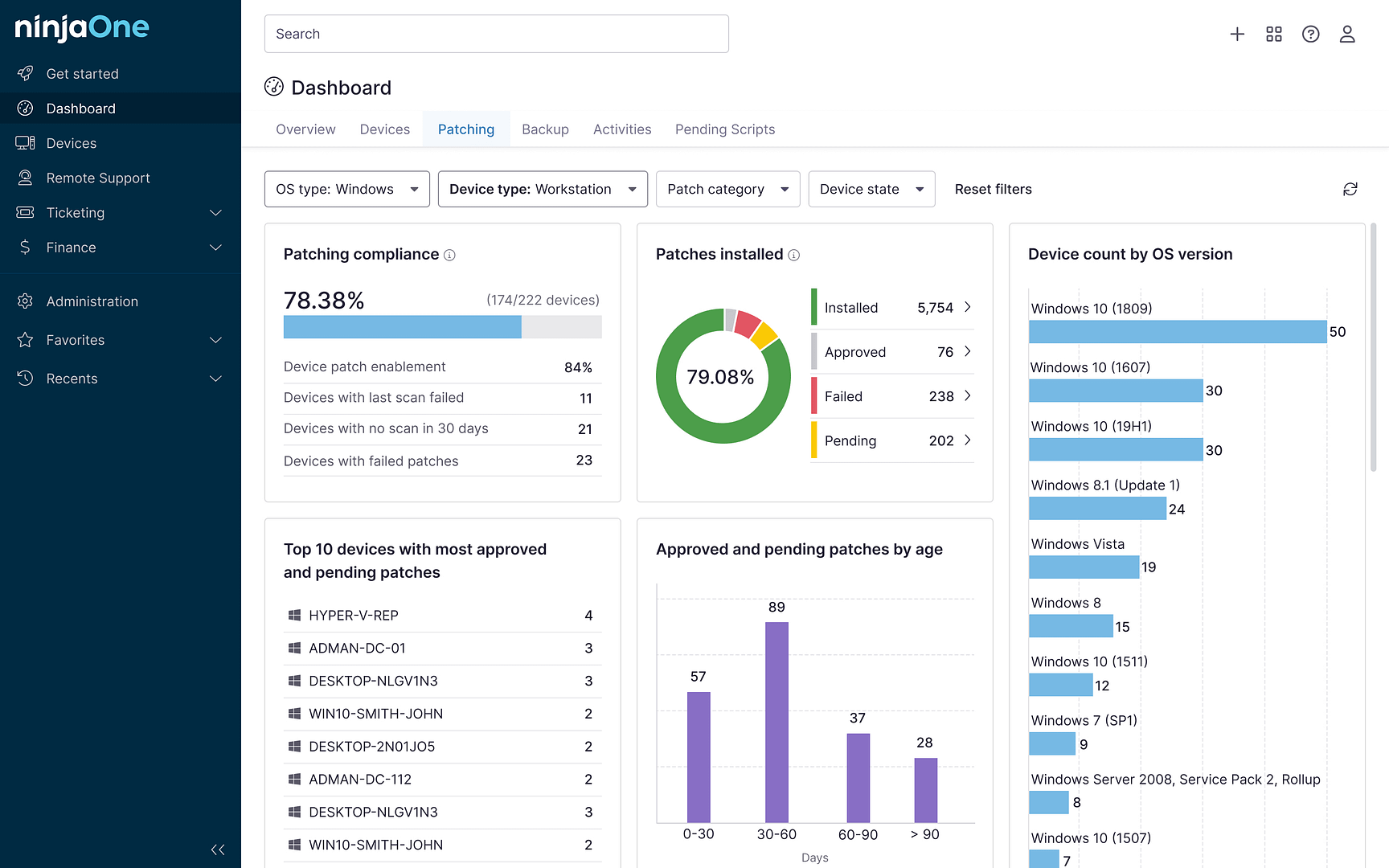
With platforms like NinjaOne, you can use real operational data (not guesswork) when evaluating cybersecurity spend. By giving clear visibility into endpoint posture, patch status, and compliance metrics, you can build a risk model that ties preventive controls to measurable risk reduction.
- Real-time Endpoint Monitoring: Continuously track device health, patch compliance, and overall security posture so you can spot gaps before they turn into incidents.
- Vulnerability Management: Bring in vulnerability scan data to prioritize what matters most and speed up remediation.
- Compliance Reporting: Automate checks for common frameworks and regulations to reduce audit effort and stay aligned with requirements.
- Cost-benefit Analysis: Use dashboards and reporting to understand exposure and track control coverage, helping teams connect security efforts with reduced risk and operational improvements.
- Proactive Risk Mitigation: Find and patch vulnerabilities earlier (before they’re exploited) so incidents are less likely and less expensive when they do happen.
Security data can become a practical decision tool. You can get the visibility to prioritize the right controls, justify spend with evidence, and improve resilience over time.
Financial clarity helps justify cybersecurity investment
Evaluating cybersecurity spend against breach impact turns security budgeting into a disciplined risk management decision. When you quantify exposure, model potential losses, and align funding to your risk tolerance, preventive investment becomes easier to justify. After all, it is backed by a clear financial rationale and strong governance.
Related topics:
- How to Run a Lightweight Cybersecurity Self-Assessment for SMB Clients
- How to Create a Modern Cybersecurity Strategy for IT Departments
- 7 SMB Cybersecurity Statistics You Need to Know in 2026
- How to Communicate Security Risk Without Alarm: A Guide for MSPs
- How to Shift From Reactive to Proactive Cybersecurity in 90 Days