
Key Points
- What Is Endpoint Backup? Endpoint backup is the process of automatically creating secure, encrypted copies of data from endpoint devices (laptops, desktops, tablets, mobile phones, POS systems, IoT devices) to remote storage for fast recovery after data loss, cyberattacks, or hardware failures.
- Why Endpoint Backup Is Essential: It protects against ransomware, accidental deletion, human error, device theft, hardware failure, software crashes, and natural disasters, ensuring business continuity and data security.
- How Endpoint Backup Works: Solutions capture files (file-level) or full system images (image-level), encrypt data, and send it to secure cloud or offsite storage. Backups can be scheduled or continuous, managed by IT admins, and validated for integrity to guarantee recovery.
- Key Features of Endpoint Backup Solutions: Look for self-service recovery, automation, centralized dashboards, bandwidth optimization (compression, deduplication, throttling), flexibility for different environments, and strong encryption for compliance.
- Endpoint Backup in Cybersecurity Strategy: Endpoint backups complement layered defenses like multi-factor authentication, patch management, application whitelisting, and advanced anti-malware. Together, these measures reduce risks from evolving cyber threats.
- Data Protection Strategy Alignment: Endpoint backup should be part of a broader data protection plan that includes encryption, disaster recovery planning, and regular security audits to secure sensitive information across remote and BYOD workforces.
Table of contents
- Key Points
- What is endpoint backup?
- What is an endpoint?
- Why is an endpoint backup important?
- Endpoint backup vs. cloud syncing
- Endpoint vs. datacenter backup
- How does endpoint backup work?
- Features of endpoint backup solutions
- Self-service
- Flexibility
- Automation
- Resource optimization
- Endpoint backup and recovery solutions
- Do I need endpoint backup?
- The importance of a data protection strategy
- Conclusion
Without a doubt, a data recovery solution is essential when it comes to maintaining security and business continuity. Backups give you i
notable survival options when
- ransomware hits,
- a laptop is lost, or
- someone accidentally deletes a folder full of important files.
Without those safe, secure, redundant copies of your most important data, you’d be left out in the cold.
In this article, we’re going to talk about endpoint backups — what they are, how they work, and why everyone should be using them.
Safeguard data and protect your endpoints with NinjaOne’s reliable backup solutions.
What is endpoint backup?
Endpoint backup is the process of automatically creating secure, remote copies of data stored on endpoint devices—such as laptops, desktops, tablets, and mobile phones—so it can be restored in the event of data loss, hardware failure, theft, or cyberattack. To fully understand the importance of this concept, let’s delve further into what an endpoint is.
What is an endpoint?
An endpoint is any device used for producing, sharing, accessing, and saving information and connected to a network. As mentioned earlier, it can be a laptop, desktop, tablet, mobile phone, point-of-sale (POS) device, manufacturing machine, IoT device, etc. These are input devices at the end of any network.
One part of effective endpoint management is maintaining backups of the files and other mission-critical data on those devices. Endpoint backup tools make this possible by sending copies of data to remote and secure file storage where it can be later recalled in the event of a disaster or deletion.
Such endpoint backup solutions usually run on a schedule; it might be every 24 hours, or it might be continuous these schedules are configured centrally by IT admins, though some solutions allow end-user flexibility
They may also run full backups or incremental backups depending on how much storage the end user wishes to allocate to backups and recovery.
Endpoint backup solutions have become very popular among SMBs and enterprises alike thanks to cloud-first delivery models and reduced storage costs. In particular, cloud-based backup solutions have certainly paved the way for more accessible and affordable endpoint backup solutions.
Why is an endpoint backup important?
Endpoint backup solutions protect against a variety of potential data loss scenarios, including:
- Hardware failure
- Ransomware attacks
- Natural disasters
- Human error
- Lost or stolen devices
- Cyber Attacks
- Software updates and upgrades
- Power Outages or System crashes
Endpoint backup vs. cloud syncing
You might ask why endpoint data backup is important when it sounds so much like the automated syncing that happens when using a cloud-based service. The answer requires that you know the differences between file syncing and true backup.
Cloud-syncing services like OneDrive, Dropbox, and Google Drive can’t protect data from the wide range of potential threats that true backup solutions address. Data corruption, ransomware, and other types of malware will simply “sync” right from the infected device to the remote storage location. Even if a user accidentally deletes a file, it will usually sync that deletion right into the cloud and remove all copies of the file. While some cloud services offer ways to recover accidental deletions, they typically only archive such files for a few days and cannot replace a dedicated endpoint cloud backup solution.
Speaking of which, endpoint backup solutions indeed, all forms of backup and recovery solutions are purposefully built for the sole mission of keeping your files protected. They are not productivity tools per se, so they don’t make compromises when it comes to the safety and security of your data.
Endpoint vs. datacenter backup
You’ve no doubt heard of data backup in some form or another. If nothing else, the idea might conjure memories of external hard drives or even tape drives used to make backup copies. You might have also heard of data center backup solutions, or just cloud backup solutions.
So where does endpoint backup fit in among all of this? That depends.
Many data center backup solutions offer endpoint security coverage but not all do. Likewise, some endpoint backup software can provide comprehensive data center backup coverage. The overlap is not guaranteed with every solution on the market, but if there is an overlap, you might be wondering what the difference is in the first place.
On the one hand, data center backup refers to solutions that are used as part of an organization’s disaster recovery and business continuity efforts. These are large-scale solutions that you might associate with making backups of a company’s entire operational database.
On the one hand, endpoint backup refers specifically to the safe storage of backup copies made from endpoint devices. If data center backup protects the company’s brain, endpoint backup protects all the other organs and limbs that make it a functioning organism.
Knowing this, you’d be aware that the biggest difference between endpoint and data center backup is that endpoint data is mobile. Endpoints are used and often physically transported by the organization’s end users.
This leads to an important consideration. Because endpoint protection and endpoint backup solutions work directly with the end users’ technology tools, it’s important that these measures don’t interfere with productivity. At the same time, they should avoid adding many unnecessary variables into the security equation. For any solution to work, it must be used, configured, and fully integrated into the workflow. Nothing is worse than losing data because an employee disabled their security software as a matter of convenience.
How does endpoint backup work?
Endpoint backup solutions can range greatly in functionality but will generally pull data from a local hard drive or device and send secured, most likely encrypted, copies of that data to a remote storage location. What data is copied and how often is configured through the software itself.
The most effective endpoint backup plan would involve protecting every file on every device (though in practice, organizations often exclude non-essential data to save storage and bandwidth). In most cases, this is possible without too much demand on resources, although large files (think media production) could put a strain on network stability if backed up frequently and in full.
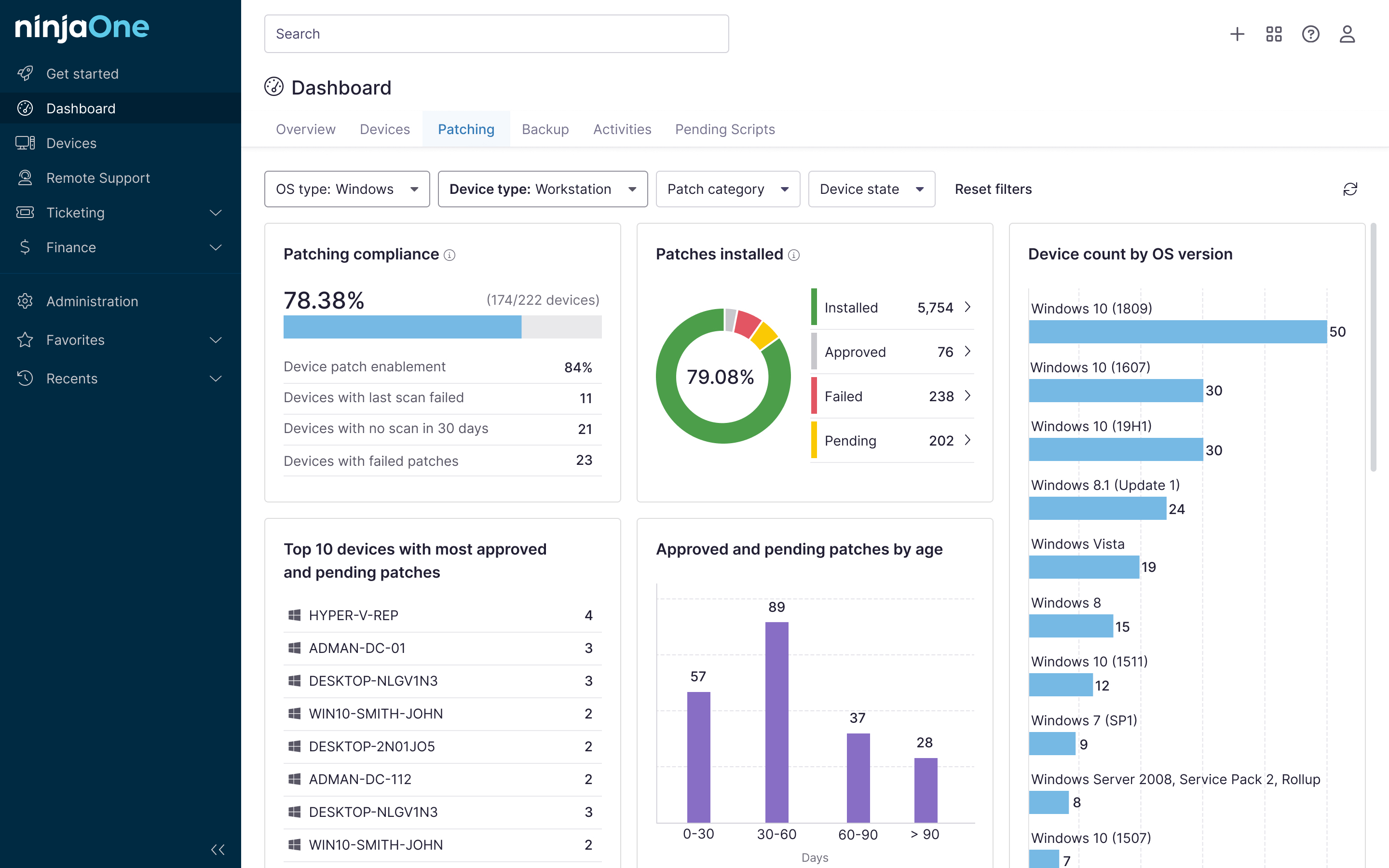
Most backup tools give users a centralized dashboard that displays the statuses of device backups and allows them to restore a single file or an entire system—including applications, configurations, preferences, and personalization—from one interface.
Lastly, the integrity of backups is a key factor that shouldn’t be overlooked. Advanced endpoint protection tools will conduct automatic backup checks to ensure backups are verified for a reliable recovery, validating every backup and providing a notification to IT if there are any issues.
Features of endpoint backup solutions
There are many options out there when it comes to endpoint backup solutions. Your ideal fit will depend on a few factors, including
- budget,
- resource needs, and
- how much freedom you need in configuration.
With that in mind, there are some important features to look for before choosing your organization’s next endpoint backup tool:
Self-service
Many users consider self-service an important part of a backup solution. Because the modern workforce operates from different locations, in multiple time zones, and with a variety of devices it can be difficult to offer responsive IT support around the clock. Even if the effort is made, larger organizations can remove a great deal of strain from their IT teams by incorporating self-service whenever possible. If end users are able to search files, restore backups, and get back to work without further intervention, everyone wins.
Flexibility
Everyone loves flexible technology. Effective protection often hinges on how well the software can be adapted to your unique needs, integrations, and technical specs.
Automation
Process automation is essential to productivity and operational maturity. The more automation can be fit into a solution, the more effective your IT environment will ultimately be — as long as that automation is used correctly and leveraged to its fullest.
Resource optimization
Backups take storage space and bandwidth, regardless of what tool you use. Familiarize yourself with options that offer bandwidth throttling, deduplication, network acceleration, compression, and other ways of minimizing bandwidth usage and storage.
Endpoint backup and recovery solutions
There are many different endpoint backup and recovery solutions available, each with its own set of features and capabilities. Some solutions focus on file-level backups, allowing organizations to protect specific files and folders. Others offer image-level backups, creating a complete copy of the device’s hard drive, including the operating system and all installed programs.
Here are 7 examples of popular endpoint backup and recovery solutions:
- NinjaOne: A cloud-based endpoint backup and disaster recovery solution that allows businesses to backup and protect their endpoints, servers, and applications.
- Carbonite: Offers cloud-based endpoint backup, recovery, and archiving solutions for both businesses and individuals.
- Veeam: Provides image-level backups as well as the ability to restore data and entire systems to a previous point in time.
- CrashPlan: Offers file-level backups and can store these backups in the cloud or on a local server.
- Datto: Offers endpoint backup, disaster recovery, and business continuity solutions for SMBs.
- Asigra: Provides cloud-based endpoint backup and recovery solutions for businesses of all sizes.
- Acronis Backup: Provides file-level and image-level backups, as well as the ability to recover data to a new device in the event of a lost or stolen device.
When choosing an endpoint backup and recovery solution, it’s important to consider the specific needs of your organization, such as
- the types of devices being used,
- the amount of data to be protected, and
- the recovery options that are required.
By choosing a solution that meets your organization’s specific needs, you can ensure that your data is protected and that your systems can be immediately restored. NinjaOne Endpoint Backup enables users to recover data and entire systems to a previous point in time and even features of file- and folder- level backup.
Do I need endpoint backup?
In a word, yes. This is because endpoints have become a key point of concern for all matters of cybersecurity.
In a 2020 State of Endpoint Security Risk report by Ponemon, 68% of IT/security professionals said that the frequency of attacks against endpoints had increased over the past 12 months. In addition, 51% of the respondents considered endpoint attacks to be successful because their endpoint security solutions didn’t accurately detect threats. In many cases, damage from the successful attacks against these endpoints could have been mitigated with endpoint backups, even though the endpoint security solution itself didn’t catch the threat.
Additionally, these mishaps can occur because the nature of endpoint security itself has changed so much in the face of changing threats.
Endpoint protection once meant using signature-based antivirus at each endpoint—a simple solution that nearly everyone could do themselves. Unfortunately, today’s threat actors have developed numerous means for bypassing these traditional antivirus solutions, driving the need for more advanced endpoint security solutions.
Protecting your organization’s endpoints has itself become a layered affair. Along with endpoint backups, you should put other defensive measures into place, such as:
- A means of application whitelisting
- Multi-factor authentication (MFA) wherever possible
- Network access control
- Patch management software to ensure all assets are updated quickly
- Advanced anti-malware software
Even with all these solutions in place, endpoint management is not complete without an endpoint backup solution. Rest assured that an effective and easy-to-use backup and recovery solution will ensure business operations can be resumed with minimal disruption should the worst happen.
The importance of a data protection strategy
Data protection is an essential aspect of any organization’s overall security strategy. With the increasing amount of sensitive information being stored on individual devices, it’s important to have a robust data protection strategy in place to ensure that this information is secure and can be quickly restored in the event of a disaster.
One key component of a data protection strategy is having an effective backup strategy. By regularly backing up data on individual devices, organizations can minimize the risks associated with data loss and quickly restore their systems and data in cases of loss and cyberattacks. This is especially important as more and more employees are working remotely and accessing sensitive company information on their personal devices.
However, endpoint backup and recovery are only one aspect of a comprehensive data protection strategy. Other important components include
- data encryption,
- disaster recovery planning, and
- regular security assessments.
By implementing a combination of these measures, organizations can better protect their sensitive information and ensure that they’re prepared to respond to a variety of potential data loss scenarios.
Recover files or entire systems effortlessly and minimize downtime with NinjaOne’s rapid restore options.
Conclusion
How we work has changed forever, and it has become routine for organizations to have employees and collaborators all over the world. Bring-your-own-device (BYOD) policies provide flexibility, but they are also a compounding security challenge in the rise of remote workforces.
As such, endpoints are now one of the weakest parts of an organization’s network with over 70% of breaches originating from endpoints. That’s why endpoint backup is a key component of any security stack, and choosing the best endpoint backup provider can make all the difference.
NinjaOne is a best-in-class endpoint backup and disaster recovery provider that allows businesses to back up and protect their endpoints, servers, and applications. Learn more about how NinjaOne can help make the difference when it comes to your data protection needs.