
Key Points
- Define the measurable outcomes each management program must produce before you name the program or choose tools.
- Assign one accountable owner to every outcome so management program governance never depends on implied responsibility.
- Set explicit scope boundaries that show where responsibility starts, stops, and hands off between teams.
- Measure success by results such as reduced risk, consistent operations, and visibility, because labels like patch management or compliance name a program without defining success.
- Plan for exceptions, edge cases, and failures up front to close governance gaps before an incident or audit exposes them.
Many organizations think that they have strong management coverage because their programs are neatly labeled. Although labels do provide clarity, they can also lead to governance gaps, ambiguous ownership, and loss of alignment with the meaning of success. This happens when labels are treated as a substitute for accountability, when responsibilities are only implied by terminology.
Keep reading to learn why label-driven management program governance creates false clarity and what it takes to build management structures grounded in explicit outcomes.
Why labels create false clarity
Program labels, such as endpoint management, patch management, vulnerability management, or compliance, provide a reassuring shared name but rarely provide a shared understanding. Without explicit definitions, labels encourage assumptions about scope and ownership that go unchallenged until something breaks.
Here are some reasons labels give a misleading sense of precision:
- Multiple unrelated responsibilities are grouped under a single name.
- Interpretations vary by team, role, or environment.
- Meanings evolve with the environment over time without formal review or agreement.
This leaves open questions hidden behind familiar terminology.
The real cost of label-driven planning
Organizations that anchor IT planning to program names rather than concrete intent pay for it in subtle yet persistent ways. Naming shortcuts turn into operational drag that slows delivery and erodes trust.
Below are some common consequences of planning around labels instead of outcomes:
- Teams believe risks are managed when no one is actually accountable.
- Responsibility boundaries blur, leading to duplicated or missing effort.
- Progress stalls as discussions focus on wording rather than action.
In the end, delivery weakens while roles and definitions remain unsettled.
Responsibility must be defined explicitly
Effective management needs a clear definition of responsibilities, as assumptions or implications can’t deliver good outcomes. Without direct ownership and decision-making authority, even well-intentioned initiatives will drift, which can leave teams unsure of what they are expected to own and defend.
See the core questions effective programs must answer up front:
- Which specific outcomes is the program expected to produce?
- Who is directly accountable for each outcome?
- Where does responsibility start, stop, and hand off to others?
- How should exceptions, edge cases, and failures be addressed?
Remember that labels alone can’t resolve these questions. Instead, focus on creating a governance plan that provides the structure to turn intent into enforceable responsibility.
Scope clarity prevents fragmentation
Unclear boundaries also cause fragmentation, allowing responsibility to drift between teams. So, the scope must be explicitly defined to prevent ownership gaps that remain invisible until exposed by pressure.
Below are common situations that emerge when the scope is unclear:
- Multiple teams assume an outcome belongs to someone else.
- Tools are implemented without agreement on who owns their results.
- Coverage gaps surface only during incidents or audits.
Clear and enforced scope definition can prevent these failures by anchoring responsibility before fragmentation can take hold.
Outcomes over categories
Successful organizations resist organizing management efforts around group tooling or program names. They align teams around measurable results that reflect real operational control and resilience.
Some outcomes these organizations consistently prioritize include:
- Reducing risk in ways that can be demonstrated and measured.
- Maintaining consistent operations across systems.
- Creating visibility that supports accountability.
- Establishing processes that can be repeated and enforced.
While categories may help describe tooling or structure, outcomes are what ultimately define success.
Common governance failure patterns
Governance failures usually follow recognizable patterns. These issues emerge when naming conventions replace deliberate responsibility design, and there’s no mechanism to correct course.
| Failure pattern | Operational impact | Fix |
| Programs are named but lack clear ownership | Accountability gaps emerge, leading to unresolved issues and finger-pointing during failures. | Assign one accountable owner for each outcome. |
| Scope is inferred from labels rather than defined | Coverage gaps remain hidden, as teams assume responsibilities are handled elsewhere until incidents expose the absence of ownership. | Write the scope boundary and the handoff points for each program. |
| Terminology debates replace planning discussions | Execution slows as time and energy are spent arguing definitions instead of aligning on outcomes and actions. | Agree on outcomes and measures first, then settle the names. |
| Tools are adopted without responsibility mapping | Complexity increases, creating overlapping capabilities, inconsistent use, and unclear escalation paths. | Record who owns each tool’s results before rollout. |
Where NinjaOne fits
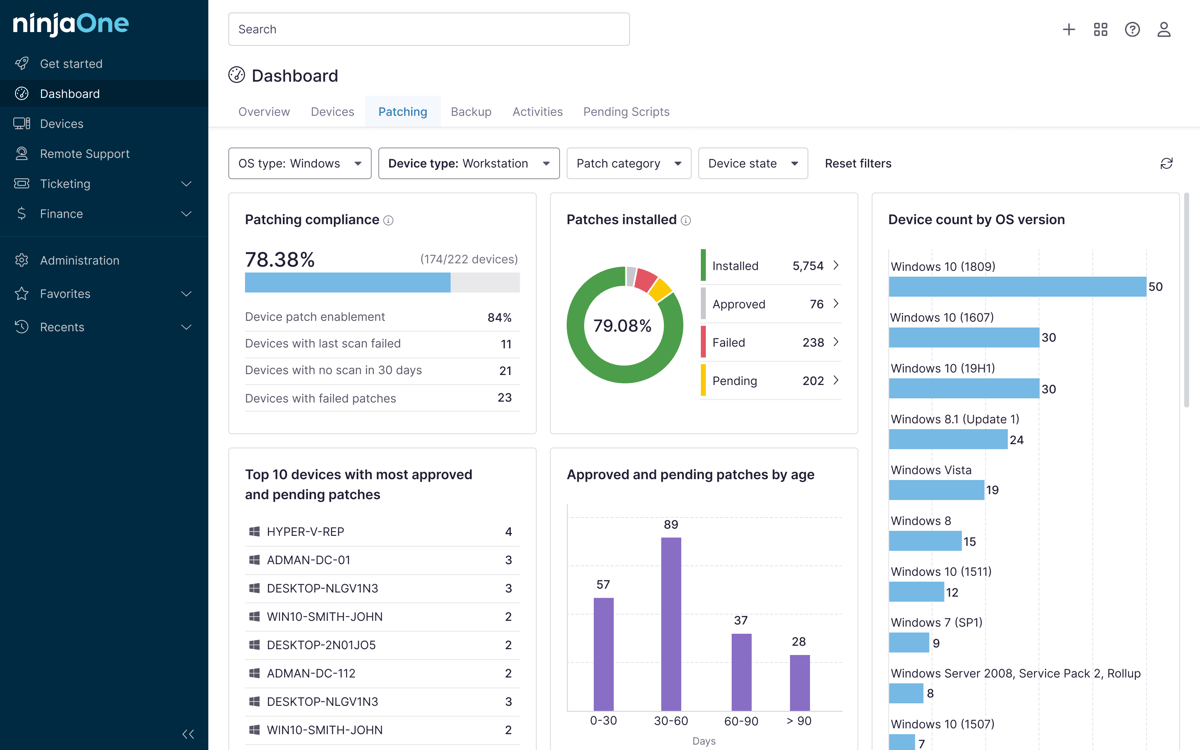
IT teams that run endpoint management, patching, and vulnerability programs on the NinjaOne platform can see device, patch, and CVE data in one console, limit technician access by organization and role, and run policy-based automation on a schedule. Those capabilities give the person who owns an outcome the data to measure it. Accountability still has to be assigned by the organization before any tool can report against it.
Replacing assumption with a clear IT governance strategy
Clear management programs are built on explicit responsibility, not on familiar names. Relying on these labels to imply ownership creates hidden gaps that only surface under stress, which slows response and weakens execution. By defining outcomes first, assigning direct accountability, and then enforcing clear scope boundaries, teams can focus on alignment and intentional action.
Related topics: