Key Points
- Decide which patches matter most, when updates can safely run, and which devices take priority.
- Use peer-to-peer sharing or caching tools to minimize duplicate downloads and optimize network efficiency.
- Schedule updates around each client’s business hours, staggering deployments to prevent bandwidth congestion.
- Monitor network usage as patches roll out and tweak caching settings to maintain steady performance.
- Create standardized templates and shared documentation so every technician follows the same, proven approach across clients.
- Platforms like NinjaOne make it easier to automate patch scheduling, apply consistent policies, and scale your patching strategy efficiently.
Cache-aware patching offers a practical solution by reusing locally stored updates and coordinating when and how patches are distributed. In this guide, you’ll learn how to plan, execute, and maintain cache-aware patch delivery strategies designed for scalable MSP delivery optimization.
5-step strategy for efficient cache-aware patching
Patch caching can dramatically improve delivery efficiency, but it also requires the right setup and awareness of network limitations. To balance performance and reliability, here are some key considerations to look out for:
- Administrative rights for patch management platforms
- Familiarity with Delivery Optimization, WSUS, or proxy caching
- Access to client environment policies and bandwidth constraints
- A patch management platform such as NinjaOne, Intune, or WSUS
Reminder: Requirements may vary based on systems, policies, and business needs.
Potential use cases for patch caching
Patch caching improves the delivery efficiency of single-network and multi-site IT environments with limited WAN capacity. MSPs can also use caching to stage large volumes of data in advance, especially during high-volume patch cycles.
Step 1: Define patch delivery objectives
Start by clarifying your patching objectives and how these goals align with client priorities. For instance, label essential and low-priority feature updates and set deployment schedules according to urgency and business impact.
Action plan: Build a prioritized patching roadmap that aligns with each client’s business needs.
Step 2: Enable and configure cache-aware distribution
Once patch priorities are defined, focus on reducing redundant downloads through cache-aware distribution. Configure proxy caching to ensure that updates are downloaded once and reused efficiently by other devices on the same network.
Action plan: Implement patch caching settings and group policies to centralize downloads, reduce WAN traffic, and speed up update distribution.
Step 3: Schedule patch delivery windows
Next, plan delivery windows that align with each client’s business cycle and operating hours. Consider staggering updates by region, department, or device type to prevent simultaneous bandwidth spikes.
Action plan: Establish a recurring delivery schedule that staggers updates intelligently and coordinates patching with system maintenance windows.
Step 4: Monitor and optimize bandwidth usage
Track bandwidth consumption during each patch cycle to identify spikes or inefficiencies. If certain sites experience delays, adjust caching parameters such as cache size, peer limits, or refresh frequency.
Action plan: Use performance dashboards and bandwidth metrics to continuously refine caching configurations and maintain optimal patch efficiency.
Step 5: Document and standardize across clients
Finally, document your process to ensure consistency across all managed environments. Create a repeatable framework for patch scheduling and maintain templates for delivery policies and approval workflows.
Action plan: Develop standardized documentation and templates that ensure consistent patching practices and compliance across all clients.
Additional considerations and troubleshooting
The following table summarizes key verification steps, troubleshooting guidance, and additional considerations to help MSPs maintain efficiency and reliability across varied client environments.
| Operational Checks | Adaptive Measures |
| Verification |
|
| Troubleshooting |
|
| Additional Considerations |
|
Regular validation and adaptability are key to maintaining optimized patch delivery, especially across multiple managed environments.
NinjaOne solutions for patch distribution
NinjaOne provides MSPs with tools that can streamline patch distribution, reduce bandwidth strain, and maintain consistency across all managed environments.
- Patch Scheduling: Use NinjaOne to define recurring delivery windows.
- Patch Caching Servers: Set up cache servers for patch distribution.
- Standardization: Apply consistent patch policies across client environments.
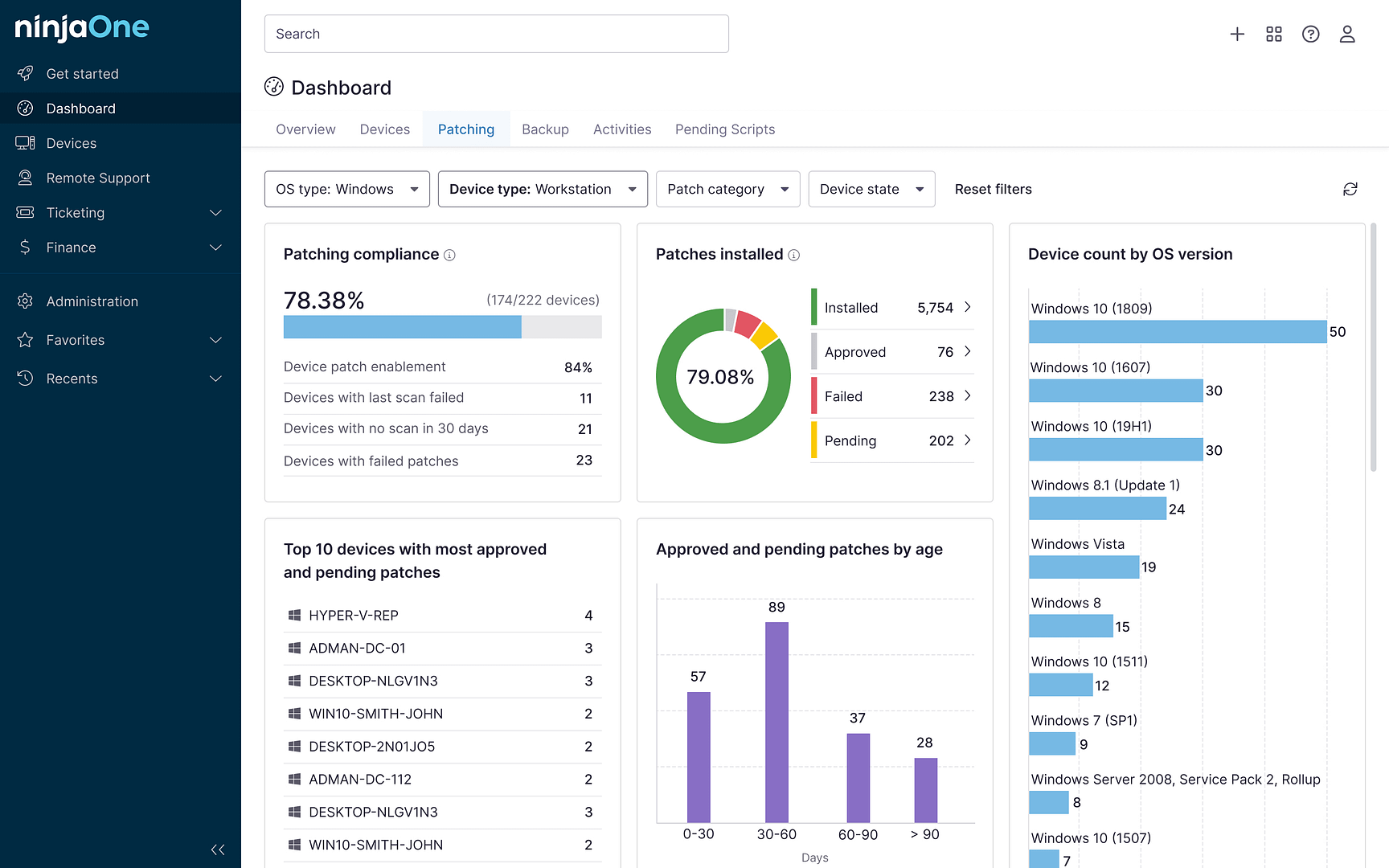
- Monitoring and Reporting: Use dashboards to validate bandwidth savings and patch compliance.
By combining scheduling, caching, and reporting within a single platform, NinjaOne enables MSPs to implement structured, data-driven patch management processes.
Achieving bandwidth-efficient patch management at scale
With the right mix of scheduling, automation, and standardization, MSPs can ensure feature and security updates are delivered efficiently and securely across all managed environments. Then, an RMM platform can be leveraged to enable centralized control, faster response times, and consistent patch delivery performance that scales with business needs.
Related topics:
- Patch Caching: Patch Smarter and Faster
- Patch Management Process: Best Practices
- Patch Management Mistakes and How to Avoid Them
- Patch Management: How to Conduct Audits and Choose the Right Tools
Quick-Start Guide
NinjaOne does support planning patch delivery windows with cache-aware distribution for MSP environments.
Key Findings:
- Peer-to-Peer Patch Caching
NinjaOne has implemented peer-to-peer patch caching capabilities that allow MSPs to:- Reduce bandwidth usage by distributing patches between client sites
- Accelerate patch deployment through local caching
- Minimize downtime by optimizing when patches are downloaded and applied
- Cache-Aware Distribution Features
The platform includes several features specifically designed for MSP environments:- Intelligent caching policies that can be standardized across distributed client environments
- Synchronization capabilities between cache servers and client devices
- Restart window management to coordinate reboots during maintenance windows
- Patch Delivery Window Planning
NinjaOne enables MSPs to:- Schedule scans and updates at specific times that align with business hours
- Coordinate reboots during designated maintenance windows
- Stagger deployments across different client sites to prevent network congestion
- Bandwidth Optimization
The system helps MSPs:- Reduce outbound bandwidth by caching patches at strategic locations
- Distribute patch downloads across multiple sites to prevent bottlenecks
- Implement tiered distribution where larger patches are cached at regional hubs
- Compliance and Reporting
NinjaOne provides dashboards and reporting that show:- Patch compliance status across all managed devices
- Bandwidth savings from caching implementations
- Success rates of patch deployments during scheduled windows
The platform appears well-suited for MSPs needing to manage patch distributions across multiple client sites while maintaining compliance, minimizing downtime, and optimizing network resources.