Key points
- A network assessment report turns raw scan output into a structured summary of device health, vulnerabilities, and configuration risk that both engineers and executives can act on.
- Include device inventory and criticality, vulnerability counts by severity, patch status, authentication exposure, and network topology in your network assessment.
- Use a consistent scoring model like CVSS to prioritize findings by severity and likelihood, not just raw counts.
- Present data to executives with visuals that support specific decisions, instead of raw technical data, by using risk heat maps, trend charts, and asset breakdowns.
- One-time network assessments capture a snapshot, while continuous, automated assessment workflows catch configuration drift before it becomes an outage.
- Do quarterly network assessment reports for smaller networks, monthly to quarterly for mid-sized environments, and continuous scanning for large or regulated environments.
Modern IT environments change constantly: new devices come online, configurations drift, vulnerabilities emerge, and business priorities shift. For MSPs and internal IT leaders, staying ahead requires a clear, structured view of network health that supports risk decisions and remediation planning.
A well-built Network Assessment Report provides that structure. Instead of raw tool output, it delivers an organized, defensible summary of exposure, configuration posture, and improvement priorities. For service providers, it strengthens client conversations and recurring value. For internal IT teams, it connects operational findings to business impact and budget discussions.
Spot configuration drift and network changes before they turn into outages.
What is a network assessment report?
A Network Assessment Report is a structured document that summarizes the health, risks, and configuration status of your IT environment. Think of it as a curated view of devices, vulnerabilities, and changes that matter, not just a dump of scan output.
It consolidates data into clear sections that provide informative and actionable insights to both engineers and business stakeholders.
A well-built Network Assessment Report helps you:
- Translate technical findings into business risk
- Track improvement over time with consistent metrics
- Prioritize remediation based on impact and likelihood
When the scope, data sources, and format stay consistent across cycles, your report becomes a management tool, not just an audit artifact.
Core components of a network assessment report
Your report should lead with data that supports decisions, then show how you gathered it. The goal is a repeatable package that leadership can trust and engineers can act on.
Key metrics and data points
Strong Network Assessment Reports start with the right data. Your report should provide both engineers and leadership with a clear snapshot of network health, including device inventory and criticality, vulnerability counts by severity, patch status, authentication exposure, and an accurate view of network topology.
This data typically comes from systems you already rely on: RMM platforms for asset inventory and uptime, vulnerability scanners for severity scoring, configuration management tools for topology and interface states, and centralized logs for change validation. When these sources are aligned, your report reflects what’s actually happening in the environment, not just what a single tool sees.
To keep the report credible, schedule scans during low-impact windows and validate results against configuration logs. Catching configuration drift early can prevent minor misconfigurations from turning into incidents between assessment cycles.
Network assessment report best practices
Staying consistent with your Network Assessment Report process is key to making the most out of it. Your Network Assessment Report best practices should focus on building a repeatable process you can apply across clients, departments, and assessment cycles without reinventing it each time.
At a minimum, it should include:
- A standardized template that defines scope, methodology, assumptions, and findings.
- Clearly defined boundaries before scanning so everyone understands what’s in and out of scope.
- Integrated data sources (RMM, monitoring, vulnerability tools) to reduce manual copy-paste work.
- Documented exclusions and limitations to avoid audit disputes later.
- Named owners and timelines for high-priority findings to ensure remediation actually happens.
This structure protects you during audits and keeps stakeholder expectations aligned. When you automate data collection and continuously refine your template, reporting becomes faster, more accurate, and much easier to scale as environments grow.
Turning audit data into executive-ready summaries
Engineers want detail. Executives want clarity and direction. A strong Network Assessment Report connects the two by translating technical findings into business impact without oversimplifying the risk.
Translating assessment results into business risk
Raw findings don’t drive action; risk statements do. Instead of listing vulnerabilities, explain what they mean in operational and financial terms. Frame each issue around potential downtime, security exposure, compliance impact, and cost.
Start with severity and context. A critical remote code execution vulnerability on an internet-facing server isn’t just a “high score,” it’s potential outage time, data loss, and reputational damage. A medium-severity issue might align with your next scheduled patch cycle. A low-risk misconfiguration, such as a single misconfigured firewall rule, may not appear urgent, but applying that rule across every device is a pattern an attacker can exploit at scale.
Then weigh likelihood against impact. An exposed RDP service presents both high probability and high consequence. An outdated driver on an isolated device may present a low probability and limited impact.
Using a consistent scoring model, such as CVSS from NIST’s National Vulnerability Database, can keep your prioritization objective and defensible.
Choosing metrics and visualizations for C-suite and tech teams
Not everyone needs the same level of detail. Executives typically want trend lines and risk concentration, while engineers need asset-level context and change history.
A few visuals go a long way:
- Risk heat maps to show where exposure is concentrated.
- Trend charts tracking open findings, remediation progress, and recurring issues.
- Asset breakdowns by OS, criticality, or ownership to support accountability.
Before including any chart, ask one question: What decision will this help someone make? If it doesn’t clearly support approval, prioritization, or remediation planning, leave it out. In executive reporting, clarity always wins over volume.
Establishing an automated continuous assessment workflow
Annual or one-off assessments provide only a snapshot. Your network, however, changes every day. An automated continuous assessment workflow keeps your visibility up to date and reduces the manual effort required to prepare each new Network Assessment Report.
Why continuous assessment matters
Configuration drift accumulates when devices change outside standard workflows, creating outages and security gaps that static reports won’t catch.
Continuous checks help you spot those gaps quickly and shorten exposure windows. Faster detection also speeds up remediation, ensuring IT teams meet compliance timelines and SLA commitments.
Over time, you’ll build a dependable rhythm that teams and stakeholders can plan against.
Building a repeatable assessment cycle
To make your assessment cycle repeatable, you first need to establish a baseline, then monitor for change and reassess on a defined schedule. Document where you are, track what shifts, and validate again before risk accumulates.
Assessment frequency should match the environment:
- Smaller networks may combine quarterly full assessments with light monitoring between cycles.
- Mid-sized environments often benefit from monthly vulnerability scans and quarterly configuration reviews.
- Large or highly regulated environments may require continuous scanning with weekly change analysis.
Formal continuous monitoring frameworks such as NIST SP 800-137 provide a useful structure for building mature programs. The key here is automation: trigger alerts when new vulnerabilities appear, automatically push findings into tickets, and generate scheduled reports without rebuilding them from scratch.
Common mistakes to avoid with network assessment reports
A well-built Network Assessment Report has little value if it doesn’t drive action. Avoid treating reports as compliance checkboxes. Prioritize findings instead of dumping raw data. Keep reports updated as the environment evolves. Most importantly, tie each critical finding to a named owner and a realistic remediation timeline.
A strong Network Assessment Report isn’t just about scanning, it’s about creating a repeatable, risk-focused process. Standardize your template. Follow Network Assessment Report best practices. Frame results in business terms that executives understand and engineers can act on.
Turn device inventory into one live view your team can act on.
Simplify your network assessment with NinjaOne
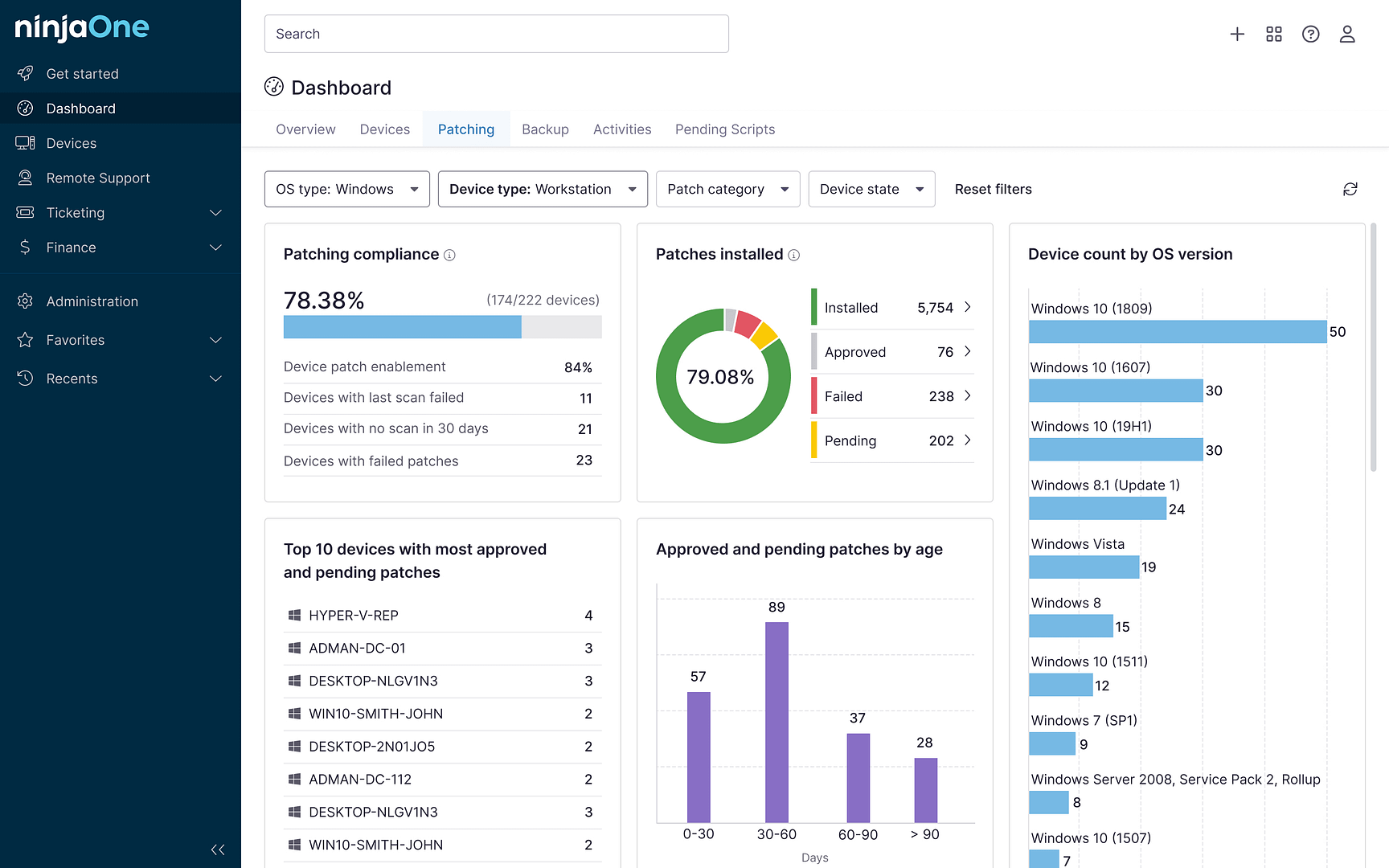
NinjaOne helps MSPs and IT leaders automate discovery, monitoring, patching, and ticketing from a single platform. Instead of stitching together scan results and spreadsheets, you can centralize asset data, trigger remediation workflows automatically, and generate recurring network assessment reports with less manual effort. Try NinjaOne for free today!
Quick-Start Guide
Network Assessment Report in NinjaOne
Network Management (NMS)
– Network discovery and monitoring via SNMP, NetFlow, and sFlow
– Device role assignment and network device management
– Network adapter traffic monitoring and status tracking
Assessment & Reporting Features
– Real-Time Software Scanning Assessment for vulnerability management
– Summary Reports with customizable data sections
– Backup Summary Reports (for SaaS Backup)
– Device health dashboards with network performance metrics
– Custom reporting capabilities
Network Monitoring Conditions
– Network Adapter Traffic monitoring
– Network Adapter Status monitoring
– Ping latency and packet loss monitoring
– Port status monitoring
Build your report: Use NinjaOne’s built-in reporting capabilities to generate a comprehensive network assessment report that consolidates real-time metrics, vulnerability, and network data. Remove manual effort from compiling data and automating continuous network assessments.