Key Points
How to Track Tool Usage and Justify Costs for Business Stakeholders
- Build a Centralized Tool Inventory: Compile tool usage data such as licenses, users, costs, and renewal dates to identify redundant or underused software.
- Monitor Usage: Track logins, sessions, automation, and activity reports through vendor dashboards, RMM/PSA integrations, or APIs.
- Standardize Reporting for Clarity: Use consistent templates with visuals, cost-vs-value tables, and color-coded indicators to simplify comparisons.
- Automate Tracking and Reporting: Use automation and tools to reduce manual work, compile insights, and ensure that IT tool justification reports are always available.
Managed service providers (MSPs) and IT departments may struggle to show the business value of their tool stack. Non-finance stakeholders like operations managers and small and medium-sized business (SMB) executives care about outcomes. With this in mind, the lack of transparent reporting will make it hard for IT teams to link their tools to business outcomes and positive impact.
MSPs can link their IT tool costs to efficiency by systematically tracking tool usage and its impact on business outcomes. This makes it easier to demonstrate return on investment (ROI), prevent budget cuts, and build trust by proving that tools are actively monitored, used, and evaluated.
This guide provides an easy-to-follow, step-by-step process for tracking tool and Software as a Service (SaaS) usage and presenting the data to non-finance stakeholders.
Steps to track tool usage and justify costs for non-finance stakeholders
Tracking tool usage is effective if you create a structured process. You can follow a set of steps to connect tool investments to outcomes that matter to business stakeholders.
📌 Prerequisites:
- You will need a centralized tool inventory that includes licenses, users, renewal dates, and the cost per seat.
- This will require access to usage tracking methods such as vendor dashboards, remote monitoring and management (RMM), professional services automation (PSA) software logs, and other integrations.
- In advance, you need to set defined business impact categories linked to tool usage, including efficiency, risk reduction, and compliance.
- You’ll need an agreed reporting schedule, whether monthly or tied to quarterly business reviews (QBRs).
Step 1: Build a complete tool inventory
A complete tool inventory is necessary for an IT cost analysis and the foundation for tracking expenses and usage. You need to consolidate this data to gain visibility into what is in use, how much it costs, and when renewals are due.
📌 Use Cases:
- This helps you identify redundant or overlapping tools that increase costs.
- It provides an accessible document containing information about license counts, renewals, and per-seat expenses.
📌 Prerequisites:
- You will need access to vendor invoices, contracts, and subscription portals.
- A documentation platform (like NinjaOne Docs) or spreadsheet (like Excel and Google Sheets) to record and update the inventory.
Information to include in the tool inventory:
- Tool name and vendor
- Cost per license or subscription
- Number of active users or endpoints
- Renewal and contract terms
Deliverable: You will have a master tool register with usage and cost visibility.
Step 2: Track actual usage across tools
Tracking tool usage shows which software is actively contributing positively to operations and which is idle and unnecessary. It can also give you insight into adoption and value.
📌 Use Cases:
- This step highlights underused tools that can be consolidated or eliminated.
- It provides evidence of tool adoption to support renewals or justify upgrades.
📌 Prerequisites:
- This step requires access to vendor dashboards or admin consoles for logging in and viewing activity reports.
- RMM/PSA integrations or application programming interface (API) connections to capture automation and script usage.
Here’s how to measure tool usage:
- Pull reports from vendor dashboards. Include data like logins, sessions, and task counts.
- Use RMM/PSA integrations to track automation and script activity.
- Identify underutilized or dormant licenses, particularly those that your team does not use frequently.
Deliverable: Usage dashboards that highlight active vs inactive adoption.
Step 3: Translate tool metrics into business outcomes
It’s important to note that raw tool usage numbers do not resonate with non-finance stakeholders. You will need to convert them into clear business outcomes to make them resonate.
📌 Use Cases:
- This step helps justify IT tool costs by showing the impact on operations and compliance.
- You’ll demonstrate efficiency gains and risk reduction in plain language to stakeholders.
📌 Prerequisites:
- You’ll need accurate usage and activity data from dashboards, RMM/PSA tools, or APIs.
- You’ll need to agree on which business outcomes matter the most, like time savings, reduced risk, or compliance improvements.
Here’s how you can frame data for stakeholders:
- Efficiency gains: “This tool automates patching for 2,000 devices, saving ~100 technician hours monthly.”
- Risk Reduction: “The vulnerability scanner flagged and closed 250 exploitable risks last quarter.”
- Compliance support: “Audit evidence packs now take hours instead of weeks with this tool.”
Deliverable: Outcome-based reporting slides designed for non-finance audiences.
Step 4: Standardize reporting for non-finance stakeholders
Reports resonate best when they follow a consistent, easy-to-read format. Standardizing how you present IT tool cost analysis will ensure stakeholders will see a clear story every time.
📌 Use Cases:
- This step builds trust with stakeholders by presenting data in a familiar, repeatable way.
- It makes it easier to compare tool performance across quarters and track improvements over time.
📌 Prerequisite:
- You will need a template or reporting tool that supports visuals and summary tables.
Here are some tips to help you standardize and further streamline your tool usage reports
- Create cost vs. value summary tables to show how much is being spent in relation to the hours saved, risks mitigated, or compliance supported.
- Add visuals that show adoption rates and the time saved.
- Use “traffic light” color indicators for tools for visual clarity.
- Green = high usage/value
- Red = review for removal
Deliverable: You’ll have an easy-to-understand quarterly tool justification report template designed for non-finance stakeholders.
Step 5: Feed tool data into governance and QBRs
Once you have the tool usage data and reports ready, integrate them into IT governance and QBRs. This keeps their value visible and ensures that low-performing tools are addressed.
📌 Use Cases:
- This step reinforces accountability by showing that tool performance is actively monitored.
- It demonstrates to clients how tool adoption reduces downtime, risk, or costs during QBRs.
📌 Prerequisite:
- You will need the IT tool usage justification report completed from steps 1-4.
Here’s how you can integrate tool data into governance and QBRs:
- Review tool usage in regular team or operations meetings.
- Present findings in QBRs to show clients how MSP efficiency translates into business value.
- During QBRs and team meetings, identify low-value and unused tools for elimination or consolidation.
⚠️ Things to look out for
| Risks | Potential Consequences | Reversals |
| Incomplete tool inventory | Redundant or unused tools can remain hidden, inflating costs. | Maintain a centralized register and update it regularly. |
| Emphasis on technical metrics | Non-financial stakeholders may lose interest or fail to recognize the value. | Translate metrics into outcomes, like time saved, risks reduced, or compliance supported. |
| Ignoring low usage tools | Costs could stay high while ROI is unclear. | Flag underused licenses and review them for consolidation or retirement. |
Best practices for tracking tool usage and justifying costs
| Practice | Value delivered |
| Build tool inventory | Provides cost and renewal visibility |
| Track actual usage | Prevents waste and tool sprawl |
| Translate metrics to outcomes | Makes cost justification business-relevant |
| Standardize reports | Ensures consistency for stakeholders |
| Tie to governance/QBRs | Reinforces value and drives continuous review |
Automation touchpoint ideas for tracking tool usage and cost justification
Automating tool usage reporting reduces manual work and ensures stakeholders will always see up-to-date data before key meetings. Here are some automation examples to consider performing:
- Pull license and usage data from vendor dashboards via your API software.
- Consolidate results into a central sheet or BI dashboard.
- Auto-generate “value summary” slides that show cost per use or hours saved.
- Distribute reports to stakeholders ahead of QBRs or governance reviews.
NinjaOne integration ideas for tracking SaaS usage and justifying tool costs
NinjaOne can help MSPs transform raw tool usage data into actionable business insights. It reduces manual tracking and makes IT tool cost justification easier for non-finance stakeholders.
Track automation and script execution
You can use NinjaOne to capture automation and script execution metrics as usage data points. This will highlight adoption and show where tools deliver efficiency.
Consolidate device and endpoint coverage
NinjaOne can consolidate endpoint and device coverage for licensed tools, giving you a clearer picture of which licenses are being utilized and which ones are idle.
Store reports and inventories in NinjaOne Documentation
You can store your tool inventory, license data, and justification reports directly in NinjaOne Documentation. This will keep SaaS usage and cost documentation centralized and relatively easy to update.
Generate QBR dashboards
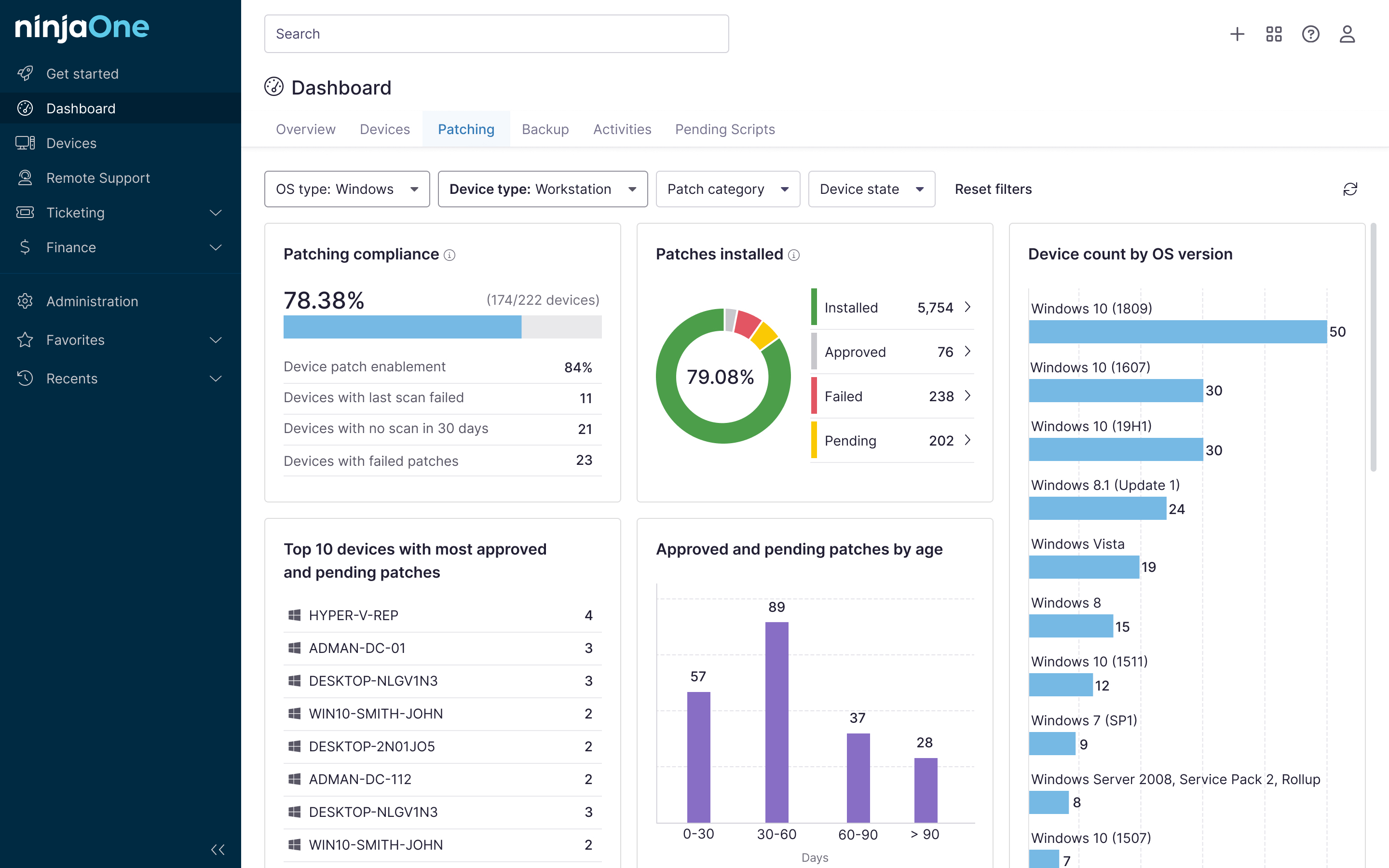
NinjaOne’s Patch Management and Dashboards features demonstrate how tools can reduce tickets, downtime, endpoint health issues, and risks. Embedding these in QBRs will make the tool value more visible.
Support license and renewal tracking
NinjaOne provides tracking and reporting features to make it easier to monitor contract dates and ensure SaaS usage is reviewed on schedule.
Turn IT tool usage into visible business value
Tracking tool usage and framing cost justification in plain terms will help non-finance stakeholders look at IT expenses as drivers of efficiency, security, and client outcomes. When tool costs are tied to measurable results, MSPs can justify renewals, reduce waste, and strengthen their role as business partners.
Related topics: