Key Points
- Modern endpoint management is built for hybrid and cloud environments. It uses cloud-based platforms to support distributed infrastructure from anywhere.
- Automated patch management, policy enforcement, and remediation help you stay ahead of issues instead of constantly chasing them.
- Modern endpoint management connects identity-based controls and risk-based patching to strengthen your overall cybersecurity posture.
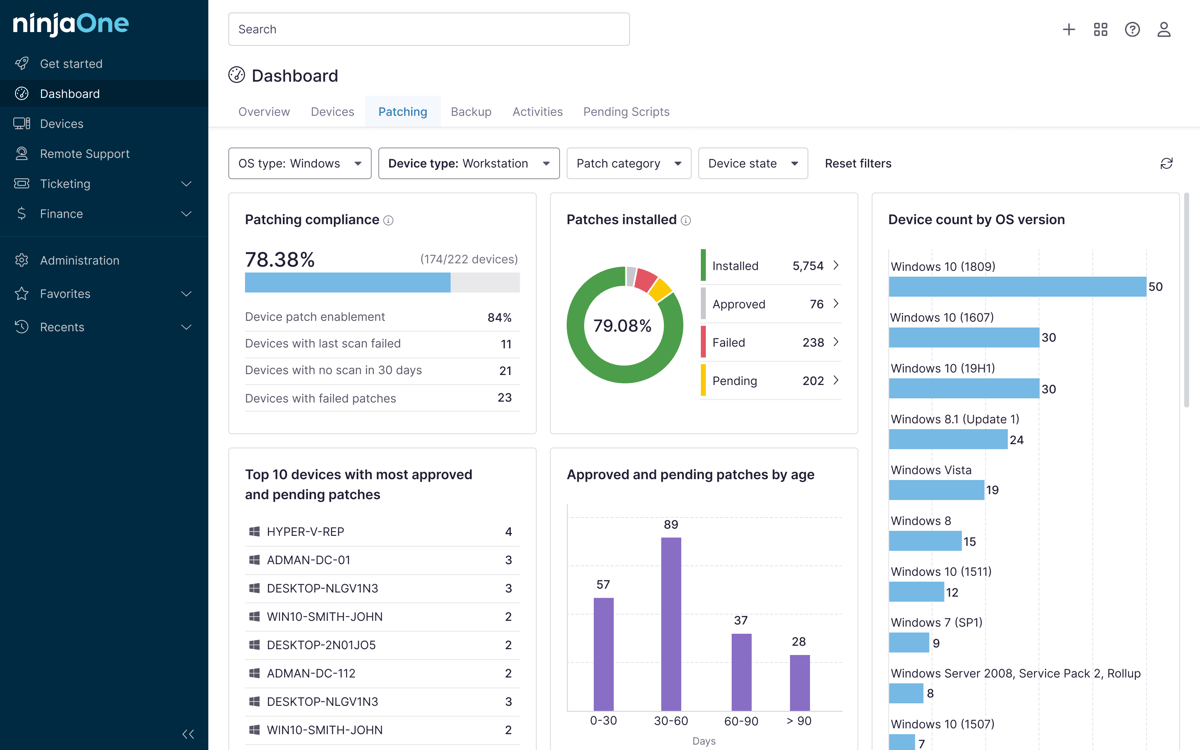
- A centralized dashboard gives you real-time insights into device health, patch status, and security posture, regardless of where a device is located.
- A modern endpoint management strategy reduces reliance on on-premise infrastructure, streamlines device onboarding, and scales operations without adding complexity.
Modernizing endpoint management for hybrid and cloud environments typically involves aligning your endpoint management strategy with cloud-first architecture, automating wherever you can, and integrating your security and service workflows directly into device management instead of layering it afterward.
In this guide, we’ll show you how you can modernize your endpoint management strategy and help you scale with confidence.
From legacy control to modern management: Understanding the difference between traditional and modern models
Traditional endpoint management was developed at a time when people only worked within the office. Laptops and desktops all lived inside a corporate network, where IT administrators had direct control over everything.
Back then, managing endpoints meant maintaining physical servers and pushing updates during scheduled maintenance cycles. Administrators reacted to issues as they occurred, and they juggled multiple IT and security tools that rarely talked to each other.
The model was largely reactive; some may say it was flawed, but it worked for everyone. Things didn’t really change until hybrid work environments became the norm.
Modern endpoint management reflects this new reality. Unlike traditional endpoint management strategies that relied on network boundaries, it uses cloud-based platforms that allow you to track endpoints from anywhere in the world.
This model also doesn’t wait for problems to appear. It continuously monitors device health and automatically enforces policies. Even better, it integrates security workflows directly into the management process instead of layering them on like an afterthought.
In short, this shift from traditional to modern endpoint management extends control beyond the walls of your organization and into wherever your devices and users are.
How to modernize your endpoint management strategy
In order to successfully modernize your endpoint management strategy, it’s crucial that you know what it looks like in practice.
At the most basic level, modern or hybrid endpoint management strategies are:
Founded on automation
Since most environments today constantly generate configuration changes and security alerts, modern endpoint management strategies should be automated by default.
Your workflow should be able to automatically:
- Deploy updates based on defined policies
- Enforce configuration baselines to maintain compliance
- Trigger remediation actions when a device drifts away from the defined baseline
- Prioritize patching based on risk thresholds
When your endpoint management strategy is centered around automation, it shifts the approach from reactive to proactive. Your team won’t have to chase after tickets or manually push updates when they have a reliable system running in the background.
Integrates security right from the start
Endpoints are your first line of defense against threat actors, which is why it’s important that your endpoint management strategy is aligned with your security operations.
Your access controls should be tied to user identity. Patch management should have a structured, risk-based framework to follow. Compliance reporting should be automated and not something you prepare at the last minute.
Endpoint detection and response (EDR) tools should work seamlessly with your management platform. This way, you can identify and contain threats before they escalate.
Provides visibility across all devices
Most of today’s environments are distributed, with some endpoints connecting from homes, airports, and other places. Maintaining visibility on all of them can be challenging without a centralized dashboard.
Your endpoint management strategy should give you a unified view of your entire device fleet, regardless of where they’re connecting. It should give you real-time insight into each endpoint’s health, patch status, security postures, and overall performance from a single dashboard.
Having centralized visibility on all your devices reduces blind spots and makes reporting easier. You can easily generate compliance reports without having to manually pull data from all your systems.
Scalable and efficient
Finally, modern endpoint management is scalable and efficient. Your management framework should be able to adapt to your organization as it grows without adding unnecessary complexity to your existing workflows.
It should help you:
- Reduce reliance on on-premise infrastructure
- Streamline device onboarding and provisioning
- Minimize manual administrative work wherever possible
Remember, the goal of modernizing your endpoint management strategy is to build a resilient system that will grow with you, no matter how distributed your infrastructure becomes.
Common misconceptions about endpoint management modernization
Here are a few common misconceptions that people have about endpoint management modernization:
Modernization requires replacing all your tools
It’s easy to think that transitioning to a modern endpoint management model means getting rid of all the tools that you’re currently using, but that’s rarely the case.
The most sustainable path to modernization is incremental integration and automation. It’s best that you start by evaluating what’s already working, then slowly layer in new capabilities.
Cloud management eliminates the need for governance
Another common assumption that people make when they modernize their endpoint management strategy is that once you move everything to the cloud, you don’t have to monitor it anymore.
In reality, governance becomes even more important the more distributed your environment becomes.
Monitoring alone equals modernization
Monitoring is important in modernizing endpoint management strategies, but it’s only one part of the equation.
You still need to automate manual tasks and align endpoint activity with defined policies. Visibility without action simply means that your management framework can tell you where the problems are, but it can’t help you solve them.
Quick-Start Guide
NinjaOne Can Help Modernize Endpoint Management for Hybrid and Cloud Environments, NinjaOne provides several key capabilities for managing endpoints across hybrid and cloud environments:
- Remote Monitoring & Management (RMM)
- Supports agent-based management for Windows, Mac, and Linux devices
- Enables remote monitoring and management across distributed environments
- Provides centralized control regardless of device location
- Mobile Device Management (MDM)
- Android MDM with zero-touch enrollment for automated device provisioning
- Streamlines enrollment of mobile devices in cloud environments
- Supports automatic device registration and configuration
- Asset Lifecycle Management
NinjaOne’s ITAM (IT Asset Management) features enable you to:
- Track devices throughout their entire lifecycle—from purchase to decommissioning
- Manage devices before they’re actively managed (provisioning state)
- Automatically convert devices between managed and unmanaged states
- Import devices via CSV or API for bulk onboarding
- Maintain asset information across hybrid environments
- Software & Patch Management
- Patch Management with support for 6,000+ software products via WinGet integration
- Automated software updates across Windows 10+ endpoints
- Centralized policy-based patch deployment
- Support for third-party application management
Transitioning to modern endpoint management
Now that hybrid and cloud environments are the norm, modern endpoint management has become a necessity. Relying on legacy, reactive management frameworks simply isn’t enough in a world where users are mobile and threats are constantly evolving.
That said, you don’t have to rush modernization. By slowly integrating automation, improving visibility across all your endpoints, and aligning your management workflows with your security controls, you’ll be able to build a modern endpoint framework at a sustainable pace.
The goal here is alignment. You want your endpoint management strategy to evolve alongside your organization at a pace your team and infrastructure can sustain. This way, it can help you grow your operations instead of holding them back.
The NinjaOne Endpoint Management platform is built for this transition. It provides IT teams with a single, cloud-native console for monitoring devices, automating patching and configuration, and enforcing security policies across Windows, Mac, and Linux endpoints, no matter where those devices connect from.
Related topics: