Key Points
- Find Windows 11 ISO Version Pre-Installation: Windows 11 ISO/USB installers embed version, build, edition, and architecture metadata before running setup.
- Inspect ISO/USB Contents Safely: Mount a Windows 11 ISO or open a bootable USB drive in File Explorer to view installation files without modifying the media.
- Use Built-in Windows Tools for Accuracy: Command-line tools (DISM, PowerShell) can reliably extract Windows 11 build and version data from install.wim or install.esd.
- Confirm Edition and Architecture Early: Check whether the media contains Home, Pro, Enterprise, x64, or ARM64 to prevent deployment mismatches.
- Verify Installer Details Ahead: Validate Windows 11 installation media in advance to reduce errors during upgrades, repairs, and enterprise rollouts.
In this guide, we list the steps on how to find the Windows 11 ISO version in your computer before installing or deploying it. Learning how to do this ahead of time can save you from possible compatibility issues or feature mismatches.
Keep in mind that Windows 11 installation media includes built-in metadata that identifies the exact build, version, edition, and architecture; all of which are not always visible at a glance.
📌 Prerequisites
Before proceeding, make sure you have:
- Windows 11 PC with administrative access
- ISO file available locally, or USB installation media connected
- Ability to mount ISO files in File Explorer
- Optional familiarity with DISM or PowerShell for advanced inspection
- Sufficient permissions to read installation media directories
How to check Windows 11 version
Method 1: Mount the ISO and inspect metadata
Mounting the ISO lets you browse its contents like a physical DVD. While this doesn’t show the full build number on its own, it helps you locate the files needed for deeper inspection.
Steps:
- Right-click the ISO file and select Mount.
- Open the mounted drive in File Explorer.
- Navigate to the Sources folder.
- Locate install.wim or install.esd.
- Note the file size and modification date for reference.
- Continue to Method 2 or 3 to extract exact build details.
Method 2: Use DISM to read Windows image information
DISM is the most reliable method for identifying the exact Windows 11 version stored on installation media. It reads the image metadata directly, without modifying the file.
Steps:
- Open Command Prompt as administrator.
- Run: dism /Get-WimInfo /WimFile:D:\sources\install.wim /index:1
- Review fields such as Version, Architecture, and Product Name.
- If the file is install.esd, replace /WimFile with /ESDFile.
- Repeat with higher index numbers to view other editions in the image.
Method 3: Use PowerShell to inspect ISO or USB versions
PowerShell provides similar results to DISM, with a slightly cleaner output format. This method is especially useful if you’re already working in scripts or automation workflows.
Steps:
- Open PowerShell as administrator.
- Run: Get-WindowsImage -ImagePath “D:\sources\install.wim”
- Review the listed build, edition, and architecture details.
- Use the correct drive letter for mounted ISOs or USB media.
- Record the version information for documentation or deployment use.
Method 4: Check version information on USB installation media
Bootable USB drives store the same image files as the ISO they were created from. You can inspect them using the same tools without booting from the device.
Steps:
- Connect the USB installation drive.
- Open File Explorer.
- Navigate to Sources.
- Confirm install.wim or install.esd is present.
- Run DISM or PowerShell commands using the USB drive path.
- Compare the build number with your expected release version.
Method 5: Validate accuracy before deployment
Before using the installation media, it’s important to confirm it matches your requirements. This step helps avoid failed installs or unexpected feature limitations.
Steps:
- Compare the build number against your deployment baseline.
- Confirm the edition (Home, Pro, Enterprise).
- Verify the architecture (x64 or ARM64).
- Record version details for troubleshooting.
- Replace outdated media if the build is no longer supported.
⚠️ Things to Look Out For
Windows 11 ISOs often contain multiple editions in a single file, so the first result you see may not be the edition you intend to deploy. Always double-check the index number to ensure it matches the correct version, such as Pro or Enterprise.
Some installation media uses install.esd instead of install.wim, which can limit how much detail certain tools display. While DISM and PowerShell can still read ESD files, converting them to WIM may provide clearer results if you run into issues.
Mounted ISOs and USB drives rely on drive letters, which can change between systems. If a command fails, confirm that you’re referencing the correct drive path before assuming the media is faulty.
Finally, keep in mind that Windows Update does not change ISO build information. If you need a newer Windows 11 build, you must download updated installation media instead of relying on an older ISO. We recommend checking our guide, How to Upgrade from Windows 10 to 11, for more information.
Troubleshooting common issues
Issue | What is happening | How to fix it |
| DISM can’t read the WIM file | DISM can’t access the image file, or the path is incorrect. | Double-check the drive letter and file path, and make sure Command Prompt is running as administrator. |
| install.esd not supported by some tools | Some inspection tools work better with WIM files than ESD. | Use DISM to convert the ESD file to WIM if deeper analysis is required. |
| ISO won’t mount in File Explorer | The ISO file may be corrupted or incomplete. | Verify the file integrity or re-download the ISO from a trusted source. |
| Multiple editions are listed | The ISO contains several Windows editions in one image. | Use the index number that matches the edition you plan to install (for example, Pro or Enterprise). |
| Version information looks unclear or inconsistent | Different tools may display details differently. | Cross-check the results using both DISM and PowerShell for confirmation. |
Quick-Start Guide
NinjaOne can help manage and deploy Windows 11 installations, including handling ISO files and USB drives. NinjaOne’s software patching and deployment tools allow you to:
1. Deploying Windows 11 ISOs
- Policy-Based Deployment: You can create policies to deploy Windows 11 ISOs to target devices. This includes setting conditions, schedules, and approval workflows.
- Automation: Use NinjaOne’s automation tools to script the extraction, mounting, or installation of ISOs. For example, you could write a script to mount the ISO, verify its contents, and trigger an installation.
- Software Library: Add the Windows 11 ISO to NinjaOne’s software library and assign it to policies for automated deployment.
2. Managing USB Drives
- USB-Based Installation: NinjaOne can deploy software and scripts to USB drives. For instance, you can use it to copy installation files to a USB drive, format it, or even create a bootable USB.
- Automation Scripts: Write scripts to automate tasks like formatting USB drives, copying files, or validating ISO integrity before deployment.
- Remote Execution: Execute scripts remotely on devices to prepare USB drives for OS installation.
3. Version and Build Verification
While NinjaOne doesn’t directly extract version details from ISOs, you can integrate external tools:
- DISM or PowerShell: Use scripts to run DISM or PowerShell commands that extract version info from
install.wimorinstall.esdfiles within the ISO. - Custom Fields: Store extracted version details in NinjaOne’s custom fields for tracking and reporting.
4. Patch Management
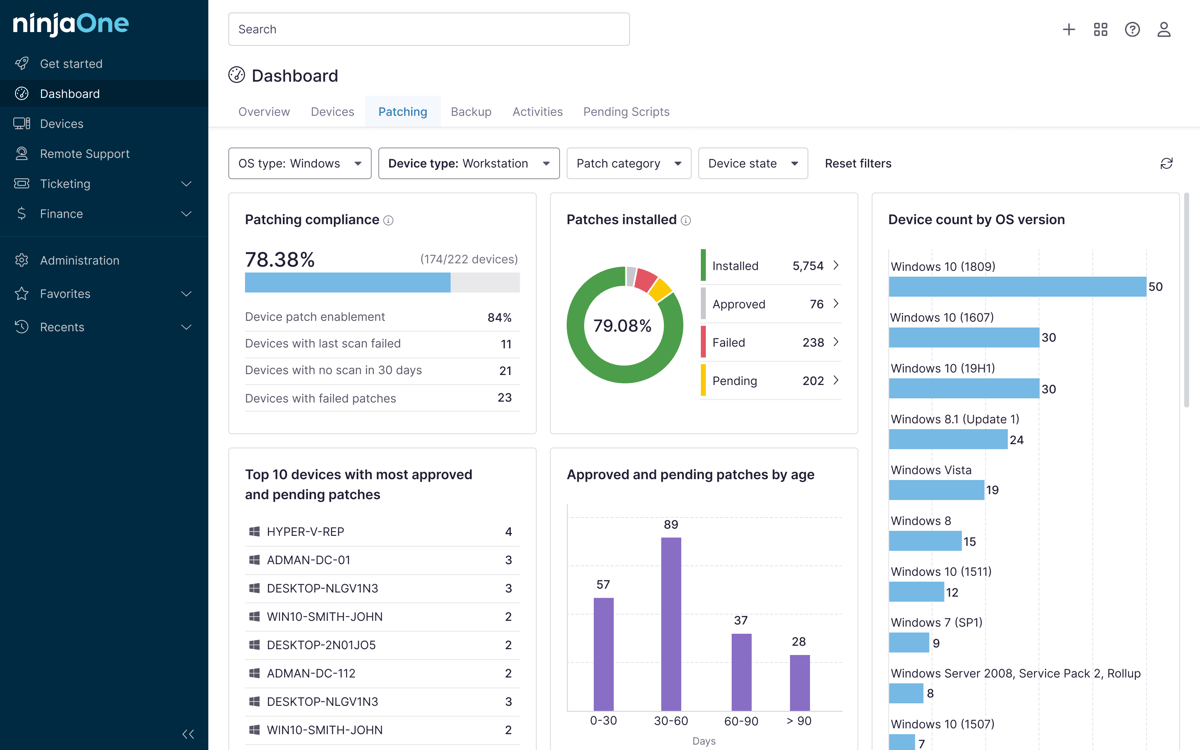
- Windows Update Integration: NinjaOne’s patch management can approve and deploy Windows 11 updates, ensuring devices run the latest build after installation.
- Approval Workflows: Use advanced approval settings to control which builds or patches are deployed.
In summary, NinjaOne provides the infrastructure to deploy Windows 11 ISOs and manage USB installations at scale, while integrating with external tools for version verification and patch management.
Determine the build, version, and edition of your Windows 11 ISO
Knowing how to find the build and version of a Windows 11 installation ISO or USB drive is essential for reliable deployments and upgrades. By mounting the media, inspecting WIM or ESD files, and validating architecture and edition details, you can confidently use the correct installer every time. These methods work consistently across personal systems and managed environments.
Related topics: