
Key Points
- MG cables are malicious hardware implants disguised as standard USB accessories that can seize device control by mimicking a trusted keyboard.
- MG cable attacks often evade traditional security measures because malicious instructions run directly from the cable’s internal chip, without saving files to the host.
- Attackers use “baiting” tactics in high-traffic areas (leaving cables in conference rooms or giving away as swag) to infiltrate secure networks.
- Automated RMM scripts and Group Policy restrictions block unauthorized USB device classes and storage before they can execute harmful commands.
- Physical USB data blockers for charging at public kiosks provide a hardware-level defense by physically disconnecting the data pins required for an attack to succeed.
- A Zero Trust hardware strategy, which treats unknown or “found” cables as compromised by default, is the most effective way to prevent physical-layer breaches.
Plugging in a charger seems harmless, but an O.MG cable can secretly hijack your device by mimicking a trusted keyboard. Since these hardware implants bypass traditional security, staying informed is critical for modern protection. In this guide, you will learn how they work and how to stay safe.
Understanding the sneaky threat: What is an O.MG cable?
An O.MG cable is a malicious tool disguised as a standard USB charging accessory that secretly compromises connected devices.
Core characteristics:
- Hidden microprocessor: A tiny “brain” inside the connector housing can execute independent, malicious tasks.
- Wireless access: A built-in Wi-Fi chip enables attackers to remotely execute commands from hundreds of feet away.
- Command injection: The cable mimics a keyboard to “type” scripts into your computer at lightning speeds.
The user experience
To anyone using it, this O.MG cable behaves like a standard charger. It powers your phone and syncs files normally, leaving no obvious signs that it is actually a malicious iPhone hacking cable or charger.
These devices can emulate a HID (Human Interface Device), such as a keyboard. Many operating systems automatically recognize keyboards and accept their input, allowing the cable to send commands as if they were typed by a user.
Why the O.MG cable is a security risk
These devices are dangerous because they exploit the automatic trust that computers give to physical hardware.
Reasons O.MG cables can be difficult to detect:
- Perfect disguise: It looks and charges like a standard charging cable, making it difficult to identify through visual inspection alone.
- Implicit trust: Your computer identifies the O.MG cable as a keyboard, a device class that typically bypasses security prompts.
- Silent execution: It “types” malicious scripts at inhuman speeds without needing to install any suspicious software.
- Remote access: A built-in Wi-Fi chip enables an attacker to remotely control the cable and issue commands to the connected device.
Can a USB cable really hack a device? Yes. By mimicking a trusted keyboard, the O.MG cable bypasses traditional antivirus software that only scans for malicious files. This turns a simple charging cable into a potential gateway for attackers to steal your data.
Tip: Treat unknown cables like unknown USB drives. If you didn’t buy it from a trusted retailer, do not plug it into your hardware.
Why traditional defenses fail against O.MG cable-related attacks
Standard security tools fail because an O.MG cable operates in a way that bypasses the “rules” antivirus software uses to find threats.
Technical blind spots for defense tools
- Hardware-native execution: Unlike a virus, the malicious code lives on the cable’s internal chip. Since the initial attack doesn’t require malicious files to be saved to your hard drive, traditional file-based scanners may have nothing to detect.
- The “Human” Fallacy: These devices can appear to the computer as a keyboard. Computers typically accept keyboard input without asking for additional permission, allowing the cable to send commands as if they were typed by a user.
- Zero footprint: An O.MG cable may leave little software evidence behind. Once unplugged, the attack can be more difficult to investigate because the initial attack doesn’t require traditional malware to be installed on the system.
Most Endpoint Detection and Response (EDR) tools monitor software behavior and file changes. They are often blind to “keystrokes” because blocking a keyboard could disrupt a legitimate user’s ability to work.
Tip: Avoid the “baiting” trap. If you find a random O.MG cable in a conference room or airport, do not test it. Professional attackers rely on the curiosity of users to bypass million-dollar security systems.
Detect and respond to potential system threats quickly with NinjaOne Endpoint Security
→ Learn more about NinjaOne Endpoint Security in our free trial
High-risk usage scenarios: Where you are most vulnerable to O.MG cables
Protecting your hardware starts with recognizing the specific environments where an O.MG cable is most likely to be deployed.
Promotional giveaways
- Be wary of free tech at trade shows or conferences. While they seem like helpful gifts, a malicious iPhone hacking cable can easily be rebranded as a promotional item to gain entry into secure corporate networks.
The “found” cable trap
- Attackers often leave an MG cable in a lobby or breakroom, hoping a curious employee will “rescue” it. This “baiting” technique relies on the common assumption that a lost cord is harmless.
Shared conference rooms
- Publicly accessible meeting spaces frequently have “convenience” cables left on tables. These cables could be swapped by an adversary, replacing a standard cable with a malicious O.MG cable to target users of the shared space.
Travel hubs and kiosks
- Airports and hotels offer shared charging stations that may already have cables attached. Because you cannot verify the provenance of these cords, they represent a significant risk for data exfiltration and remote command injection.
Unregulated BYOD offices
- In “Bring Your Own Device” environments, employees often use unverified personal accessories. A single MG cable brought from home can bridge the gap between a personal device and sensitive company infrastructure.
Hardware provenance is a core tenet of Zero Trust. If the chain of custody for a peripheral is broken or unknown, the device should be considered untrusted and denied access to the network.
Defending your hardware: Mitigation strategies against O.MG cable
Reducing the risk of an O.MG cable attack requires a combination of automated technical locks and proactive user habits.
Technical and automated safeguards
- Endpoint control (GPO): Use Windows Group Policy to block unauthorized USB device classes. Properly configured restrictions can prevent an O.MG cable disguised as a keyboard from being automatically accepted by the system.
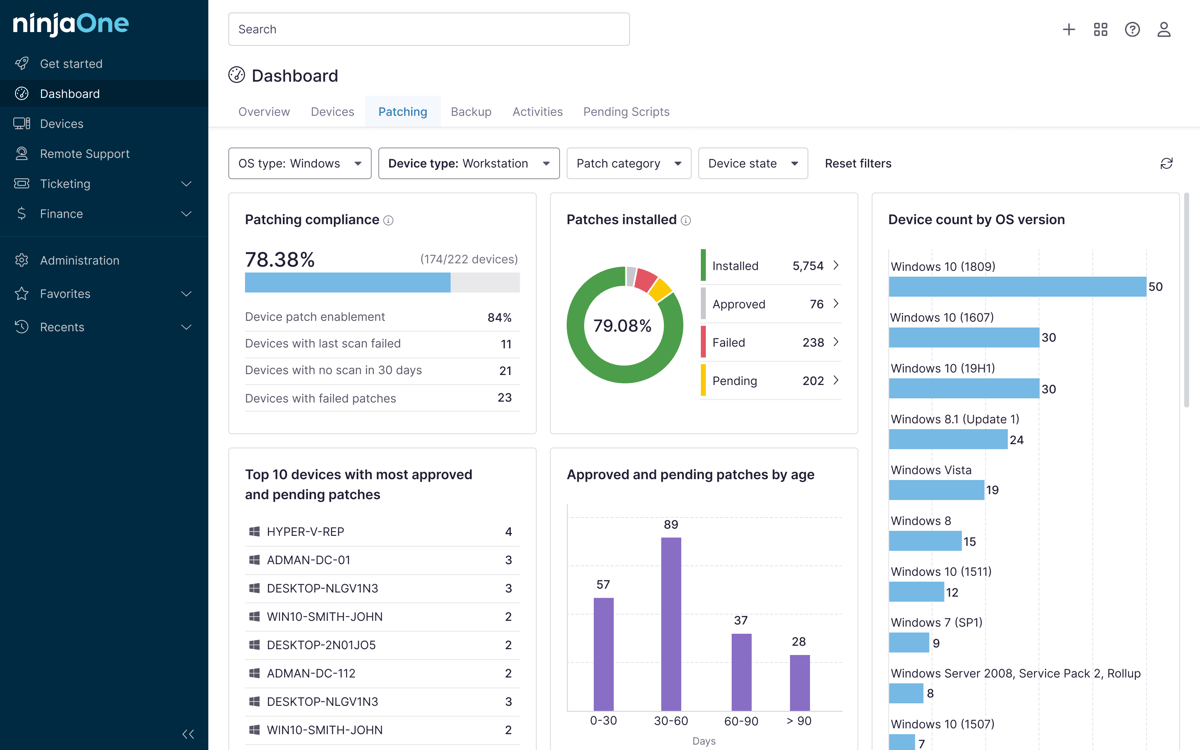
- RMM automation: Tools like NinjaOne can deploy daily scripts to disable USB storage. This ensures that even if a port is accidentally enabled, it reverts to a secure state automatically.
- AV integration: Pair hardware monitoring with scheduled or triggered RMM scripts so IT teams can be notified of unexpected hardware and remotely apply configured device restrictions.
Physical and awareness-based defense
- USB data blockers: When charging in public, use a “data blocker” adapter. This blocks USB data communication, ensuring a malicious cable can provide power but cannot send commands through the USB connection.
- Zero Trust hardware: Treat “found” or promotional cables as malicious by default. Education is the best defense against baiting attacks in shared workspaces or travel hubs.
Neutralize threats with RMM
Integrating RMM tools like NinjaOne provides an automated way to help mitigate O.MG cable threats across managed endpoints.
- Automated blocking: NinjaOne allows IT teams to deploy scripts that automatically enforce USB device restrictions across managed endpoints, helping reduce exposure to unauthorized hardware.
- Real-Time alerts: NinjaOne can monitor managed endpoints for hardware-related changes and use configured conditions or scripts to alert IT teams to unexpected USB device activity, helping them investigate and take remote action.
Tip: Set your automation to reapply USB storage restrictions every 24 hours. This helps ensure that if the restriction is manually changed or disabled during the day, the configured setting is automatically reapplied.
For consistent protection, combine RMM automation and monitoring with AV integration. This ensures an effective defense against malicious cables.
Improve hardware surveillance with NinjaOne RMM
Key considerations when managing hardware risks
Defending against an O.MG cable requires looking beyond traditional software vulnerabilities to address the physical nature of the threat.
Difficult forensics
- Hardware attacks leave a minimal digital footprint. Once an MG cable is unplugged, there are often no malicious files or software logs left on the hard drive for IT teams to investigate.
Enforcement gaps
- Organizations without formal policies for peripheral use may lack clear rules on cable reuse, allowing a single O.MG cable to be passed between employees and potentially expose multiple workstations to attack.
Mobile vulnerability
- High-traffic areas like airports exploit our constant need for power. Attackers rely on users being desperate enough to use any available charging cables without considering the potential security risks.
Physical-digital overlap
- This threat shows how physical access can create a direct path to the device. An O.MG cable can exploit the way computers accept input from connected USB devices, such as keyboards, without first having to bypass network defenses.
Hardware security can support a Zero Trust approach. If you cannot verify the chain of custody for a peripheral, it should be treated as a high-risk device and restricted by your endpoint policies.
Identifying and troubleshooting O.MG cable interference
Troubleshooting a suspected hardware breach requires looking beyond standard software errors to identify physical entry points.
Signs of an active attack
- Ghost keystrokes: If terminal windows open or text appears automatically, an MG cable may be active. These devices emulate keyboards to “type” malicious scripts at inhuman speeds, often bypassing the visible UI.
- Clean malware scans: Traditional antivirus software often finds nothing because the threat is hardware-native. If your system behaves strangely but scans come up clean, investigate your physical accessories for a hidden MG cable payload.
- Persistent anomalies: Watch for unexpected device activity when plugging in a charging cable. IT professionals can check Windows Event Logs, including Event ID 6416 when the appropriate auditing is enabled, to identify newly recognized devices and investigate unexpected Human Interface Devices (HID).
Immediate response steps
- Isolate the hardware: If you suspect an MG cable is involved, unplug it immediately. Disconnecting the physical link is the only way to kill the remote Wi-Fi bridge used by the attacker.
- Audit and replace: When in doubt, swap the accessory for a verified manufacturer cord. Documentation and enforcement of a “Known-Good” cable policy are the best ways to resolve uncertainty in shared or high-risk environments.
Tip: If a cable feels unusually warm near the connector even when not charging, it may be the internal microprocessor and Wi-Fi chip drawing power. This is a common physical indicator of a malicious implant.
Use your RMM tool to collect information about recently connected devices. Cross-referencing device identifiers against your organization’s approved hardware list can help identify unexpected devices and support the investigation of a suspected O.MG cable.
Secure your hardware and neutralize the O.MG cable threat
The O.MG cable proves that physical trust is a high-stakes vulnerability in any security strategy. By combining strict hardware policies with automated endpoint controls, you can effectively neutralize these hidden implants. Staying vigilant ensures your everyday accessories remain tools for productivity, not gateways for attackers.
Related topics: