Cybercrime has reached new heights, and new research suggests it will continue to do so in the coming years.
Sources like Cybersecurity Venture predict that the cost of global cybercrime will grow by 15% annually over the next five years and could potentially increase to $1 trillion per month by 2031.
As a result, more and more companies are looking for higher insurance coverage, which is causing insurers to demand more detailed documentation for cybersecurity readiness assessments.
Whether applying directly themselves or helping their clients through the process, MSPs must present clear, concrete evidence of their cybersecurity posture.
This means that if you want comprehensive cyber insurance, you need to demonstrate robust technical controls, continuous governance over tenant environments, and well-defined incident response strategies.
Adopting a structured approach to documentation can increase your chances of approval.
What insurers want: Key documentation requirements for a cybersecurity readiness assessment
Cyber insurance requirements can vary depending on the type of coverage you’re applying for and the insurer you’re working with. Still, there are documentation areas that almost every provider asks for.
A. Security Posture Reports
These reports demonstrate how well protected your MSP is from common cyberthreats. It should include:
| Component | Purpose/Value |
| Recent vulnerability assessments and patching logs | Demonstrates that your systems are regularly scanned for vulnerabilities and patches are applied on time |
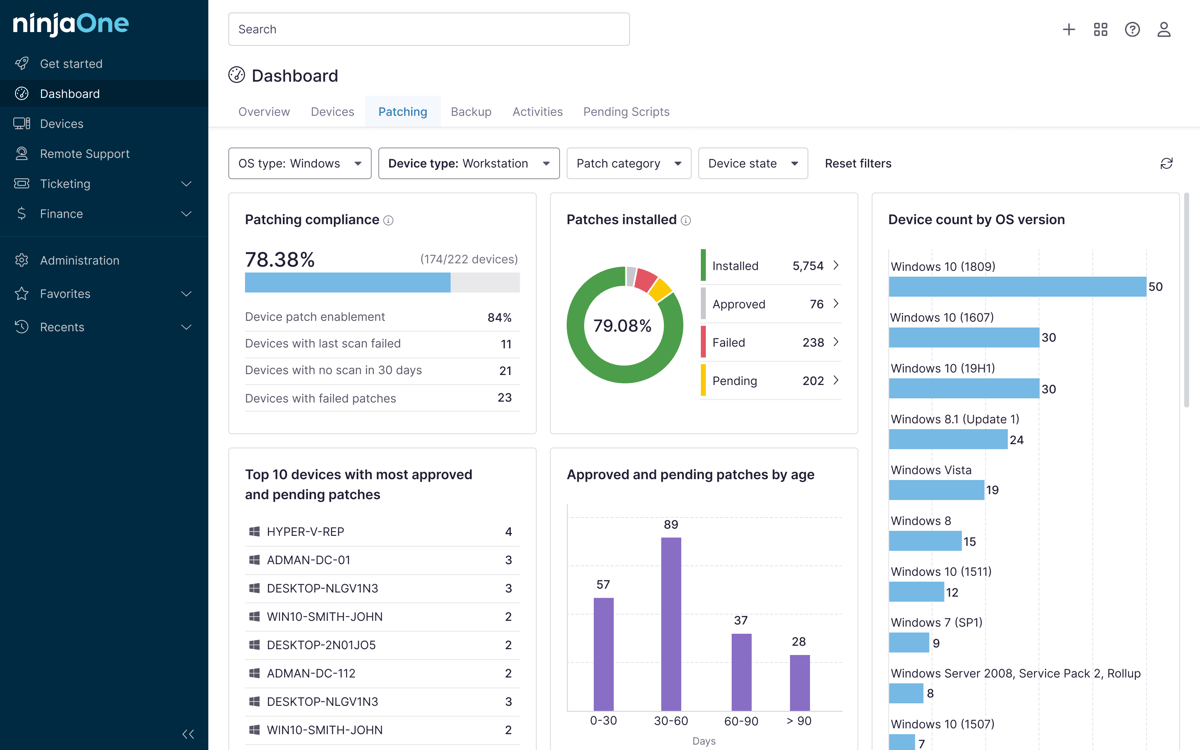
| Antivirus/EDR deployment status and monitoring evidence | Confirms that your endpoint protections are active and monitored using reliable tools like Axcient and Blumira |
| Multi-factor authentication (MFA) enforcement and access logs across all privileged accounts | Ensures that MFA is enforced for all critical accounts |
B. Backup & Disaster Recovery (BDR) Verification
This reassures insurers that your organization can recover from data loss or system failure.
| Component | Purpose/Value |
| Documented backup schedules, retention policies, and encryption standards | Shows that your backups are regular, secure, and compliant with industry data protection standards |
| Logs of successful restore tests and failover drills | Highlights that your backup strategies have been tested and are working in practice. |
💡Tip: You can use Huntress and other similar tools to monitor and validate your BDR processes.
C. Policy Frameworks & Governance
These documents establish that your organization implements a structured approach to cybersecurity.
| Component | Purpose/Value |
| Incident response plan and evidence of testing | Proves readiness in case of a breach |
| Acceptable use, breach notification, and data retention policies | Ensures that your employees know and understand their responsibilities |
| A map of controls to NIST CSF, CIS Controls, and other similar frameworks, summarized in a Compliance Scorecard | Demonstrates that your security practices align with industry standards |
D. Access Control and Privilege Management
This section demonstrates that you do not grant access to systems and data without proper oversight.
| Component | Purpose/Value |
| Review logs of inactive or orphaned accounts | Shows that your organization is actively managing user accounts |
| Privilege escalation policies and audit trails | Illustrates how your organization grants and monitors escalated access |
| Logs from recent access reviews | Establishes that you regularly review and update access rights |
💡Tip: Use ConnectSecure to automate the documentation of these processes.
Automating documentation processes for cybersecurity risk assessment
Since compiling security documentation can be time-consuming, you can use scripting to automate the process. Here’s a sample PowerShell script you can use to automate the export of MFA-enabled users from Azure AD:
Connect-MgGraph -Scopes "User.Read.All", "UserAuthenticationMethod.Read.All"
$users = Get-MgUser -All
$results = foreach ($user in $users) {
$methods = Get-MgUserAuthenticationMethod -UserId $user.Id
$mfaEnabled = $false
foreach ($method in $methods) {
if ($method.ODataType -match "microsoftAuthenticatorAuthenticationMethod|phoneAuthenticationMethod|fido2AuthenticationMethod") {
$mfaEnabled = $true
break
}
}
[PSCustomObject]@{
UserPrincipalName = $user.UserPrincipalName
MFAEnabled = $mfaEnabled
}
}
$results | Export-Csv "C:\ComplianceEvidence\MFA_Enabled_Users.csv" -NoTypeInformation
This script can help you produce verifiable evidence that you enforce MFA.
Best practices for effective cybersecurity documentation
Here are some additional best documentation practices to make preparing for a cybersecurity readiness assessment easier:
Create a “Cyber Insurance Readiness” folder
Set up a centralized folder where you can put all the key documentation insurers typically ask for during a security readiness assessment, including:
- Backup logs
- Vulnerability scan summaries
- Policy templates
- MFA snapshots
Organizing all your files in one place will make filing for new insurance applications easier.
Use version control and timestamping
To ensure that you don’t accidentally submit outdated documentation to insurers, all your files should have:
- A clear version number (e.g., v1.2, v2.0)
- A last updated date
- A change log, if applicable.
This will help you maintain a clear audit trail.
Leverage simple compliance mapping
Map your documents and controls to a recognized cybersecurity framework, like:
- NIST Cybersecurity Framework (CSF)
- CIS Controls
- ISO/IEC 27001
A mapping table or checklist demonstrates that your organization’s cybersecurity strategies align with the industry’s best practices.
Train clients on their role
In addition, you must train your clients on their role in maintaining a secure infrastructure. For instance:
- Enforcing strong password policies
- Using only approved software
- Reporting suspicious activity promptly
Documenting these shared responsibilities prevents misunderstandings and helps strengthen your client’s overall security posture.
Review and refresh your documentation quarterly
Cyber insurance requirements can change quickly, so you should review and update your documentation at least every quarter.
Set recurring reminders to re-run automation scripts for exporting data and incorporate insurer feedback into your existing documentation.
Coordinate with brokers beforehand
Finally, talk to your insurance brokers before the cybersecurity readiness assessment. Ask them about the documentation they typically request, their preferred formats, and any frameworks they follow.
💡Tip: Leverage tools like ScalePad to automate asset tracking, backup verification, and compliance reporting.
What is cyber insurance, and why is it important?
Cyber insurance, or cyber liability insurance, helps businesses cover financial losses from data breaches and cyberattacks. It works just like any insurance policy: providers will pay for covered damages and costs, including data recovery, legal fees, and even lost revenue.
With the cost of cybercrimes increasing alarmingly, organizations need safeguards to help them recover the financial and reputational damage they may incur from an attack.
However, it’s important to note that cyber insurance can never replace an effective cybersecurity program. Instead, think of it as your safety net and robust security posture as the foundation of your defense mechanism.
Without a strong cybersecurity program in place, most insurers will offer you limited protection for a steep price. Worse, they’ll refuse to issue you coverage.
How NinjaOne can help you prepare for a cybersecurity readiness assessment
NinjaOne has various tools to turn complex security documentation into clear, verifiable evidence.
| NinjaOne Service | What it is | How it helps |
| Policy Templates | Stores security policies, knowledge base articles, and standard operating procedures (SOPs) in NinjaOne Documentation. | Takes the manual work out of compiling security documentation and ensures all your evidence is formatted properly |
| Registry Key Validation | Uses advanced device filtering to scan endpoints for backup configuration status, EDR presence, and encryption status. | Reduces the time spent on conducting gap analysis |
| Scheduled Scripts | Allows you to create scripts for gathering compliance evidence and generates reports with timestamps and detailed device information. | Ensures consistent, up-to-date compliance data with minimal manual effort |
| Restore Success Tracking | Logs backup and restore success/failures and creates snapshots of backup configurations. | Validates your organization’s disaster recovery capabilities and backup integrity |
| Compliance Tagging | Use device tagging to mark compliant systems and provide client-facing summaries like runbook reports and dashboards. | Makes demonstrating compliance posture easier |
Quick-Start Guide
NinjaOne’s Security Documentation Capabilities
1. Vulnerability Management
NinjaOne offers a Vulnerability Importer that allows MSPs to:
- Import vulnerability data from multiple scanning tools
- Centralize vulnerability tracking across devices
- Generate comprehensive vulnerability reports
2. Security Frameworks and Tracking
Track cybersecurity Key Performance Indicators (KPIs):
- Framework coverage
- Risk reduction speed
- Evidence readiness
- Align with cybersecurity frameworks like NIST
3. Key Documentation Tools
- Centralized visibility
- Compliance tracking
- Automated reporting
- Device health status monitoring
Recommended Approach for Cyber Insurance Documentation
1. Comprehensive Vulnerability Tracking
Use NinjaOne’s Vulnerability Importer to document:
- Identified vulnerabilities
- Remediation status
- Patch management efforts
2. Security Incident Response
- Develop and document a clear incident response playbook
- Track and log security incidents
- Demonstrate proactive security management
3. Continuous Monitoring and Reporting
Implement quarterly security reviews
Generate reports showing:
- Security controls
- Risk mitigation efforts
- Continuous improvement
4. Integration of Security Tools
Utilize integrated security solutions like:
- SentinelOne for endpoint protection
- Vulnerability scanning tools
- Patch management
Strategic documentation: The key to a successful cybersecurity readiness assessment
As cybercrimes continue to escalate, insurance providers are becoming increasingly selective about the organizations to which they grant coverage. They don’t just want to hear that you have the right security measures in place; they want you to prove it by submitting clear, verifiable evidence.
This is where strategic documentation comes in. By preparing well-organized reports and policies that align with industry standards, you can speed up the underwriting process and reduce premium rates.
More importantly, strategic documentation reinforces your MSP’s reputation as a proactive cyber-risk mitigator.
Related topics: