
Key Points
- Endpoint performance monitoring tracks and optimizes the health, speed, and reliability of devices across a network.
- Effective monitoring combines real-time data collection, automated alerts, and actionable insights to address bottlenecks.
- Best practices include setting performance baselines, prioritizing critical endpoints, and integrating monitoring with broader IT workflows.
Endpoints directly contribute to the business operation and user experience, which is why ensuring that these devices function at peak performance is a top priority for IT teams and MSPs. However, the Resilience Risk Index by Absolute Security has revealed that one out of five endpoints tends to be unprotected, creating unnecessary attack vectors.
A fleet of hundreds or thousands of endpoints can overwhelm even the most skilled technicians, especially without the right tools to scale. Enterprises and MSPs need modern, persistent endpoint performance monitoring, which this post will discuss.
Automate data collection to ensure consistent, accurate performance insights.
What is endpoint performance monitoring?
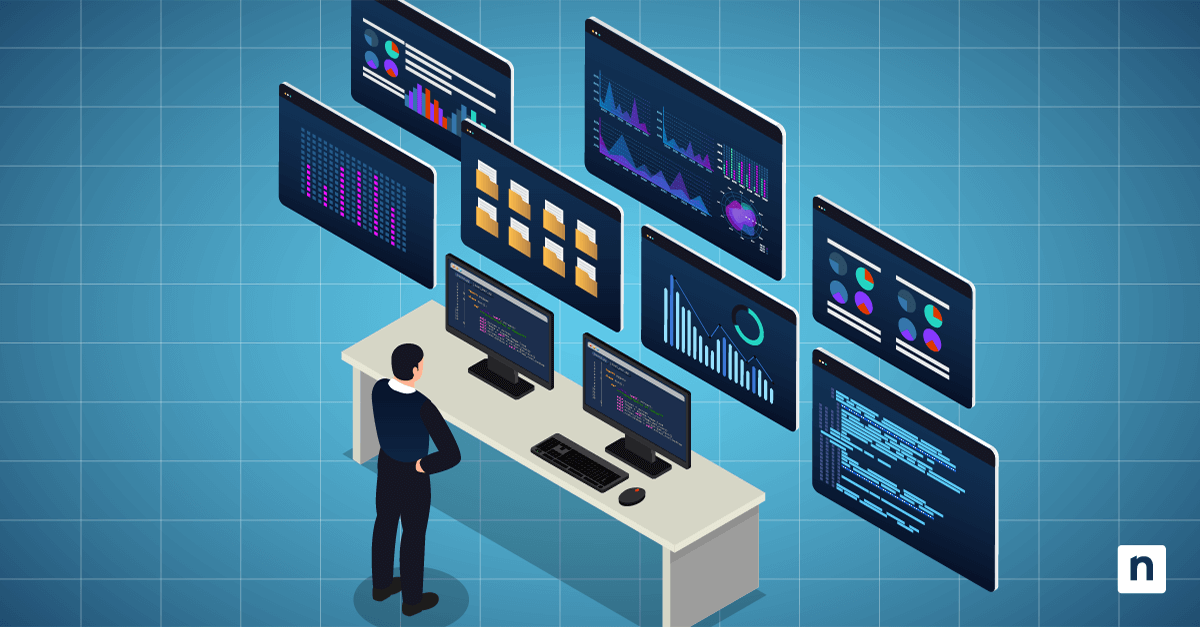
Endpoint performance monitoring is the process of gathering and providing telemetry data from endpoints. It is one of the critical processes within an endpoint monitoring and management system. The valuable data gathered from endpoint performance monitoring helps IT teams learn. Especially about the current health, performance, and safety of their devices and networks.
5 benefits of endpoint performance monitoring
In addition to reducing an IT team’s workload, there are various other advantages such as:
1. Reinforce security
IT monitoring tools enable organizations to adopt a proactive approach to security by analyzing real-time data and receiving alerts for unusual activity. This approach allows IT teams to timely detect anomalies such as unauthorized access attempts, unusual CPU spikes, or suspicious network traffic, helping mitigate risks like malware, ransomware, or data breaches before they escalate.
2. Support remote work
It’s clear that remote work is here to stay, which is why agile and transformative organizations are adapting or building infrastructures and systems for remote and hybrid workforces. Along with this, IT teams will rely on endpoint performance monitoring to help create a safe, productive work environment for remote employees.
3. Minimize costs
Endpoint monitoring additionally helps organizations avoid the financial fallout of cyberattacks, which can include downtime, data loss, and reputational damage. By proactively detecting and addressing performance anomalies and security threats, IT teams reduce the risk of costly breaches, system failures, and operational disruptions, ultimately lowering long-term expenses.
4. Gain insight
Endpoint performance monitoring gathers live telemetry data from managed devices. As such, IT teams are able to gain quality insights into the overall health and performance of their endpoints and networks, which are important sectors of their IT environments.
On that note, in order for the information to be as accurate as possible, it’s recommended to choose an endpoint performance monitoring solution that offers live data from a single pane of glass.
You can also watch this video guide on “Endpoint Monitoring Explained with an Example” for a demonstration of its core capabilities.
5. Boost employee satisfaction
Nothing is more frustrating for employees than trying to complete tasks or troubleshoot without sufficient information. IT monitoring helps the team consistently monitor the health and performance of devices without wasting resources. For instance, alerts and notifications allow technicians to provide immediate and efficient IT support for team members across the organization.
How to choose an endpoint performance monitoring solution
The best way to find an endpoint performance monitoring solution is to consider the specific needs and requirements of your organization. Endpoint performance monitoring is usually a feature within an endpoint monitoring and management tool, and there are multiple options out there for businesses of all sizes. Some factors to keep in mind as you choose an endpoint monitoring and management tool include:
- Features
- Cost
- Scalability
- Security
- Effectiveness
- Integration
- Ease of use
- Support
Selecting the right endpoint performance monitoring solution usually comes down to balancing scalability, real-time visibility, and integration with your existing IT workflows. Prioritize tools that offer automated alerts, cross-platform support, and actionable insights to ensure both security and operational efficiency.
View the 10 Best Endpoint Management Tools available based on real user reviews
How to monitor endpoint performance in NinjaOne
NinjaOne’s endpoint monitoring and management software makes endpoint performance monitoring an easy and simple process. To monitor device performance in the NinjaOne tool, here’s what you do:
- Go to the NinjaOne dashboard
- Navigate to Organizations tab
- Locate an organization and click into it (This will take you to a list of all the devices within an organization)
- Select the device you want to monitor
- You will now see a device overview. This will show you live CPU, memory, volume, adaptor, and other information
- If you want additional details, navigate to the “Details” page. This is located right next to the overview for more specific information about an endpoint and its performance metrics
See monitoring in motion—watch this video: ‘Endpoint Monitoring Explained with an Example’.
Manual performance tuning is inefficient and inconsistent.
5 best practices for successful endpoint performance monitoring
1) Monitor all types of endpoint devices
Even if a large percentage of your connected devices are Windows, you still need to monitor endpoints with different operating system. Even if there are only a few, they are still connected to your network and can act as entryways. Monitor and manage all types of endpoint to ensure the health and safety of your devices.
2) Manage every device on a network
With remote or hybrid workforces and BYOD policies, it can be challenging to manage every device on your network. However, even though it may be challenging, organizations do have to manage each and every device. All it takes is one unmonitored and unsecured device to create all kinds of IT cybersecurity horror stories.
3) Understand the “big picture” with single pane of glass software
With single pane of glass software, users are able to see all endpoint monitoring data on a single screen. This means no more switching between screens or interfaces and attempting to collect and organize data to analyze. This way, it’s easier for users to understand the “big picture” when checking on endpoints.
4) Simplify and unify monitoring processes
Trying to manage endpoints with various tools is not only stressful, but it’s also extremely time-consuming. Save time and boost efficiency by using a unified endpoint management tool such as NinjaOne.
5) Receive live telemetry data
The best way to acquire the most accurate information from endpoints is to receive live telemetry data. Live data shows you what is happening on endpoints in real-time so that technicians know exactly what is happening in a given moment. This comes in handy not only for monitoring and analysis purposes, but it also supports endpoint security measures.
Monitor IT performance and network activity in one console
Unify your endpoint monitoring and management processes under NinjaOne’s endpoint management solution to boost efficiency, improve visibility, and strengthen device security. NinjaOne is an all-in-one solution that provides endpoint performance monitoring, task automation, remote access, monitoring and alerting, software management, automated patching, and more. Get started now with a free trial of NinjaOne.
Related topics: