
Key Points
- NAS devices centralize shared data across different departments, making them critical failure points that can cause organization-wide downtime.
- Traditional backup strategies may not include network shares by default, which can create recovery gaps if NAS data isn’t explicitly included.
- RAID and snapshots provide redundancy and rapid recovery, but don’t protect against corruption, ransomware, device failure, and long-term data loss like true backups do.
- An effective NAS backup strategy follows best practices like the 3-2-1 backup rule, versioning, and immutable storage to prevent a single point of failure.
- Recovery planning must account for large data volumes, recovery objectives, priority datasets, and quick access restoration to reduce downtime.
- NAS backups require ongoing monitoring and testing to ensure their ability to effectively reduce downtime and accurately recover shared data.
Many modern organizations rely on network-attached storage (NAS) to centralize storage and streamline resource sharing. NAS typically supports multiple users and applications; without a NAS backup strategy, its downtime can have a direct impact on critical business operations.
NAS backup strategy: Why is it important?
A NAS is a file storage device that allows centralized data access and storage across local area networks (LANs). Some environments rely on NAS as a primary hub for shared folders, departmental files, archives, and as a repository for backup data, often serving multiple users simultaneously.
Although this centralization makes collaborations easier, it also concentrates risk. When large volumes of shared data are stored in one place, issues like hardware malfunctions, accidental user-initiated deletions, corruption, or ransomware attacks can disrupt the entire organization.
Simply put, when a NAS device goes offline, the impact’s blast radius is wide, and downtime can cascade quickly across different departments. Without a dedicated backup strategy, NAS becomes an organization’s Achilles’ heel, a single point of large-scale failure.
Traditional vs. network-attached storage backups
Standard backup strategies are often focused on protecting endpoint data. NAS platforms, on the flipside, centralize shared data access at scale. That difference can introduce protection gaps if NAS data isn’t explicitly included in backup strategies.
Endpoint backups don’t include centralized network shares by default
Standard backups usually focus on recovering data within endpoints, such as workstations and physical servers. When recovering data from NAS, those files are not stored locally in an endpoint; they are stored within the NAS device. Unless existing NAS devices are explicitly included in your overall backup strategy, your environment’s shared data remains unprotected.
NAS relies on file-based storage
Some backup strategies use system-level recovery methods, such as full image backups. However, NAS devices are primarily file-based storage systems that frequently change contents and open file states due to their large user base. Without appropriate configuration, backup strategies may not capture frequent changes or scale efficiently with large datasets.
RAID and snapshot support
NAS supports Redundant Array of Independent Disks (RAID) and snapshots, which can mislead organizations to assume their data is fully protected. However, neither feature replaces a dedicated backup strategy.
While RAID improves drive performance and offers redundancy, it doesn’t protect NAS from accidental deletions, corruption, firmware failures, or ransomware. Additionally, snapshots typically reside on the NAS, potentially offering limited retention that can leave organizations exposed once the NAS is compromised.
Designing an effective NAS backup strategy
Because NAS devices centralize shared data across multiple users, their failure poses a widespread risk for an organization. A common backup practice is to plan for potential NAS failure, whether due to hardware issues, software corruption, or malicious attacks.
Independent backup copies outside the NAS device
Storing a backup copy inside the same NAS device it’s meant to protect defeats the purpose of having a backup. If NAS fails due to corruption or natural disasters, any data stored on it can be affected.
To prevent total data loss, it’s crucial to store NAS backup copies outside the system itself, as stated in the 3-2-1 backup rule. This prevents NAS from becoming a single point of failure, ensuring business continuity even if the device is lost.
Offline or immutable storage options
Ransomware attacks attempt to delete backup files or encrypt backup repositories to eliminate the possibility of a clean restore. Leveraging offline and immutable storage helps prevent backup data from being altered, deleted, or accessed via the network.
This ensures that even if the NAS is compromised, a clean copy is untouched and ready to recover your files.
Incorporate versioning in your backup practices
Shared environments are prone to accidental file deletions, overwrites, corruption, and ransomware encryption. Relying on automated backups without versioning limits your recovery options to whatever the last backup captured.
Versioning provides multiple iterations of files, allowing you to roll back to a clean version or recover from a point before an incident occurred. This allows you to restore specific data without rebuilding everything from scratch.
Periodically test NAS backups to validate recoverability
Many organizations assume their backups work until an outage proves otherwise. The existence of backup copies doesn’t ensure recoverability; it requires regular restore testing. Through continuous testing, you prove backups are recoverable over time, and your downtime expectations align with the defined RTO and RPO.
Preserve permissions and NAS configuration
Ensure that your backup strategy includes access control lists (ACLs), ownership, and NAS configuration elements, such as shared folder definitions, protocol settings, and access policies. Without these, restored data may exist but remain inaccessible or exposed.
“Preserve permissions and NAS configuration
Ensure your backup strategy includes file permissions (ACLs), ownership, and NAS configuration elements such as shared folder definitions, protocol settings, and access policies. Without these, restored data may exist but remain inaccessible or improperly exposed.”
Recovery considerations for effective NAS data protection
Once you have designed your NAS backup strategy, the next step is to ensure the accurate recoverability of large data volumes. Since NAS offers centralized storage for multiple teams, recovery strategies should reflect the scale required to effectively handle that amount of workload during outages.
Large data volumes affect restore time
NAS devices handle files from multiple departments that compound over time. As storage grows into terabytes, or sometimes even petabytes, restorations become more complex and time-consuming.
Considering restore times allows you to approximate how long each full restore takes and if the environment can continue operating undisrupted while partial recovery workflows commence in the background.
Separate priority data from archival data
NAS devices usually contain a large volume of shared data from different environments; however, not all their content carries the same importance. Some shared folders may be critical to business operations, but other data may be archival or infrequently accessed.
Your recovery plan should prioritize business-critical data over archival data to foster rapid recovery for important workflows. This can reduce the need to wait for a full rebuild before restoring critical data and systems.
Restore access for multiple users
A NAS outage impacts not just a single endpoint, but multiple users across different departments and workflows. Your recovery strategy should address the quick restoration of shared folders, permissions, and access to allow workflows to resume after an outage.
Limitations of NAS backup strategies
A strong backup strategy doesn’t eliminate downtime, but it reduces recovery time and limits disruption during an outage. As NAS environments grow and shared data expands, backup strategies must evolve alongside them to remain effective.
Simply having existing backups in place isn’t enough. NAS backups also require ongoing monitoring and review to ensure their reliability. Without proper testing, organizations risk overreliance on recovery procedures that can potentially fail during critical recovery workflows.
Gain visibility into backup activity with NinjaOne
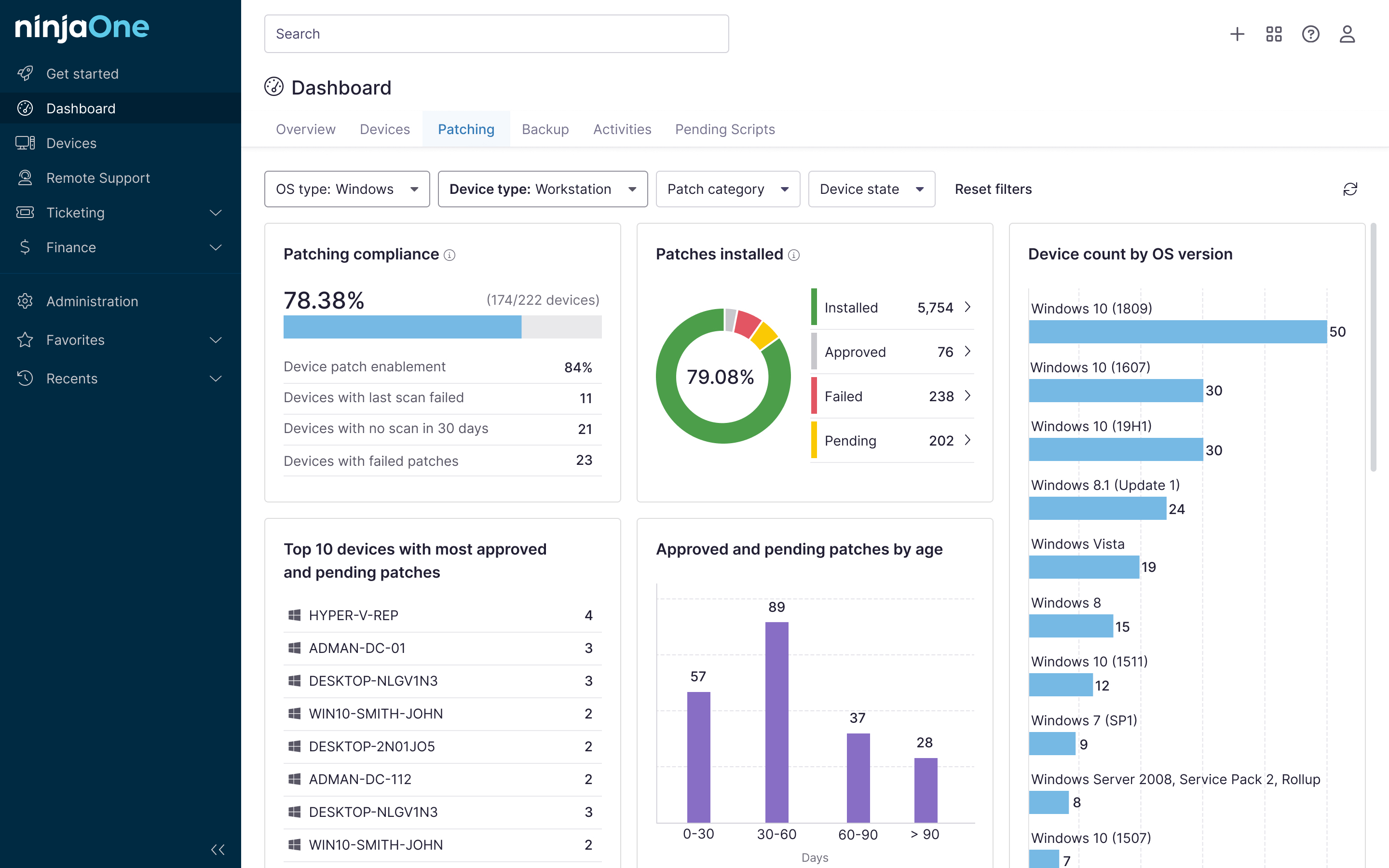
NinjaOne provides centralized visibility, policy management, and monitoring for backup activities, helping administrators track backup status across environments.
- Unified dashboard: NinjaOne offers unified management through a centralized dashboard, providing visibility into backup activity across the environment.
- Backup policy management: Create and enforce backup policies that define backup schedules, retention periods, and storage destinations.
- Automated compliance: Automate policy enforcement and maintain visibility across managed devices to help monitor alignment with defined compliance requirements.
- Image backup and restore: Use image-based backups to restore full systems or recover data as part of broader recovery workflows.
- Cloud and hybrid storage options: Choose between cloud-only, local, or hybrid storage options for backups, providing flexibility in how backup data is stored.
Effective NAS backups strengthen data protection and security
When NAS devices fail, it can cause downtime across all departments within an organization. Traditional backup approaches can be insufficient when supporting NAS-dependent environments, as NAS requires backup strategies that are designed to handle huge volumes of shared data at scale.
Protecting NAS data means planning beyond built-in RAID and snapshot features, including isolated backup copies, versioned recovery, and ongoing testing. When designed properly, NAS backup strategies speed up MTTR during outages, allowing business operations to resume with minimal to no downtime.
Related topics: