NinjaOne patch scanning across Windows, macOS, and Linux
NinjaOne Patch Management scans managed Windows, macOS, and Linux endpoints for missing operating system updates and organizes results by policy approval status before installation.
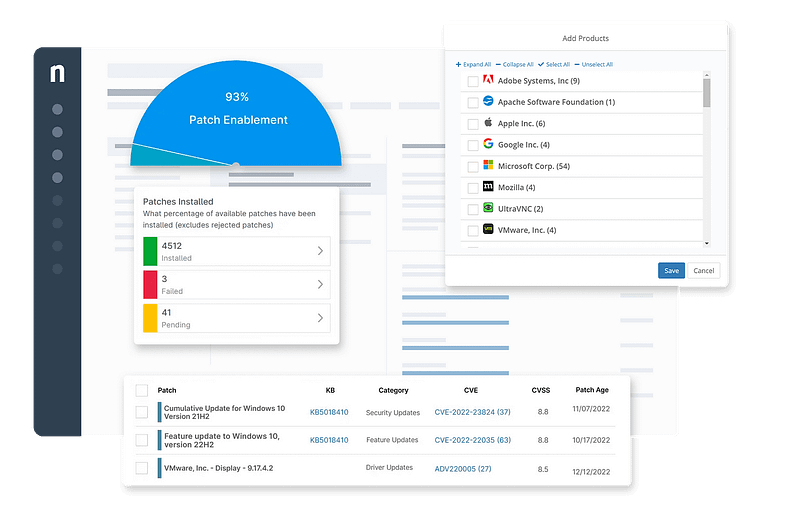
NinjaOne Patch Management scans managed Windows, macOS, and Linux endpoints for missing operating system updates and organizes results by policy approval status before installation.
Problem | How NinjaOne resolves it |
IT teams need to regularly identify which devices have missing or available patches, but manually checking individual endpoints can be time consuming and inconsistent. | NinjaOne automates patch scans to identify patches available for managed devices, giving administrators a centralized view of patches that require attention. |
Scanning and patch installation often need to happen at different times to reduce disruption and give IT teams an opportunity to review available updates before deployment. | NinjaOne separates scan and update schedules, allowing administrators to configure when devices scan for available patches and when approved updates are applied. |
IT teams managing large numbers of endpoints may struggle to keep patch scans running consistently across devices, especially when devices are offline during scheduled scan windows. | NinjaOne supports scheduled patch scans and missed-scan makeup options, allowing scans to run when devices become available after missing their scheduled scan. |
Administrators need to distinguish patches that are ready for deployment from those that still require review or should not be installed. | NinjaOne categorizes patches according to configured approval settings, including Approved, Pending, and Rejected, so administrators can review patch availability and determine which updates should proceed. |
Missing patches are easier to identify by scanning managed devices for available OS updates and showing which patches are applicable, helping IT teams understand where updates are needed.
Patch priorities are easier to determine by giving administrators visibility into applicable patches and their approval status, helping them focus on updates that require attention or manual review.
Affected devices are easier to identify because administrators can view which devices a specific patch applies to, making it easier to determine the scope of a required update.
Patch installation issues are easier to investigate by showing whether patch installation attempts are recorded as installed or failed, giving technicians information to support troubleshooting and follow-up.
Patch scanning requires less manual checking by automatically scanning for available patches according to configured schedules, reducing the need for technicians to manually check individual devices for updates.

NinjaOne automatically scans managed endpoints for available operating system patches, helping administrators identify updates that are ready for installation without manually checking each device.

NinjaOne provides visibility into patches identified during scanning, with the OS patches view allowing administrators to filter patches by statuses such as Pending, Approved, Rejected, Installed, and Failed.

NinjaOne can be configured to run a patch scan immediately when a scheduled scan is missed, helping maintain regular patch discovery on devices that were unavailable during their scheduled scan window.

NinjaOne allows administrators to run patch scans on demand, enabling IT teams to check managed endpoints for available updates outside of their regular scan schedule when immediate patch discovery is needed.
IT teams use NinjaOne patch scanning to check managed devices for available OS and application updates and identify systems that may require attention. By reviewing scan results across device groups, administrators can determine which devices have missing patches and use that information to plan the appropriate remediation, helping maintain more consistent patch coverage across the environment.
IT teams can run or schedule patch scans ahead of a maintenance window to identify updates available for a specific group of devices. Reviewing scan results before patching helps administrators understand what updates are applicable and determine whether additional preparation, approval, or follow-up is needed before the scheduled update cycle.
Administrators use patch scan results to identify devices with outstanding updates and focus remediation efforts where patching is most needed. By narrowing the results to specific organizations, device groups, or applicable patches, IT teams can work through outstanding updates in a more targeted way instead of manually checking individual devices.
NinjaOne patch policies define which OS and third-party updates a device is scanned against, with configurable scan and update schedules and approval rules. Policy-based scanning, including third-party software patching, is available across Windows, macOS, and Linux endpoints, with coverage across all supported Linux distributions.
Once a policy is active, NinjaOne scans each endpoint against it to detect available OS and third-party updates and flag missing patches for review or automatic action. Scans can run on a schedule or be triggered on demand, so patch status stays current between deployment cycles.
Detected patches are evaluated against the policy’s approval rules. For Windows patches, Patch Intelligence AI can apply AI-driven risk analysis and highlight known issues, giving IT teams a way to activate and configure automated approval overrides rather than reviewing every patch manually.
Approved patches move to deployment, and NinjaOne coordinates the process with device state. If a scan or apply step requires a restart, the patch scan and apply functions will not complete until the pending reboot is resolved, so the reporting reflects a device’s true patch status rather than a stalled action.
NinjaOne Patch Scanning uses patch and endpoint data collected from managed devices to identify missing updates across supported operating systems and applications. Patch scan results can also be enriched with vulnerability data from supported third-party scanners, including Qualys, Rapid7, and Tenable, helping IT teams prioritize missing patches based on associated vulnerability severity. NinjaOne imports and maps this third-party vulnerability data in the console; it does not natively perform vulnerability scanning.
IT teams use NinjaOne patch scans to assess the patch state of managed devices before deciding what updates require action. By separating scanning from installation, administrators can identify missing patches and investigate gaps without automatically deploying updates.
"When we migrated to NinjaOne, we found that some of the 430 servers hadn’t been patched in months."
— Yanick Chief, Systems Engineer, Solothurner Spitäler.
Source: NinjaOne
Identify missing patches across managed Windows, macOS, and Linux devices and use scan results to prioritize updates and keep patching work organized. Explore NinjaOne patch scanning and see how centralized patch management can help your team reduce manual effort and stay on top of patch status.
Patch scanning is the process of checking a device for available updates for its operating system and installed third-party software. It identifies which patches are missing, pending, or already installed, giving IT teams visibility into the device’s patch status. In NinjaOne, patch scanning is the detection step that happens before patch deployment and can run on a schedule or on demand.
It is the temporary status shown while NinjaOne is actively checking a Windows endpoint for available updates. It does not indicate a pass or fail outcome, only that the scan is still running.
To run a patch scan in NinjaOne, configure a patch policy for the applicable operating system and set the scan to run on a schedule or trigger it on demand. The scan checks the device for missing, pending, and installed operating system and third-party patches. For the exact steps and current interface, refer to the appropriate NinjaOne patch management documentation for Windows, macOS, or Linux.
A software patch is an update released by a software vendor to fix, improve, or update an existing application or operating system. Patches commonly address security vulnerabilities, bugs, stability or performance issues, and other software problems. Unlike major version upgrades, patches are typically smaller, targeted updates designed to keep software secure, reliable, and up to date.
NinjaOne patch scanning checks managed endpoints for missing operating system and application updates. Scans can run on a schedule or on demand, helping IT teams identify available patches and organize results by status before updates are installed.
NinjaOne can scan managed Windows, macOS, and Linux endpoints for available patches. IT teams can schedule scans or run them on demand to identify missing updates, review patch status, and determine which updates are ready for installation.