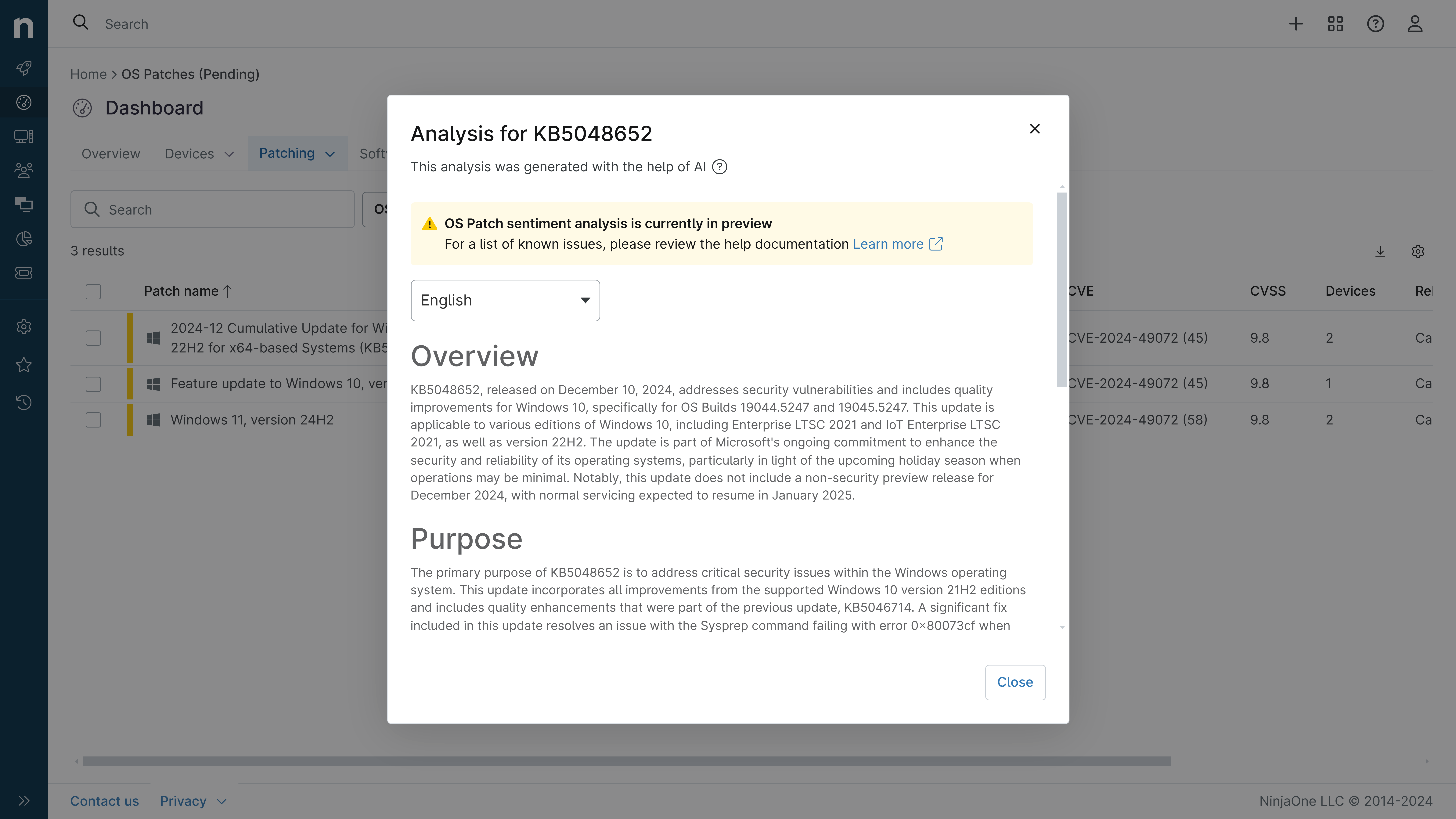
KB5082414: Overview with user sentiment and feedback
Last Updated May 28, 2026
Probability of successful installation and continued operation of the machine
Overview
KB5082414 is an April 2026 cumulative security and reliability update targeting .NET Framework 3.5 and 4.8 on Windows 10 version 1809 and Windows Server 2019 systems. This patch addresses multiple critical security vulnerabilities affecting the .NET Framework runtime environment, including a remote code execution flaw and several denial-of-service weaknesses. The update is part of Microsoft's regular monthly maintenance cycle and is recommended for deployment across affected systems as part of standard patch management practices.
The patch encompasses six distinct security vulnerabilities along with quality improvements to the .NET runtime. Microsoft has confirmed no known issues exist with this release, indicating a thorough testing cycle prior to public availability. The update is available through multiple distribution channels including Windows Update, Windows Update for Business, the Microsoft Update Catalog, and Windows Server Update Services (WSUS), providing flexibility for various deployment scenarios in enterprise and consumer environments.
General Purpose
This cumulative update delivers critical security enhancements to the .NET Framework infrastructure. The patch resolves a remote code execution vulnerability (CVE-2026-32178) that could allow attackers to execute arbitrary code through compromised .NET applications, representing a significant security risk. Additionally, the update addresses three separate denial-of-service vulnerabilities (CVE-2026-32203, CVE-2026-32226, and CVE-2026-23666) that could be exploited to disrupt application availability. A security feature bypass vulnerability (CVE-2026-26171) and an information disclosure vulnerability (CVE-2026-33116) are also remediated. Beyond security fixes, the patch includes runtime improvements that enhance ClickOnce verification logic to support SHA384 and SHA512 cryptographic algorithms, strengthening the integrity verification mechanisms for deployed applications. The update requires a system restart and recommends closing all .NET Framework-based applications prior to installation.
General Sentiment
The sentiment surrounding KB5082414 is decidedly positive due to the absence of reported issues and the comprehensive nature of the security fixes provided. The patch addresses legitimate security threats, particularly the remote code execution vulnerability, which justifies immediate deployment in most environments. Microsoft's explicit statement that no known issues exist provides confidence in the update's stability. However, potential concerns include the mandatory system restart requirement, which may necessitate scheduling considerations in production environments. The patch's focus on legacy .NET Framework versions (3.5 and 4.8) rather than newer .NET Core versions may limit its relevance for organizations that have modernized their application stacks. The straightforward deployment process through standard Windows Update channels mitigates implementation concerns. Overall, the technical community would likely view this as a necessary and well-vetted security update with minimal risk factors.
Known Issues
- No known issues reported by Microsoft for this update
- No documented compatibility problems identified during testing
- No reported conflicts with existing applications or system configurations
Disclaimer: We take measures to ensure that AI-generated content is of the highest possible quality, but we cannot guarantee its accuracy and recommend that users do their own independent research. Generated on 2026-05-28 07:21 PM