KB5084066: Overview with user sentiment and feedback
Last Updated May 30, 2026
Probability of successful installation and continued operation of the machine
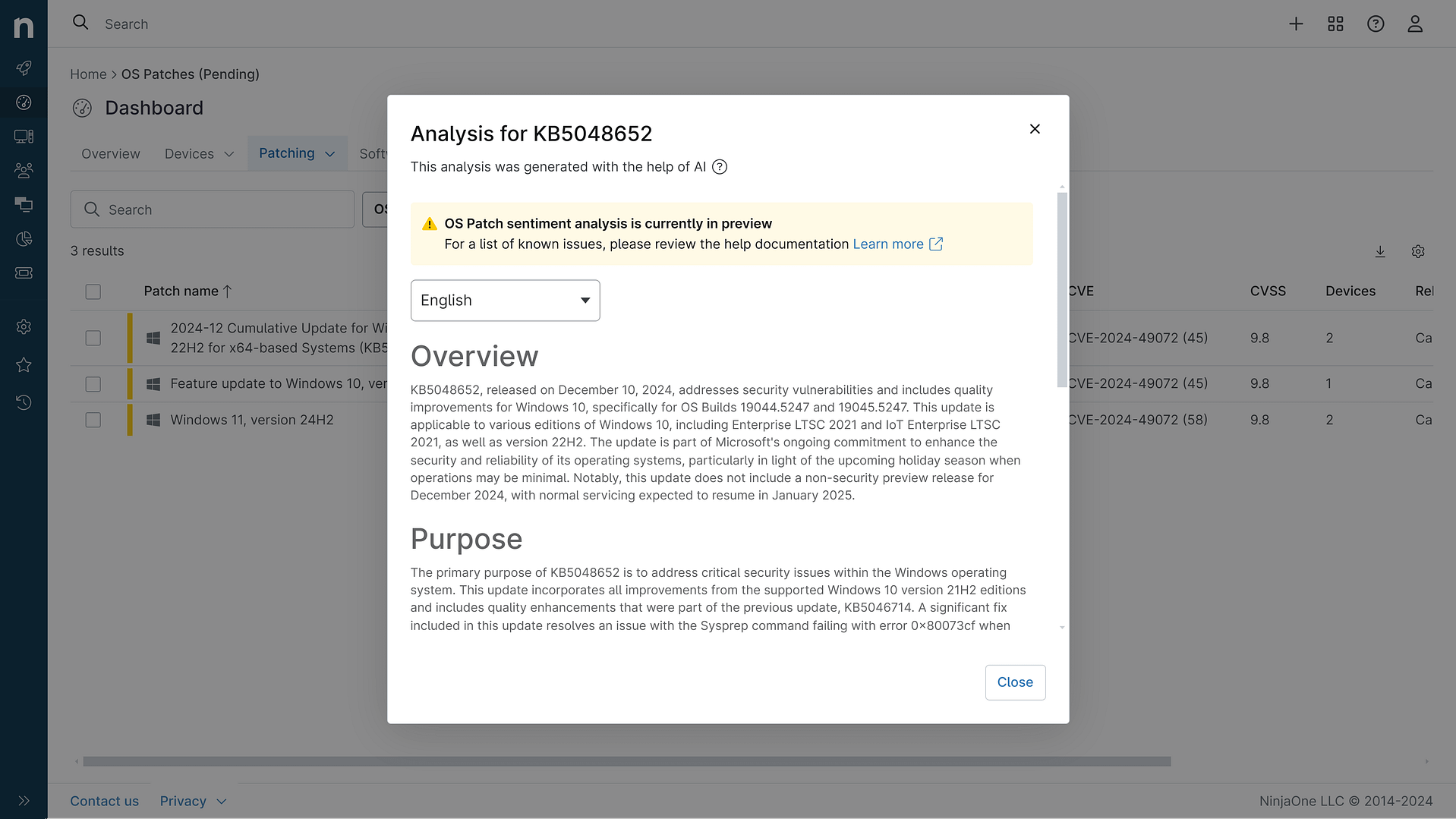
Overview
KB5084066 is a cumulative security and quality update released on April 14, 2026, targeting the .NET Framework across multiple versions including 3.5, 4.7.2, and 4.8. This patch is specifically designed for Windows 10 version 1809 and Windows Server 2019 environments. The update consolidates multiple security fixes and reliability improvements into a single deployment package, streamlining the patching process for organizations maintaining legacy .NET Framework implementations.
This cumulative update addresses six distinct security vulnerabilities ranging from critical remote code execution threats to information disclosure risks. The patch is distributed through standard Microsoft update channels including Windows Update, Microsoft Update, and Windows Server Update Services (WSUS), ensuring broad accessibility across enterprise and consumer deployments. Microsoft has confirmed no known issues exist with this release, indicating a thorough testing cycle prior to general availability.
General Purpose
KB5084066 serves as a critical security remediation for .NET Framework installations on Windows 10 version 1809 and Windows Server 2019 systems. The update addresses a remote code execution vulnerability (CVE-2026-32178) that represents the most severe threat vector, alongside four denial-of-service vulnerabilities (CVE-2026-32203, CVE-2026-32226, CVE-2026-23666) that could compromise system availability. Additionally, the patch resolves a security feature bypass vulnerability (CVE-2026-26171) and an information disclosure vulnerability (CVE-2026-33116). Beyond security enhancements, the update incorporates quality and reliability improvements to strengthen the overall stability of supported .NET Framework versions. Organizations relying on .NET Framework 3.5, 4.7.2, or 4.8 for business-critical applications should prioritize deployment of this cumulative update to mitigate exposure to these identified threats.
General Sentiment
The sentiment surrounding KB5084066 is decidedly positive given the absence of reported issues and the comprehensive nature of the security fixes included. The patch addresses genuinely critical vulnerabilities, particularly the remote code execution flaw, which justifies immediate deployment consideration. Microsoft's explicit confirmation of no known issues provides confidence that the update underwent appropriate validation before release. The availability through multiple distribution channels (Windows Update, WSUS, Microsoft Update Catalog) demonstrates Microsoft's commitment to accessibility across diverse IT environments.
However, potential concerns warrant consideration. The patch targets aging operating system versions (Windows 10 version 1809 and Windows Server 2019), which are approaching or have reached end-of-support status. Organizations should verify their support lifecycle position before investing heavily in patching these legacy systems. Additionally, while no known issues are documented, the cumulative nature of the update means it includes all prior fixes, which could theoretically introduce edge cases in specific application configurations. The lack of granular quality improvement details makes it difficult to assess whether any particular reliability enhancement might affect specialized workloads. Despite these considerations, the security benefits substantially outweigh the minimal risks associated with this update.
Known Issues
- Microsoft has confirmed no known issues exist with this cumulative update at the time of release.
Disclaimer: We take measures to ensure that AI-generated content is of the highest possible quality, but we cannot guarantee its accuracy and recommend that users do their own independent research. Generated on 2026-05-30 07:50 PM