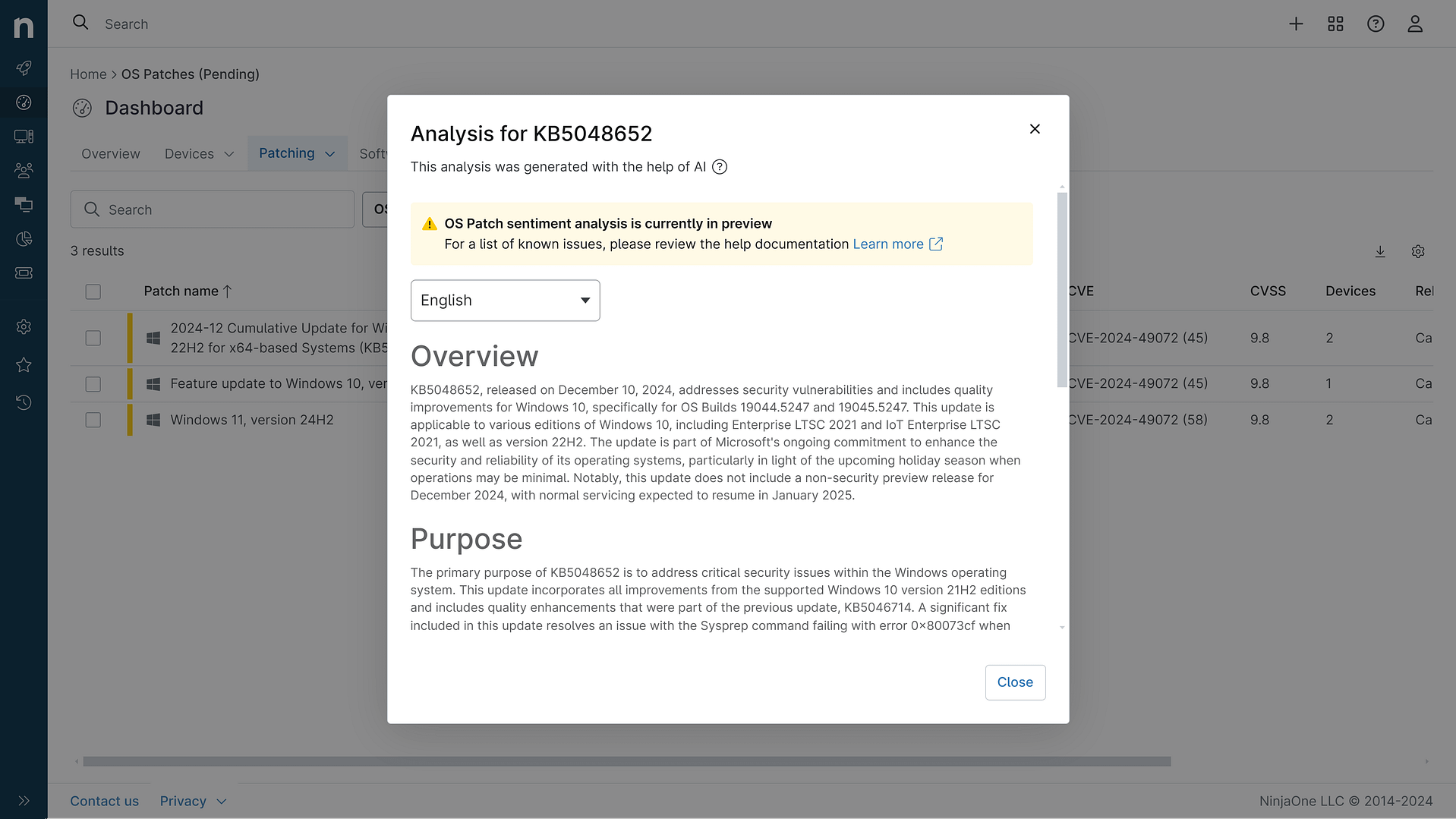
KB5082398: Overview with user sentiment and feedback
Last Updated May 31, 2026
Probability of successful installation and continued operation of the machine
Overview
KB5082398 is an Extended Security Update (ESU) released on April 14, 2026, specifically designed for .NET Framework 3.5 running on Windows Server 2012. This cumulative security and quality rollup addresses multiple critical vulnerabilities within the .NET Framework that could potentially compromise system security and stability. Windows Server 2012 reached end of support on October 10, 2023, and this patch is part of Microsoft's Extended Security Updates program, which provides continued security coverage through October 13, 2026, for organizations that have purchased ESU licenses.
The patch encompasses six distinct security vulnerabilities ranging from remote code execution threats to denial-of-service and information disclosure risks. Organizations still operating Windows Server 2012 environments with .NET Framework 3.5 dependencies should prioritize this update to maintain security posture during the extended support window. The update requires .NET Framework 3.5 to be present on the system and recommends installation of the latest servicing stack update prior to deployment.
General Purpose
This security and quality rollup provides targeted remediation for six documented vulnerabilities affecting .NET Framework 3.5 on Windows Server 2012. The primary security improvements address a critical remote code execution vulnerability (CVE-2026-32178) that could allow attackers to execute arbitrary code within the framework context, alongside four denial-of-service vulnerabilities (CVE-2026-32203, CVE-2026-32226, CVE-2026-23666) that could disrupt service availability. Additionally, the patch resolves a security feature bypass vulnerability (CVE-2026-26171) and an information disclosure vulnerability (CVE-2026-33116). The update modifies core framework components including mscorlib.dll, system.security.dll, system.servicemodel.dll, and presentation framework libraries. While no new quality and reliability improvements are documented beyond security fixes, the patch maintains framework stability through targeted component updates. Installation requires the latest servicing stack update (KB5044413) to ensure optimal deployment reliability.
General Sentiment
Community sentiment regarding this patch is cautiously positive, though discussion volume remains limited given that Windows Server 2012 is in extended support phase with a narrowing user base. The patch addresses legitimate security concerns that warrant installation for organizations maintaining legacy infrastructure. However, some considerations temper enthusiasm: the target platform is approaching end-of-life, which may reduce perceived urgency among some administrators. The requirement for prerequisite servicing stack updates adds deployment complexity. On the positive side, Microsoft explicitly states no known issues exist with this release, and the patch follows established security update procedures. Organizations relying on .NET Framework 3.5 applications will likely view this as necessary maintenance. The lack of reported complications in early deployment phases suggests a stable release. Some IT professionals may view this as an opportunity to plan migration strategies away from Windows Server 2012, though the patch itself presents minimal risk for those requiring continued support.
Known Issues
- Microsoft is not currently aware of any issues in this update
- Installation may fail on Azure Arc-enabled devices running Windows Server 2012 unless specific network endpoint requirements for Extended Security Updates are met
- Language pack installation after applying this update requires reinstallation of the patch
- All .NET Framework-based applications should be exited before installation to prevent potential file locking issues
Disclaimer: We take measures to ensure that AI-generated content is of the highest possible quality, but we cannot guarantee its accuracy and recommend that users do their own independent research. Generated on 2026-05-31 01:48 PM