Key Points
- Cybersecurity Threats in Education Are Escalating: Schools face record levels of ransomware, data breaches, and AI-driven phishing schemes due to aging infrastructure, unpatched systems, and weak BYOD policies.
- Hybrid-Cloud and Multi-Cloud Adoption Driving Complexity: As districts balance on-prem student information systems (SIS) with cloud learning tools, managing fragmented hybrid IT environments increases exposure to cyber threats.
- Device Management Is Critical for Endpoint Security: With educators and students using multiple personal and district-owned devices daily, unified IT platforms are essential for automating patch management, enforcing baseline policies, and shutting down vulnerabilities.
- MSPs and Cyber Insurance Mandates Accelerate Controls: Managed Service Providers (MSPs) help understaffed district IT teams bridge technical gaps, while strict cyber insurance requirements force schools to deploy mandatory Multi-Factor Authentication (MFA) and continuous endpoint monitoring.
- Unified IT Operations Platforms Power Modernization: Solutions like NinjaOne enable educational institutions to simplify fleet-wide endpoint management, eliminate legacy tech debt, and strengthen security across complex hybrid environments from a single glasspane.
School IT teams face escalating ransomware, phishing, and data breach risks, driven by aging infrastructure, unmanaged BYOD devices, and a fast-growing mix of hybrid- and multi-cloud tools. As the new school year begins, these pressures compound the same device- and cloud-sprawl challenges other industries have faced in the shift to hybrid work.
In the NinjaOne Back to School Security report, we found that the number of devices educators used for daily instruction was growing rapidly but a mixed approach to device security was a hurdle that many organizations hadn’t yet mastered.
For example, many schools have implemented a bring-your-own-device (BYOD) policy and required little to no security software, such as anti-virus or authentication software, to be installed on devices. While the security posture at schools is changing, this oversight can lead to data leakage, theft, or ransomware.
This growth in devices sees no sign of slowing down either. A report from IDC found strong growth in the devices market, including tools used for daily instruction such as desktops, netbooks, and tablets.
This year, we surveyed the landscape and reviewed new reports and data from our recent Global Tech Debt report. In doing so, we found some bright spots but lingering challenges on the horizon. In this post, we’ll examine the current challenges of IT in the education sector. Plus, we cover how these leaders can improve the efficiency of their IT operations.
You can partner with a managed services provider (MSP) or adopting a new unified IT management platform to manage things themselves. There are now options for both to create a more secure and efficient organization.
Cybersecurity threats for schools
In 2025, cyber attacks targeting K-12 and higher education institutions reached record levels, with ransomware and data breaches posing continuous threats to district operations.To this day, educators and students are still exposed to cybersecurity threats. Ransomware, phishing, denial-of-service, and data breaches are all on the rise, especially as remote learning and an influx of new devices and virtual classrooms open up new opportunities for would-be attackers.
Beyond traditional ransomware, school districts now face sophisticated AI-driven phishing schemes that mimic district administrators and automated voice deepfakes targeting staff. Furthermore, stricter regulatory compliance frameworks – such as updated FERPA guidelines and state-level data privacy mandates – have raised the stakes for securing student records against unauthorized exposure.
High-profile incidents underscore the scale of this exposure across the country:
- Los Angeles Unified School District (LAUSD): A massive ransomware attack compromised sensitive student records, district files, and internal systems, demonstrating the vulnerability of large metropolitan districts.
- Minneapolis Public Schools: A critical breach led to the public exposure of private student records, medical files, and personnel data after the district refused to pay a ransom demand.
- University of Michigan: A widespread cyber incident forced the temporary shutdown of campus networks, email systems, and administrative portals during the start of the academic year.
Ransomware remains one of the most devastating cyber incidents that schools face. Not every district maintains offsite, immutable backups. Even when backups are available, administrators sometimes consider paying ransoms to prevent stolen student data from leaking onto dark web forums.
In the case of one Missouri school district that successfully recovered from a ransomware attack without paying the ransom, isolated system backups played a critical role in restoring operations. The district managed more than 300 unique operational systems – spanning learning management platforms and surveillance cameras to classroom intercoms and network infrastructure.
This illustrates the rapidly expanding technological footprint of modern schools, highlighting potential attack surfaces and underscoring the necessity of a unified IT operations platform.
These disruptions extend far beyond operational downtime; they directly hinder student learning. Studies on classroom interruptions show that prolonged access loss and operational downtime compound learning gaps in core subjects like math and reading. When cyber incidents block access to learning platforms and course materials, educational attainment drops.
To counter these risks, cyber insurance requirements are forcing districts to elevate their baseline security posture. Insurance carriers now mandate strict controls – including multi-factor authentication (MFA), automated patch management, and endpoint detection – before issuing policies or renewing coverage.
National initiatives and dedicated federal funding streams are also emerging to help understaffed district IT teams. To bridge remaining talent and budget gaps, many school leaders partner with Managed Service Providers (MSPs) to deliver 24/7 endpoint monitoring and cost-effective security management.
Disparate devices and cybersecurity for schools
In NinjaOne’s report on school security, we found that nearly half of educators were using upwards of 5 devices for daily lesson management. This includes laptops and desktops, smartphones, tablets, webcams, and printers. With so many devices holding student data, managing and securing these devices is imperative.
Ideally, the school should provide all of the devices an educator or student needs to be successful. This is so they can be more easily monitored and managed. When schools manage these things, it takes the burden off teachers, students, and their parents from being IT experts, allowing them to do what they do best – teach and learn.
In the event that something were to go wrong, IT teams should quickly diagnose and remediate an issue all while being remote. This is done effectively with the help of a unified platform that combines the power of an RMM with a ticketing solution, many routine issues that students and educators are likely to encounter can be automated to improve learning experiences.
Of course, this tight level of control over devices may not be possible for all schools. Some schools facing financial constraints or a lack of access to reliable internet may have to employ a BYOD policy. It could be likely that the school provides a limited number of devices to students and educators.
When deciding what to provide, school IT leaders should identify the greatest areas of risk for potential attacks. From there, they can weigh it against their budgetary constraints. For example, the school can provide a laptop and mobile hotspot, but not a smartphone or tablet. In any case, a cloud-based unified platform for IT operations can also help here. Especially as it enables students and educators to download and install the agent on their own devices. Thus, the school’s IT team can still provide support and management.
But new devices aren’t the only ones that schools need to worry about. Many of the devices and hardware schools rely on are aging quickly. In the NinjaOne Global Tech Debt report, 20% of school IT leaders surveyed reported that their school’s hardware was more than 10 years old. Outdated IT infrastructure may not seem menacing, but these devices are more likely to be left unpatched and insecure.
In fact, the report found that 38% of school IT leaders said their organization had suffered a cybersecurity incident due to insecure legacy technology. Respondents also noted that replacing outdated or aging IT infrastructure was their second-highest priority, and transitioning from on-prem to cloud software was their top priority.
Outdated, insecure, and improperly managed devices can severely impact the student experience. It should therefore be a major consideration when evaluating a school’s IT needs. MSPs hoping to work with clients in the education space should keep this in mind and consider ways to highlight how improved IT services translate into better student experiences.
Furthermore, proactive maintenance and management of their devices through a unified platform can prevent many issues from arising in the first place.
Actionable Device Management Framework
To help school IT directors quickly evaluate gaps across their hybrid fleet, the following matrix outlines core security controls for personal and district-owned hardware:
| Security Control | BYOD Devices | School-Owned Endpoints |
| Authentication | Mandatory MFA via SSO | Certificate-Based Identity |
| Patch Management | Agent-based or conditional access | Automated OS & App Auto-Patching |
| Data Protection | Containerized web apps / Sandbox | Full-Disk Encryption (BitLocker/FileVault) |
| Monitoring | Network Access Control (NAC) | 24/7 EDR & Telemetry |
Education moves to hybrid- and multi-cloud future
The increasing cybersecurity demands of modern classrooms require software tailored to their specific needs, much like IT solutions for state and local government.
Because some new software deals with sensitive student data, schools are employing a hybrid approach to the tools they use. Student data has remained very cloud-resistant and many schools opt to have a unique on-prem or privately managed cloud to manage this data. However, some cloud-based solutions, like Google’s popular Workspace for Education have caught on in the remote learning era. The data it holds includes grades, rosters, registration, demographics, and other sensitive student information. Beyond the need to securely store student data, schools have additional cloud storage requirements, including documents, presentations, and recorded lectures, among others.
A multi-cloud or hybrid approach is becoming increasingly the norm for more practical reasons, too. It’s much more cost-effective to anticipate and manage surges in demand as well as deliver IT services. This approach allows schools to meet students wherever they are while delivering a high-quality end-user experience. A combination of public, private, and edge computing also provides schools with a framework for effectively dealing with disruptions and crises.
Hybrid cloud environments are complex and require specialized tools to be managed effectively. Thankfully, MSPs have helped clients in industries such as healthcare, finance, and professional services transition away from legacy and embark on digital transformation journeys.
In many ways, education is experiencing its own transformation and there are many resources available to them that a trusted advisor can provide guidance on.
Avoid costly downtime — watch IT horror stories: how unpatched software hurts businesses now.
How schools can improve cybersecurity and IT operations
Like most organizations trying to rapidly adapt to a new and changing world, educational institutions are no different. According to recent reports, school IT leaders have stabilized their schools’ networking environments and protocols. This helps with supporting students and teachers. However, the new challenge is centered on efficiently managing all new devices, software, and cloud environments that power digital learning.
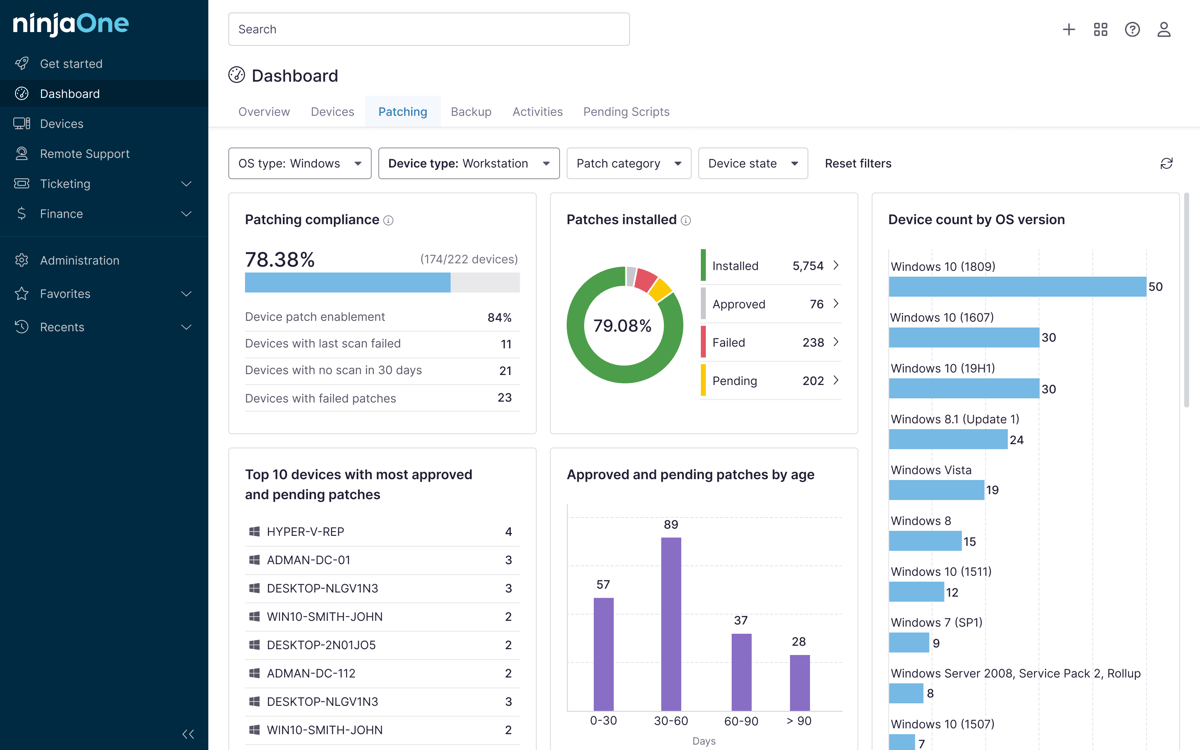
Facing tight budgets, aging technology, and more IT leaders need new options for efficient and secure device, application, and cloud management. At the core of their needs is a unified platform for IT operations. Schools, universities, and other higher education institutions can manage thousands of unique devices. And a decentralized approach to device management is a sure way to end up with unpatched software and inefficient use of resources.
As schools prepare for the upcoming year, they should chart a path towards IT modernization. As schools prepare for the upcoming year, the NinjaOne unified IT management platform can help deliver that experience through a single source for total endpoint management. Best yet, Ninja is easy to use and is equipped with features that make co-managed IT services more effective. Whether school IT leaders decide to manage their organizations themselves or with support from an MSP partner, Ninja is designed to make it easy.
Sign up for a free trial of NinjaOne today to see how a unified IT management platform can support your organization.