


Enforcing strict device drop-off procedures ensures that endpoints outside the office are safely returned, properly processed, and suitable for hybrid and off-site work. Implementing this involves a refined documentation process with RMM support, which is crucial if you still don’t have a clear policy for IT equipment return.
Develop robust standards for the safe return of company-owned assets. This article provides a client-friendly framework for endpoint logistics.
Streamline device drop-off policies to secure your assets
Your device drop-off workflow should offer return address options, alternative channels, and device reset scripts. Consider your organization’s technical constraints when outlining your device return strategy.
Step 1: Define drop-off options and communication scenarios
First, list multiple alternative return methods for convenience and flexibility, in case employees encounter circumstances that prevent usual ways of device drop-off. Viable options include:
- Local drop-off: Add MSP sites or local client offices to facilitate device drop-off for hybrid or off-site personnel.
- Prepaid shipping arrangement: Prepare a return kit complete with a pre-addressed sticker, device type-specific packaging, and more for smoother returns. Integrate this into your standard operating procedures (SOP).
- Third-party logistics: Schedule pickups with local courier services for international returns.
Additionally, an effective IT equipment return strategy standardizes communication templates. These can include clear labeling instructions, return timelines, or a dedicated support line for possible issues or delays.
Step 2: Use a checklist-driven device return workflow
Arrange device drop-off protocols into an actionable checklist for seamless handling and accountability. Make sure to add these verified steps:
| Step | Description | Input example |
| Identify User and Assigned Device(s) | Match the end-user with their assigned hardware using asset management. | “Jane Doe – Lenovo Ideapad Slim 5 – Asset Tag #DL9375-JD.” |
| Send Return Instructions and Materials | Send email or ticket with prepaid label, expected device return date, and packaging instructions. | “Please pack the company laptop into the enclosed foam sleeve and return by Sept 21 using the FedEx label provided.” |
| Confirm Return Tracking or In-Person Receipt | Track shipment or confirm handoff at select offices. | “FedEx Tracking #123456789 confirms delivery on September 20, 2025.” |
| Inspect Device for Damage | IT support checks for damage, missing accessories, and signs of misuse. | “Mouse wheel non-functional, broken laptop camera – logged in ticket #IT-123.” |
| Run Secure Wipe or Reset Process | Perform a data wipe with MDM and PowerShell scripts. | “Data wiped using PowerShell script: Reset-ComputerMachinePassword + Stop-Computer -Force“ |
| Log Return in Inventory System | Document asset condition in a centralized knowledge base. | “Asset #DL9375-JD marked as HEALTHY.” |
| Determine Next Action | Choose whether to redeploy, recycle, or hold a device and add context. | “Device sent to OEM for recycling due to screen damage.” |
Step 3: Include a lightweight PowerShell reset script
Resetting a device to its factory settings primes it for reuse, supporting data management best practices. To reset a returned device, do the following:
📌 Use Cases: Use this to automate device resets for seamless turnover SOPs.
📌 Prerequisites: Windows 10/11, administrative privileges.
Method 1: Reset via Settings (GUI)
- Press Win + I to open Settings.
- Navigate to Update & Security > Recovery.
- Under Reset this PC, click Get started.
- Choose Remove everything to wipe all user data.
- Follow prompts to complete the reset.
Method 2: Reset via PowerShell/Command Line
- Press Win + R, type PowerShell, and press Ctrl + Shift + Enter to run as administrator.
- Run the command:
systemreset -factoryreset
- Choose Remove everything when prompted.
Step 4: Track returns and inventory status
Monitoring device drop-off helps you prevent asset loss and potential leaks. A recent survey shows that 30% of EU and US-based companies pay more for insurance due to repeated device theft, underscoring the need for stronger monitoring solutions. Endpoint platforms empower IT professionals by:
- Providing customizable status tags (for example, STATUS – Returned).
- Recording asset status, date of receipt, and next steps.
- Integrate logs with other PSA platforms for centralized reporting, improving auditability.
Step 5: Monitor metrics and improve device drop-off times
Lastly, track metrics like time-to-redeploy and timely return rates to measure your workflow’s success. Doing this helps pinpoint areas for improvement while building trust with your clients.
Key performance indicators (KPI) that are worth tracking include:
- % of returns completed on time
- % of devices returned damaged
- Average time to redeployment
- Client satisfaction scores for the current device drop-off SOP
⚠️ Things to look out for
| Potential issues | Potential Consequences | Reversals |
| Lost or missent devices | Delayed processing and lost data |
|
| No one to receive the device drop-off | Unconfirmed device return and possible theft |
|
| Wrong courier used | Device stuck in customs |
|
| User-device mismatch | Wrong device returned and audit gaps |
|
| Device reused without proper inspection | Hardware failure during redeployment |
|
Use NinjaOne to streamline IT equipment return
Endpoint management features improve your device drop-off process by letting IT professionals:
- Use internal device tagging features (such as custom dropdowns or checkboxes).
- Automate tasks using device status (A.K.A. event-based triggers).
- Simplify audits and device inventory with dedicated device profiles.
- Set alerts for unused endpoints that are ready for returns.
- Integrate popular Professional Services Automation (PSA) tools like HaloPSA or ConnectWise for automated tickets and easier tracking.
Quick-Start Guide
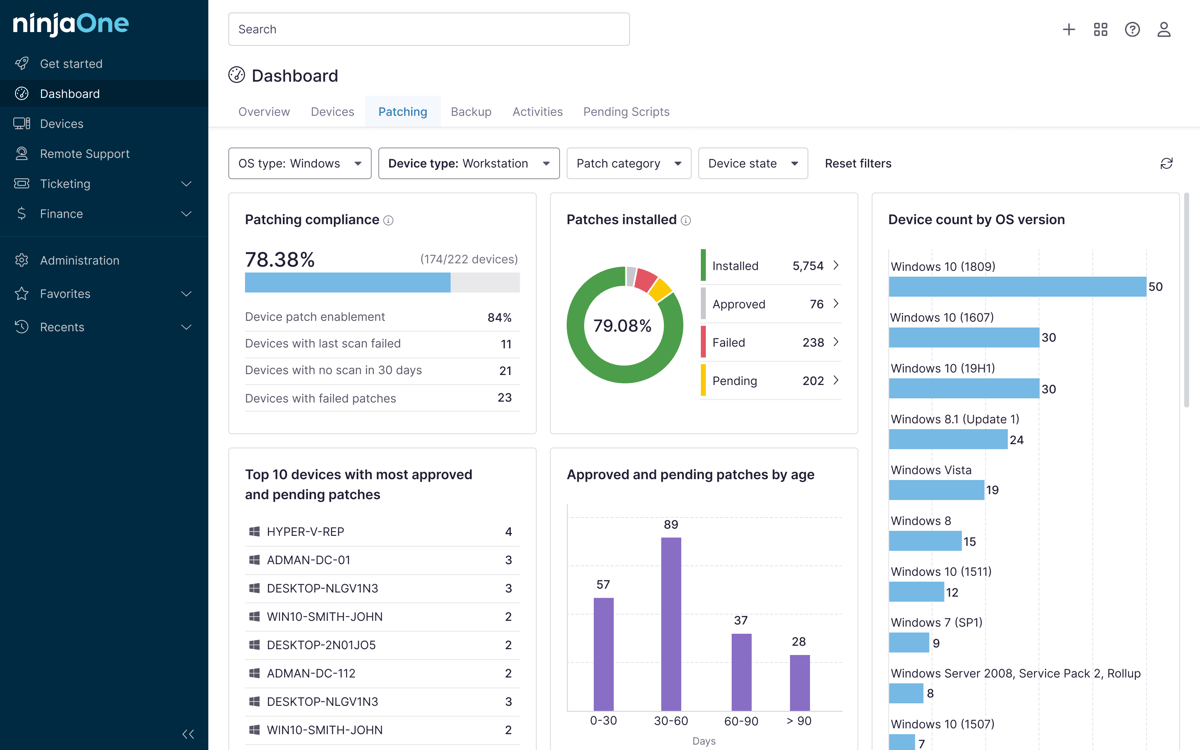
NinjaOne can support the standardization of remote device returns with a clear “Drop Off” Standard Operating Procedure (SOP). Here’s how:
1. Device Management and Tracking
- Asset Tracking: NinjaOne allows you to track all devices, including their status, location, and assignment. This helps in monitoring which devices need to be returned.
- Custom Fields: You can add custom fields to devices to specify return instructions, drop-off locations, and deadlines.
2. Automated Alerts and Notifications
- Return Reminders: Set up automated alerts to remind users to return devices. These can be customized based on the device type, user, or return date.
- Escalation Paths: If a device is not returned by the deadline, NinjaOne can escalate the issue to managers or IT support.
3. Integration with PSA Tools
- Ticket Creation: When a device is due for return, a ticket can be automatically created in your Professional Service Automation (PSA) tool. This ensures that the return process is documented and tracked.
- Workflow Automation: Define workflows that route return tickets to the appropriate team members for processing.
4. Reporting and Compliance
- Return Reports: Generate reports to track return rates, identify devices that are overdue, and ensure compliance with your SOP.
- Audit Trails: Maintain an audit trail of all return activities, which is crucial for compliance and accountability.
5. User Communication
- Instructions and Guidelines: Provide clear instructions to users on how and where to drop off devices. This can be done through internal communication tools or directly within the NinjaOne platform.
- Confirmation of Receipt: Once a device is dropped off, you can update its status in NinjaOne, ensuring that both the user and IT team are informed.
Keep track of your endpoints with RMM-supported workflows
Crafting a structured SOP for device returns bolsters your security posture and sets compliance standards for zero asset loss. Ensure returns by setting contractual terms, maintaining your device drop-off checklist, and adjusting when necessary for successful returns.
Lending hundreds of expensive assets in hybrid/remote work environments carries obvious risks, highlighting the need for centralized control. When designing your client-tailored SOPs, integrate modern endpoint management features like device tagging and automated script deployment.
Related topics: