Key points
- Android Project Mainline modularizes core OS components to allow independent, faster updates directly through the Google Play Store infrastructure.
- This modular approach significantly reduces platform fragmentation by bypassing the traditional, manufacturer-dependent over-the-air (OTA) update process.
- Critical security patches and bug fixes are delivered rapidly to devices, minimizing the vulnerability window for both end-users and enterprise fleets.
- Devices benefit from extended support lifespans, receiving essential framework updates even after their hardware manufacturers stop providing full OS upgrades.
- Users receive the benefits of Mainline automatically by running a compatible Android version and installing standard update prompts without any special configuration.
- IT administrators should utilize Mobile Device Management (MDM) tools to monitor device compliance and ensure all endpoints successfully apply these modular patches alongside traditional full system upgrades.
Android Project Mainline is the current method by which Android devices stay up-to-date with the latest critical code changes that ensure your devices’ security and continued functionality.
This article explains what the Android project mainline initiative is, and how its shift to faster, modular updates to the Android OS benefits you over older, fragmented update methods.
What is Android Project Mainline?
Android Project Mainline (often just referred to as ‘Mainline’) was an initiative introduced with Android 10 in 2019 to improve the way updates are delivered to Android operating system components. By modularizing system components, they can be updated independently, meaning that bug fixes and security patches can be deployed for these components outside the regular Android update cycle.
Fragmentation was a major problem for Android users: manufacturers would release their own variants of the OS, which did not always integrate updates to the main Android OS promptly (or in some cases, at all). Even users with different model devices from the same manufacturer, released in the same year, could see vastly different experiences, some never seeing updates, while others received years of support. Relying on manufacturers for OS updates was leaving Android devices with security vulnerabilities and bugs that affected usability. For organizations, this meant an inconsistent, unpredictable cohort of Android devices to support and keep secure.
Mainline works to solve this, building on the work of ‘Project Treble’ that began separating the Android codebase, abstracting away the hardware layer, so manufacturers could work on OS updates with more independence from hardware vendors (silicon suppliers like Qualcomm and MediaTek).
Mainline is an ongoing project, with more and more Android OS components being added.
What Android Project Mainline does
Updates to the modularized Android OS components are delivered using Google Play system update, which works using the same infrastructure that the Google Play Store uses to download apps. Google can deliver critical updates directly, even if your device manufacturer has ceased issuing major updates. This shifts the responsibility of providing updates away from manufacturers who traditionally hadn’t been keeping up, leaving devices outdated and vulnerable.
You don’t have to do anything to receive the benefits of Project Mainline, as long as you’re running a compatible and supported version of the Android OS, and install updates when prompted. New features are now also being rolled out using Mainline, further improving how users receive updates – though over-the-air (OTA) updates remain the way major versions and new functionality are released.
Note that Mainline does not cover the entire Android OS: full system updates are still a necessity for delivering new features and supporting new hardware. Devices running Android versions covered by Mainline will not be updated in perpetuity as hardware becomes obsolete.
How Project Mainline differs from traditional OTA updates
Android modular system updates are a significant improvement over traditional OTA updates. Traditional updates:
- Replace or modify large portions of the operating system
- Depend heavily on device manufacturers and carriers
- Are released infrequently on many devices
Updating components covered by Mainline, on the other hand:
- Targets specific system modules
- Allows updates to be delivered more frequently
- Reduces dependency on full OS upgrades from the device manufacturer
While OTA and full system upgrades are still present (and necessary, as many components fall outside of Mainline), if the manufacturer is delayed in releasing them, users still receive critical updates, such as security updates and those that maintain device compatibility.
Ensuring devices are supported by Mainline, as well as keeping up-to-date with the latest OTA and major OS releases, is best practice for maintaining the security of Android devices. This can be monitored and enhanced in the enterprise using Android mobile device management (MDM) to ensure devices are patched and properly configured.
Security impact of Android modular system updates
Zero-day exploits must be patched quickly by software vendors once discovered, and patches must be deployed to devices without delay to ensure the window for exploitation is as narrow as possible. Mainline helps with this by providing another way for updates to reach users sooner.
Device longevity is also improved, as devices are more likely to receive critical updates after the manufacturer has ceased providing OTA updates. However, you should regularly check that your Android OS version is still supported by Google and is receiving updates.
Mobile device security is a critical consideration for organizations, as a compromised device could lead to a data breach, social engineering attack, or the intrusion or introduction of malware into your IT infrastructure. This is especially important for businesses that deal with protected data and must remain compliant with data protection regulations.
NinjaOne gives you oversight over Android device security and update status, wherever your users are
Maintaining the operational capability and security of fleets of Android devices, from phones to tablets, and other devices like Android-powered desk phones and televisions, is a significant challenge for IT teams and managed service providers (MSPs). While Android Project Mainline is taking significant steps to solve many of the problems Android fragmentation presents, vendor inconsistencies and end-user behavior still lead to unpatched and vulnerable devices.
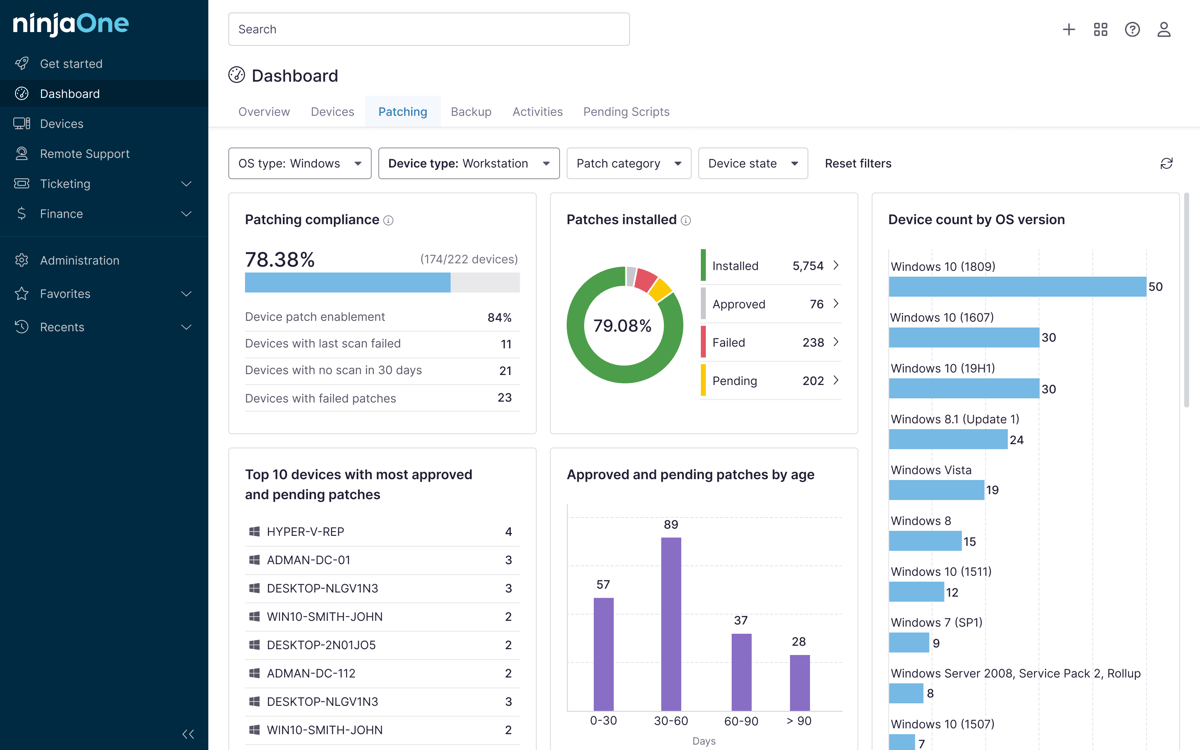
NinjaOne MDM covers Android, Apple, and Windows mobile devices, allowing you to configure, manage, and remotely support them and ensure that they are running the latest OS and patched against critical vulnerabilities. Lost or stolen devices can be remotely locked, preventing sensitive data from falling into the wrong hands.
Quick-Start Guide
Android Project Mainline & NinjaOne
What is Android Project Mainline?
Android Project Mainline (also called “Mainline modules”) is Google’s framework for delivering critical Android system components as modular updates through the Google Play Store, rather than requiring full OS updates. This allows security patches and system improvements to be deployed independently of major Android version releases.
Key aspects:
– Modular updates – System components can be updated separately
– Faster security patches – Critical fixes don’t require waiting for quarterly OS updates
– Reduced fragmentation – Devices stay more current with security patches
– Backward compatibility – Works on Android 10 and later
Can NinjaOne manage this?
Based on NinjaOne’s current documentation, NinjaOne MDM (Mobile Device Management) supports Android device management through features like:
– Zero-touch enrollment for Android devices
– Device policy enforcement
– General Android OS management
However, the documentation doesn’t specifically detail Project Mainline module management. NinjaOne’s Android MDM capabilities focus on device enrollment, policy deployment, and general device management rather than granular control over individual system module updates.
Recommendation: If you need specific details about NinjaOne’s Project Mainline support, we suggest reaching out to NinjaOne Support or your account team to confirm current capabilities and any roadmap items.