Key Points
- Mobility management strategies don’t drift instantly; they erode over time. This makes it hard for IT teams to identify stagnation immediately.
- Visibility gaps may lead to issues such as unmanaged devices, inconsistencies in OS versions, penetration of shadow IT, and limited compliance reporting.
- When mobility policies fail to evolve with new OS releases, hardware changes, remote work expansion, and compliance updates, enforcement gaps are likely to emerge.
- Clear ownership prevents governance drift, which otherwise results in fragmented accountability, undocumented processes, and inconsistent reporting.
- Common misconceptions include assuming that having an MDM, experiencing low incident volume, focusing only on smartphones, or upgrading tools automatically means a mobility strategy is modern.
Mobility management strategies are supposed to evolve much like every other technology. This evolution should take device diversity, security threats, organization growth, and many others into account. Otherwise, your mobility management strategy may stall, and problems like visibility erosion, manual dependency, policy stagnation, and security lag may start to exist.
In this blog, we will unravel the tell-tale signs of strategy stagnation. This is to help you recognize structural indicators that your mobility management techniques might be drifting.
Visibility gaps signal structural decay
Incomplete device insight may be one of the first hallmark indicators that a mobility management strategy has stalled. This is when IT teams cease having a clear, real-time picture of the devices on the network. Common issues that involve visibility include:
- Non-registered devices: Devices may not show as enrolled in your Mobile Device Management platform.
- OS version inconsistencies: Reporting may show inaccuracies on critical information, such as devices’ operating system versions.
- Shadow IT penetration: Unauthorized or unmanaged devices (shadow IT) may start bypassing policy controls, which may pose threats if ignored.
- Limited compliance reporting: Compliance reports may become incomplete or inconsistent, requiring manual investigation.
At this point, visibility gaps create blind spots in device security and compliance. Instead of automated inventories and dashboards, IT is left piecing together device status through investigations. This reactive posture signals that your strategy no longer aligns with operational demands.
Manual processes indicate automation debt
“Automation debt” starts to increase when human intervention gradually replaces automation. This may increase human error and reduce operational resilience. Signs of automation debt include:
- Hand-configured enrollment steps rather than automated onboarding.
- Policies are updated manually in response to incidents rather than proactively.
- Troubleshooting recurring issues on an ad-hoc basis.
- Spreadsheet-based tracking of devices and compliance status.
Over time, manual processes may become a hidden tax on IT teams.
Policy stagnation creates enforcement gaps
Regularly assessing mobility controls helps ensure policies remain effective and aligned with current operational requirements. When policies fail to evolve alongside new device types and changing use cases, operational and enforcement gaps may begin to appear, including:
- New OS releases: Policies may stop covering new OS releases or device types.
- Hardware shifts: When organizations start switching to newer devices or device categories, policies written for older hardware may not be applicable anymore.
- Remote and hybrid expansion: Policies originally built for office-based environments may not reflect the realities of distributed work.
- Compliance requirements: Regulatory standards evolve over time. If mobility policies are not updated, they will not reflect new compliance expectations.
Security posture lags behind threat evolution
A stalled mobility strategy often demonstrates delayed or inconsistent security enforcement. This lag creates exposure to modern threats. Look for:
- Slow adoption of OS patching and update enforcement
- Inconsistent encryption validation across devices
- Weak remote lock or wipe capabilities
- Poor integration with incident response processes
Governance ownership determines maturity
Governing ownership of policies, operations, and security is crucial because it defines accountability. When governance is neglected, the maturity of the mobility management strategy is hindered. This situation commonly occurs when governance practices gradually drift over time. Signs of governance drift include:
- Unclear ownership: Policies, security, and operations are not structurally defined across team members.
- Undefined lifecycle: Processes for the lifecycle of devices are not documented, introducing gaps in compliance and scalability.
- Undocumented roles: Governance drifts also occur when team members accountable for policy updates and compliance reviews are not clearly identified.
- Disparate reporting: Logging methods that don’t integrate across devices and user groups are an indicator that visibility is fragmented.
Common misconceptions
Modernization is often misunderstood. Let’s clear up three common fallacies:
Having an MDM means mobility is modern
Implementing a mobile device management platform is a key foundation for modern mobility management. However, long-term success also depends on strong policies, automation, and governance processes.
Low incident volume means the strategy works
You cannot be complacent just because the team is receiving very few incident tickets. Visibility gaps may be to blame since they can conceal issues that haven’t surfaced yet.
Mobility only affects smartphones
Smartphones are just one of the many device types that encompass mobility. In today’s hybrid and remote workforce, mobility includes tablets, laptops, and hybrid endpoints.
Upgrading tools fixes strategy
Product updates and replacements don’t guarantee fixes if the mobility management strategy stalls. Your mobile infrastructure still needs process alignment and governance since they are the real drivers of modernization.
NinjaOne integration
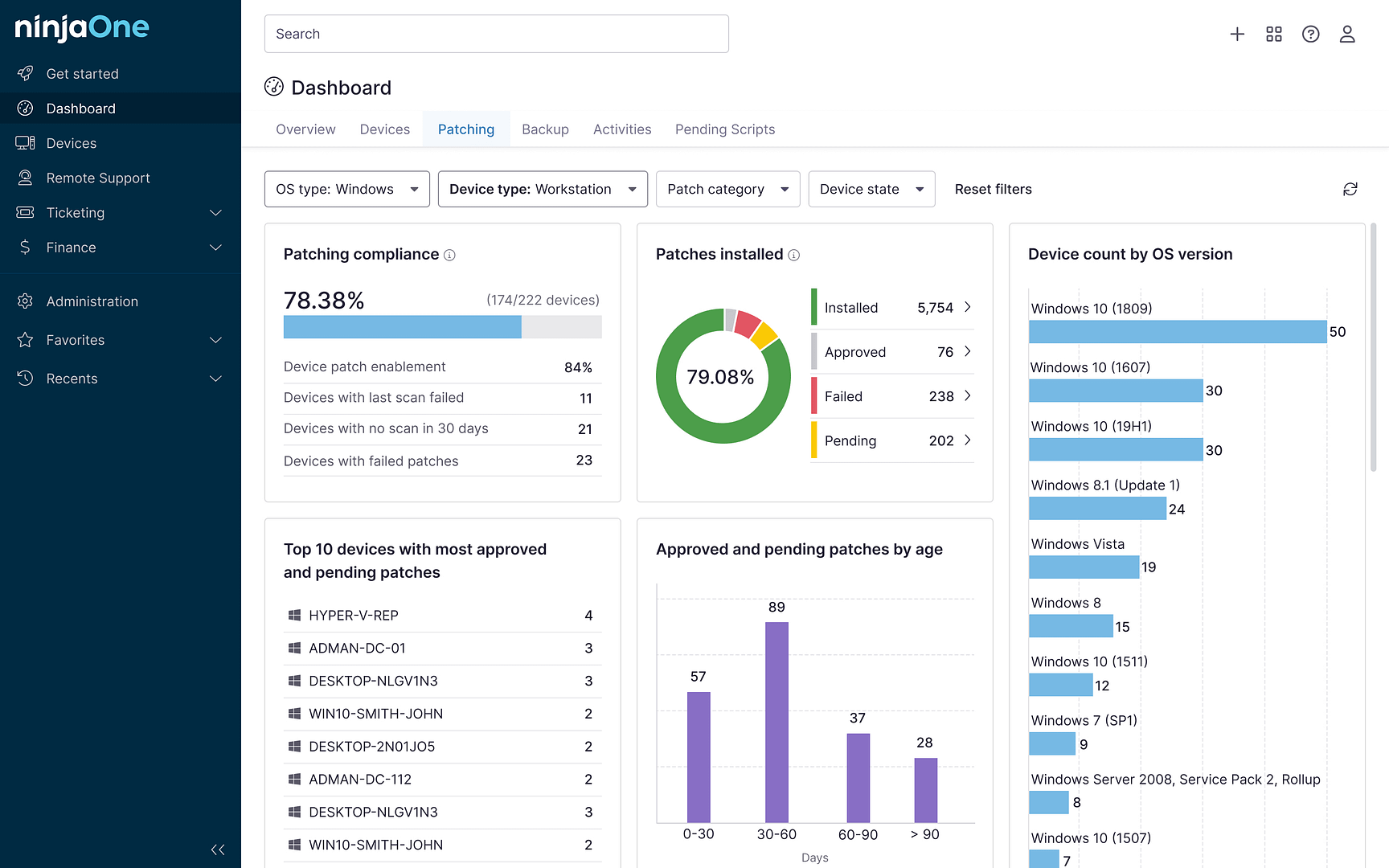
NinjaOne supports mobility strategy evolution through centralized enrollment, real-time device visibility, automated policy orchestration, and lifecycle reporting, helping organizations transition from reactive mobility management to structured governance alignment.
These features are designed to provide comprehensive visibility and control over mobile devices, ensuring that organizations can manage their device fleets more effectively and securely.
Identifying gaps in mobility management
Mobile management strategies may erode over time. It’s not something that happens out of the blue, giving IT teams some time to carefully assess their mobile environment’s posture. However, if policies, security, and operations are neglected, mobility gaps could easily slip by without IT teams knowing.
To combat mobility management drifts, you must continuously assess how policies, automation, security, and governance are needed, ensuring that these components align with operational requirements. Recognizing structural signals like visibility gaps, manual processes, policy stagnation, and governance drift empowers IT leaders to take corrective action before risks escalate.
Related topics: