
Many MSPs (managed service providers) know how to talk about tech but struggle when sitting down with non-technical decision-makers, such as CEOs, CFOs, or board members. They find it hard to communicate MSP value, leading to lost opportunities. Business leaders are not keen on hearing about log files and endpoint telemetry. They are about cost control, uptime, security, and risk prevention.
This is why it’s crucial to create a repeatable framework to communicate MSP value in business terms. By focusing on outcomes instead of jargon and infrastructure, automating executive-friendly metrics, and using clear visuals and stories, MSPs can communicate clearly. Ultimately, this leads to them proving their impact and trust and positioning themselves as essential partners, not just IT providers.
Make it easier to promote your MSP value with a robust tool IT professionals trust.
How to communicate MSP business value to non-technical decision makers
📌 Use Cases:
- This will help you explain the impact of MSPs in a way that resonates with CEOs, CFOs, and non-technical decision-makers.
- You will be able to reframe technical metrics to outcomes and benefits like risk reduction and productivity gains.
- These will help you create MSP sales pitches and support renewal conversations, budget approvals, and business reviews.
📌 Prerequisites:
- To perform these tactics, you need to have a clear idea of how to connect your technical services to business results. For example, it should answer:
- How does endpoint uptime support revenue?
- How does consistent patching reduce risk?
- You need to have access to data from tools like your RMM, help desk, or backup systems that can provide easy-to-understand metrics.
- Prepared examples or stories that illustrate your value in real-world business terms.
Tactic 1: Define business‑level outcomes that matter
In a nutshell, business executives don’t give much thought to the technical details behind your services. They only care about how it benefits them in terms of revenue, risk prevention, and productivity. This makes it best to frame your work in business outcomes instead of technical jargon.
📌 Use Cases:
- This will help you show how technical services support business priorities.
- You can reframe the conversation into results and benefits instead of features.
📌 Prerequisites:
- Your clear service catalog that lists the services you deliver.
- An agreement with your MSP team and a logical connection between what your service delivers vs the benefits.
Mapping technical services to business priorities
Here are some examples of technical services and MSP terms and how their appropriate counterpart are in business priorities:
| Technical term/service | Business priority |
| Uptime | System availability |
| Patch management | Software maintenance/risk avoidance |
| Help desk SLAs (Service Level Agreements) | Fast response and resolution times |
| Backup and recovery | Data privacy and protection |
| Security monitoring | Compliance support and reduced breach risk |
| Endpoint lifecycle management | Proactive device management |
Reframe messaging from features to results/benefits
Instead of trying to sell your MSP’s features and capabilities, sell the benefits or results:
| Technical term/service | Benefits/results |
| “We monitor endpoints 24/7.” | “We reduce unplanned downtime by 88%.” |
| “We provide encrypted backups.” | “We ensure your business can recover data immediately after an outage.” |
| “We patch systems weekly.” | “We reduce vulnerabilities that could lead to breaches.” |
Tactic 2: Build a three-minute value pitch
When delivering a pitch, there’s no need for a comprehensive technical breakdown. A short, results-focused pitch will make it easier to explain your MSP’s value in terms that resonate.
📌 Use Cases:
- This will help you deliver a concise yet compelling message during pitches, quarterly reviews, and renewal conversations.
- Helps you build trust by clearly stating results, not tools
📌 Prerequisites:
- A clear understanding of your client or target audience’s pain points and priorities
- Defined examples of how services solve problems and create measurable outcomes
Here are some tips to help you create a short yet effective pitch:
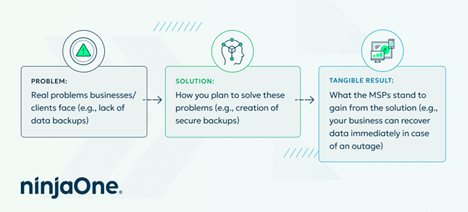
- Craft a short narrative composed of the following:
- Problem – Real problems businesses/clients face
- Solution – How you plan to solve these problems
- Tangible result – What the MSPs stand to gain from the solution
- Avoid acronyms or using the names of vendors in your software.
- Craft your pitch depending on the company you’re presenting to (legal, government services, healthcare, etc).
- Practice the pitch and deliver it in three minutes. It should be short, clear, and straightforward.
Tactic 3: Automate executive-friendly metrics
Gather metrics that matter most to executives. You can automate the collection of KPIs (key performance indicators) and present them in plain business terms.
📌 Use Cases:
- This will help you show value to your audience with clear and understandable numbers.
- Replace logs and technical charts with simple scorecards and brief insights.
📌 Prerequisites:
- You will need access to RMM exports, ticketing data, and backup reports you can pull.
- To perform automation, you’ll need elevated access and enough PowerShell permissions on your endpoints.
Gather information
- Use PowerShell or RMM exports to obtain KPIs like:
- Uptime percentage
- Ticket resolution time
- Backup compliance rate
- Present the numbers in business terms via graphs or scorecards so they’ll easily understand them.
This PowerShell script generates a simple CSV report showing all services running when the script runs, which can be used to indicate uptime.
Get-Service | Where-Object {$_.Status -eq "Running"} |
Select DisplayName, Status | Export-Csv "C:\Reports\Services.csv"
Turn numbers into insights
You can effectively communicate your MSP’s business value to executives by turning numbers into insights. Here are some examples:
- Your systems stayed 99.8% of the time this quarter.
- Our team resolved tickets in an average of 30 minutes.
- 98% of your backups completed successfully, ensuring business continuity and data security if something goes wrong.
Tactic 4: Use storytelling and visuals over tech specs
Although raw numbers and technical details are essential, executives are more likely to remember stories and visuals.
📌 Use Cases:
- This will let you share wins with executives in a way that sticks, like case studies or impact summaries.
- Helps you replace technical jargon and diagrams with clear visuals that highlight results
- Reinforces your role as a proactive partner rather than a reactive service provider
📌 Prerequisite:
- Requires real and truthful situations where your MSP prevented or solved a costly issue
- Access to design or multimedia tools for creating well-made videos or graphical presentations
How to use storytelling and visuals to highlight your MSP’s value to decision-makers
- Illustrate outcomes with short case studies or “win” stories that connect your technical work to business value. For example, you could highlight an issue you proactively prevented that could have caused days of downtime and lost revenue.
- It’s best to avoid technical terms and diagrams. Instead, use icons, before and after visuals, or simple summaries.
- Focus on moments where your MSP prevented issues from occurring or minimized a problem.
💡 Note: People remember stories more than charts. But remember to ground your presentation in data, apply suitable art and designs, and emphasize the benefit to your boardroom audience.
Tactic 5: Deliver value through regular, non-technical engagements
Executives don’t want to sit through technical briefings. They want clear updates in plain language that show how your MSP supports their business.
📌 Use Cases:
- Provide executives insight into IT performance value without the jargon.
- This will help you keep executives engaged and aligned.
📌 Prerequisite:
- Access to executive-friendly reports or dashboards that summarize IT outcomes
How to deliver value through non-technical updates
- Schedule recurring executive reviews (monthly or quarterly) with slide decks or one-page summaries.
- Use color-coded dashboards and charts.
- Keep updates short, like 15-20 minutes, to keep your audience engaged, unless requested otherwise.
💡 Tip: The goal is to keep your clients/business leaders informed and engaged, not overwhelmed.
Tactic 6: Align with executive language and priorities
Align your presentations with executive language, not technical jargon. Note they care about growth, compliance, and cost, not numbers or metrics.
📌 Use Cases:
- This will help position your IT service as a driver of business growth and efficiency.
- It shows that your MSP is aligned with its strategic goals, not just technical maintenance.
📌 Prerequisite:
- You will need a clear understanding of the client’s business priorities.
How to align your reports/communication with executive language and priorities
- Use KPIs relevant to your clients’ needs. These include:
- Cost per incident
- Time to resolve
- Percentage of planned vs reactive work
- Tie your services to goals like revenue continuity, compliance, or employee enablement (boosting productivity, ease of workflows).
- Answer questions executives ask, like “How does IT affect your ability to serve clients and grow?“
💡 Note: Speak in their terms, or use plain language. Don’t teach them yours.
Strengthen IT value communication with expert leadership insights.
⚠️ Things to look out for
| Risks | Potential Consequences | Reversals |
| Overloading execs with technical jargon | Causes confusion, and your message won’t come across | Strip out acronyms and jargon. Focus on benefits and outcomes, not features. |
| Using metrics that do not matter to leadership | Make IT feel disconnected and undermines your credibility | Reframe metrics into KPIs tied to cost, risk, and productivity. |
| Failing to align with business priorities | Makes it seem like your MSP is not contributing to business goals | Ensure you know what matters to executives and link your services to their goals. |
How NinjaOne can help you communicate your MSP’s business value
| What can NinjaOne do? | What it is | How does it help? |
|---|---|---|
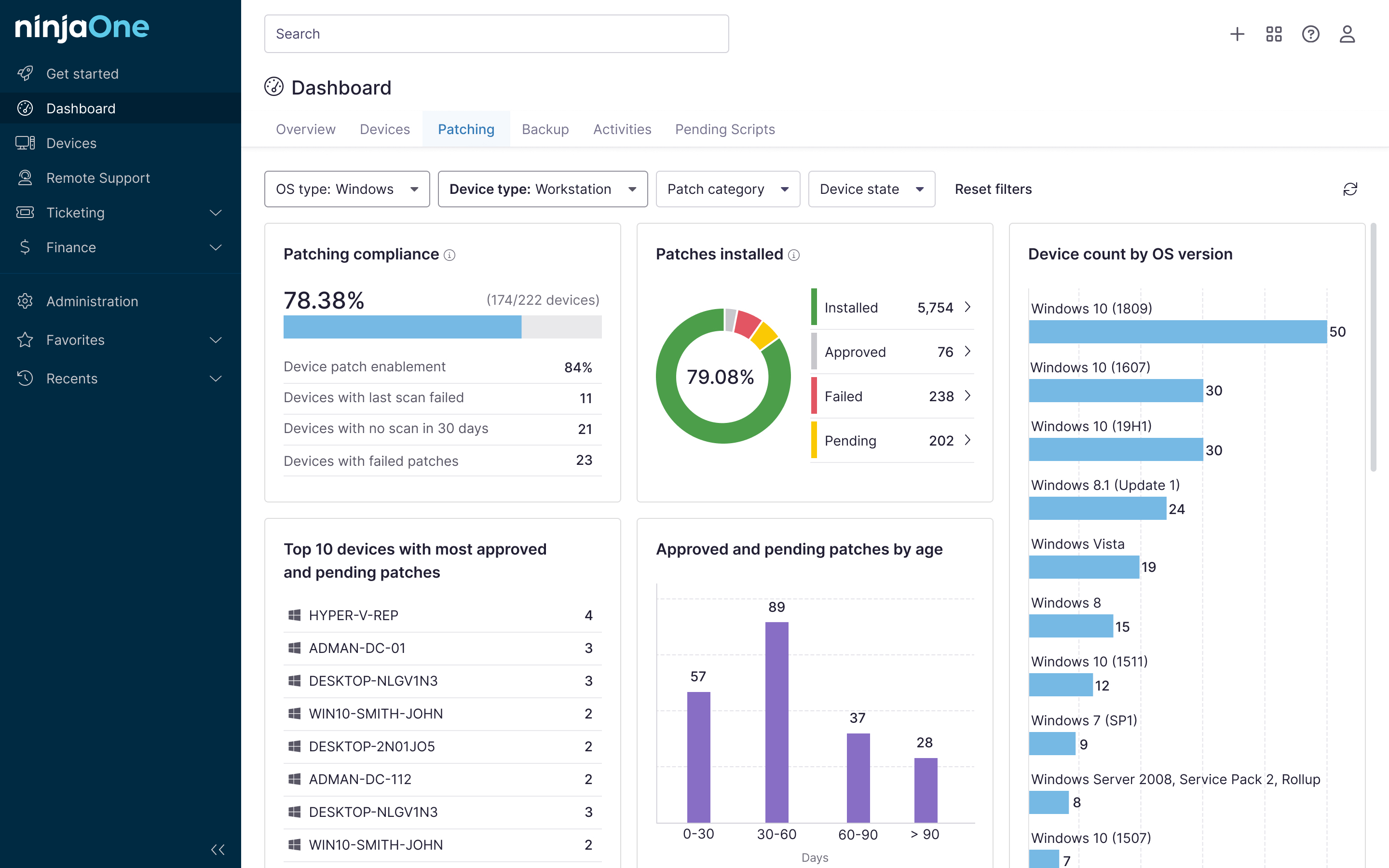
| Provide dashboards | This enables you to export executive-ready visuals from NinjaOne | Share simple, non-technical reports with business leaders |
| The ability to run automated scripts | Run scripts that output key metrics weekly or monthly | Keep executive KPI updates fresh without manual effort |
| Client tagging capabilities | Tag clients by QBR status or “Strategic Stakeholder” | Prioritize outreach and ensure key accounts get extra attention |
| Helps you create lightweight reports | Aggregate endpoint coverage, backup status, and ticket resolution into one summary | Provide executives with a clear one-page view of IT value. |
Justify your MSP services by showcasing RMM tools that demonstrate your performance.
Turn your metrics into stories to communicate your MSP’s value to clients
Technical skill doesn’t always translate into perceived value. By refining their messaging, automating executive-friendly insights, and consistently engaging with business leaders, MSPs can shift the conversation from technical support to strategic partnership. They can turn plain numbers and metrics into stories that will help make the impact of their MSP services resonate more.
Related topics:
- How to Communicate Value as an MSP in 2026
- Proving IT Value With Remarkable Reporting
- 12 Essential Strategies to Improve IT Communication
- MSP Breakthrough Episode 6: Building Client Relationships That Make Renewals Easy
- MSP Sales Process: Guide and Checklists
Quick-Start Guide
NinjaOne offers several features that can help MSPs demonstrate tangible business value to non-technical decision makers:
- Comprehensive Insights and Reporting
- The SaaS Insights Dashboard allows administrators to analyze and track business-critical metrics
- Provides visibility into email usage, communication patterns, and organizational efficiency
- Automated Patch Management with AI
- OS Patch Sentiment Analysis helps make informed patching decisions
- Provides caution levels and known issues for patches, allowing non-technical leaders to understand potential risks
- Helps demonstrate proactive IT management and risk mitigation
- Endpoint Management and Security
- Integrated security solutions like SentinelOne
- MDM (Mobile Device Management) with geolocation tracking
- Helps show asset protection, compliance, and inventory management
- Operational Efficiency
- Native patching automations
- Remote support capabilities
- Background mode for minimal user disruption
- Demonstrates technology that reduces downtime and improves productivity
- Compliance and Asset Tracking
- IT Asset Management (ITEM)
- Device tagging and easy identification
- Helps non-technical leaders understand IT asset lifecycle and management