
Key Points
- Automated Lightsail Backups: Set up scheduled snapshot automation using AWS CLI or API to ensure hands-free backups and consistent RPOs.
- Tag-Based Backup Policies: Utilize standardized tags (e.g., environment, owner, and backup tier) to scope protected instances and apply uniform backup policies.
- Tiered Retention and Cleanup: Apply retention rules by environment to control storage costs and automatically delete outdated snapshots.
- Regular Restore Testing: Run monthly restore drills in isolated environments to validate snapshot integrity, confirm recovery steps, and measure RTOs.
- Cross-Region Snapshot Replication: Copy critical snapshots to secondary regions or accounts to reduce regional outage risk and strengthen disaster recovery.
- Monitoring, Alerts, Reporting: Monitor backup jobs with alerts and monthly reports to detect failures, support audits, and meet compliance requirements.
Amazon Lightsail makes it easy to deploy and manage lightweight workloads. However, to ensure reliable data protection, you will still need to implement structured processes and automation. This guide will help managed service providers (MSPs) automate Lightsail snapshot management, transforming a manual task into a governed operational control.
Keep reading to learn how to build a policy-driven Amazon Lightsail backup strategy that delivers consistency and compliance across all your managed environments.
How to back up Lightsail instances with snapshots and automation
When backing up Amazon Lightsail instances, MSPs and IT teams must focus on building a repeatable process that ensures every workload can be recovered when needed. However, manual backup options don’t scale or provide the proof that most organizations require, so you want a governed snapshot backup operation with clear policies, automated schedules, regular verification, and documented evidence. Below are some steps to help you do just that.
📌 Prerequisites:
- Inventory of Lightsail instances by tenant, environment, and criticality
- IAM (Identity and Access Management) roles and access keys scoped to snapshot and instance operations
- Destination for reports and artifacts (e.g., shared documentation space, evidence workspace)
- Basic monitoring scripts, dashboards, alerts, and storage tracking for job success and storage use
Step 1: Define protection policy and tags
Before automating backups, create a clear protection policy and tagging system that will enable easy identification of which Lightsail instances are covered. Tags should help automation scripts find the right resources and apply consistent backup rules.
Key actions:
- Create standard tags (e.g., Environment, Owner, BackupTier, RPO).
- Define the protection scope by determining which instances require backups and how frequently.
- Set retention rules to determine how long snapshots are kept for each tier.
- Ensure consistency so automation can accurately include or exclude instances.
Step 2: Standardize snapshot creation paths
You should also establish consistent snapshot creation methods to ensure every backup is predictable and easy to manage. Lightsail supports both manual and automated snapshot options, and documenting these paths helps maintain structure and accountability.
Key actions:
- Use on-demand snapshots for quick, manual backups before maintenance or major changes.
- Use scheduled snapshots through the CLI (Command Line Interface) or API (Application Programming Interface) for routine protection.
- Record each method, including name formats, tags, and scheduling details.
Step 3: Schedule snapshots with automation
Now, you can start automating snapshot creation to reduce manual effort and ensure consistent protection across all Lightsail instances. A scheduled job can help you handle backup tasks reliably and keep every instance within your defined recovery objectives.
Key actions:
- Set up a scheduled job to run at fixed intervals, such as nightly or hourly.
- Use Lightsail APIs or CLI to create snapshots for all tagged instances.
- Add timestamps to snapshot names for easy sorting and tracking.
- Log every run, including success or failure, snapshot IDs, and sizes.
- Store logs securely for later review and compliance checks.
Step 4: Apply tiered retention
Retention should match the importance of each environment and the cost you can justify. Short retention fits dev and test, while longer retention fits production and regulated systems. You want to set automated cleanup to keep storage lean and compliant without manual effort.
Key actions:
- Define tiers for dev, test, staging, and production.
- Set shorter retention for non-production.
- Set longer retention for critical and regulated workloads.
- Mark special snapshots to keep beyond policy when needed.
- Run a nightly cleanup to delete snapshots that are past their retention period.
Step 5: Plan restore and cutover steps
Next, you should have a solid restore plan to ensure you can bring services back online quickly and correctly. Always document each step to prevent confusion during an outage and help operators act confidently when time matters most.
Key actions:
- Write clear restore instructions for each tenant or environment.
- Restore snapshots into a new instance to verify the process safely.
- Reattach or configure network settings such as IP addresses and firewalls.
- Update DNS records to direct traffic to the restored instance.
- Keep a short, tested checklist so restores can be done without guesswork.
Step 6: Drill restores regularly
Because testing backups is the only way to prove they work, you need regular restore drills to confirm that snapshots are usable and that recovery steps are accurate and fast. These exercises will reveal any issues before a real outage occurs.
Key actions:
- Choose a few representative instances each month for testing.
- Perform test restores in an isolated network to avoid disruption.
- Validate application behavior, credentials, and connectivity.
- Record any errors, fixes, or lessons learned.
- Update procedures based on drill results to improve future recoveries.
Step 7: Separate blast radius
Don’t keep all backups in one place, as this increases risk. It’s always good to copy critical snapshots to another region or account, which adds an extra layer of protection against localized failures or account issues, limiting potential data loss.
Key actions:
- Identify critical instances that need off-site protection.
- Copy or recreate snapshots in a different AWS region or backup account.
- Use minimal permissions for the copy process to reduce exposure.
- Automate the copy task and verify completion in each run.
- Track copy results and errors in your logs or reports.
Step 8: Control cost with measurement
Snapshots consume storage and can grow quickly if left unchecked. You must track usage and costs to keep your backup plan sustainable while still meeting recovery goals. It also highlights where automation and cleanup deliver real savings.
Key actions:
- Monitor total snapshot count and size for each tenant or project.
- Track cost trends monthly to spot growth early.
- Record savings from automated cleanup jobs.
- Compare actual storage use against your budget or forecast.
- Adjust snapshot frequency or retention when usage exceeds limits.
Step 9: Integrate monitoring and alerts
Add monitoring and alerts to ensure you are notified when a backup job fails or coverage is lost. A simple dashboard can give teams a quick view of snapshot health and restore readiness.
Key actions:
- Set alerts for missed schedules or failed snapshot runs.
- Track API errors and failed copy or cleanup jobs.
- Build a lightweight dashboard showing snapshot coverage and success rate.
- Display the age of the last snapshot for each instance.
- Include restore drill results to show real recovery readiness.
Step 10: Publish a monthly evidence packet
Finally, turn your backups into provable control with evidence. Create a concise and easy-to-read one-page packet for each tenant that displays coverage, drill results, and the cost impact.
Key actions:
- Include coverage by tier and the last snapshot age for each instance.
- Summarize restore drill results, including success rate and time to ready.
- Report cleanup savings, along with exceptions and their respective owners and expiry dates.
- Add two short timelines showing key events and linked artifacts.
Best practices summary table
Below are some best practices to reinforce reliable, automated, and auditable backup operations for Amazon Lightsail. Use them as a quick reference to align your backup strategy with consistent protection and operational proof.
| Practice | Purpose | Value delivered |
| Policy and tags | Ensure consistent targeting and scope | Reduce drift and simplify reporting |
| Scheduled snapshots | Automate regular backups | Eliminate manual steps and ensure predictable RPO |
| Restore drills | Validate recovery readiness | Improve confidence and response during incidents |
| Cross-region or account copy | Limit data loss from regional issues | Increase resilience and isolation |
| Monthly evidence packet | Provide clear, auditable proof | Simplify QBRs and compliance reviews |
Understanding Amazon Lightsail instances and the need for reliable backups
Amazon Lightsail instances are virtual private servers (VPS) that offer a simple and cost-effective way to run applications, websites, or dev environments in the cloud. Lightsail simplifies deployment and management, but a failure, accidental deletion, or software error can cause data loss or downtime, making reliable backups essential for business continuity. By creating automated snapshots of your instances, you can quickly restore systems, minimize disruptions, and maintain compliance with minimal manual effort.
Automation touchpoint example
Automation will help keep your Lightsail backup process consistent, verifiable, and low-maintenance. These routine jobs will handle protection, testing, and reporting with minimal manual work.
Key automation points:
- Run a nightly job that lists tagged instances, creates snapshots, records IDs and sizes, removes old backups, and copies critical ones to another region or account.
- Set up a weekly job that restores one instance for testing, measures the restore time, runs basic checks, deletes the test instance, and saves the results.
- Use a monthly job that compiles reports, charts, and drill timelines into a one-page evidence packet for each tenant.
- Add logging and alerts so teams know when jobs fail or when backups are missed.
- Design scripts to scale easily across multiple tenants and environments.
NinjaOne integration
MSPs can integrate NinjaOne with their Lightsail backup workflow to help centralize reporting, monitoring, and evidence collection. With the platform’s automation and reporting features, you can track backup health, document restore drills, and publish monthly summaries without too much manual effort.
| Function | How to use in NinjaOne | Value delivered |
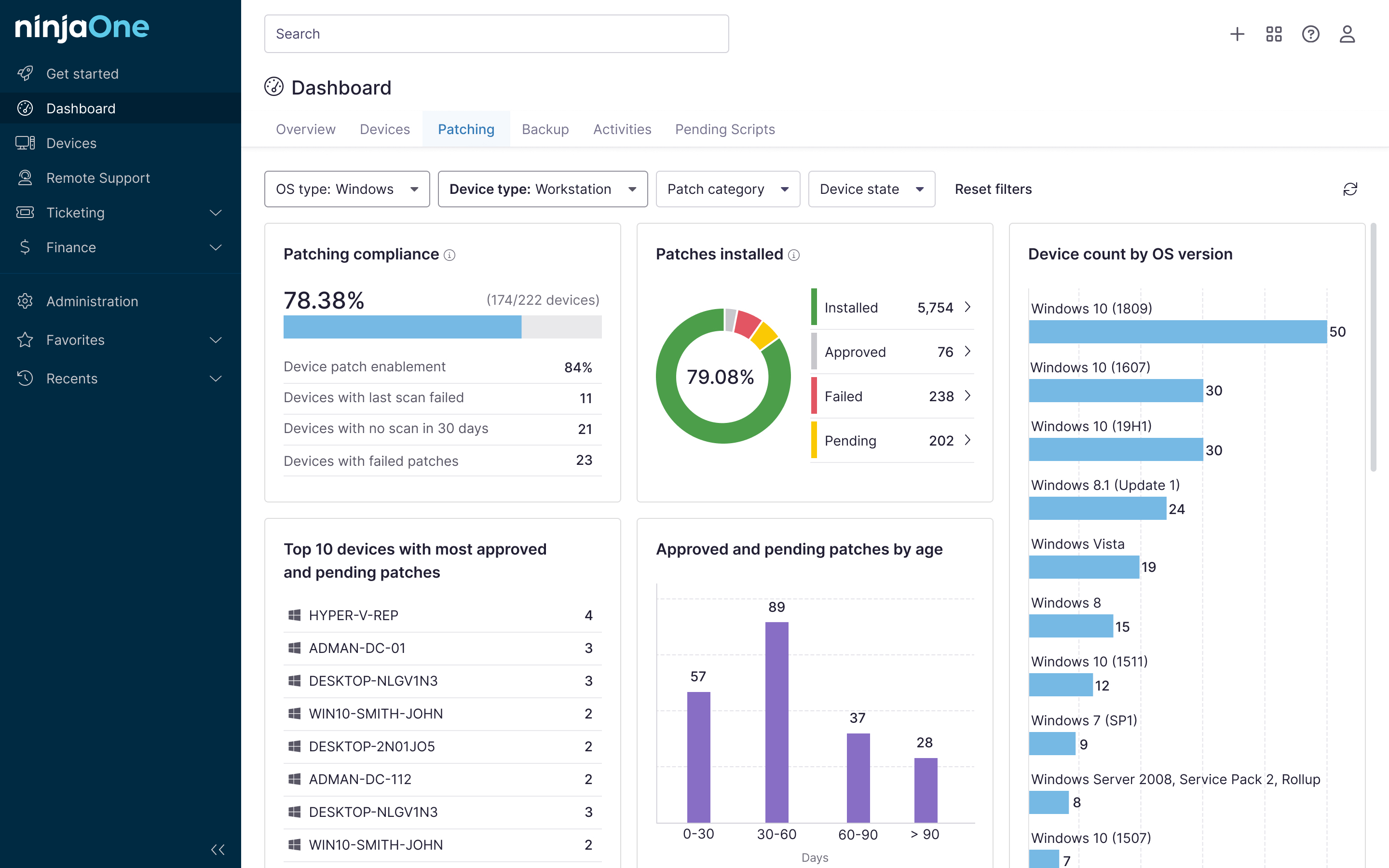
| Backup logging and tracking | Use NinjaOne’s backup tracking to monitor snapshot job results. View successful and failed backups through a centralized dashboard for clear visibility after each attempt. | Ensures continuous monitoring and quick detection of failed jobs. |
| Scheduled reporting | Configure scheduled reports on a daily, weekly, or monthly basis. Add company branding and distribute reports automatically to stakeholders. | Delivers consistent, professional evidence packets for audits and QBRs. |
| Restore drill documentation | Track restore activities directly in NinjaOne, including restore attempts, download status, and migration progress. Attach timing notes and outcomes from each drill. | Provides verifiable proof of restore readiness and supports compliance requirements. |
Operationalizing backup governance in Amazon Lightsail
Amazon Lightsail backups can deliver lasting value when treated as a structured and automated process, rather than a one-time setup. By following the steps outlined in this article, you can ensure recoverability at scale. Make sure that you utilize automation and documentation to keep Lightsail workloads protected and ready for any recovery scenario.
Related topics: