Key Points
- Implement a Measurable IT Efficiency Program: Build an evidence-based efficiency framework with KPIs, scheduling strategies, and guardrails.
- Optimize IT Operations with Smart Scheduling: Classify workloads, throttle heavy tasks, and shift major jobs to off-hours to maintain system stability.
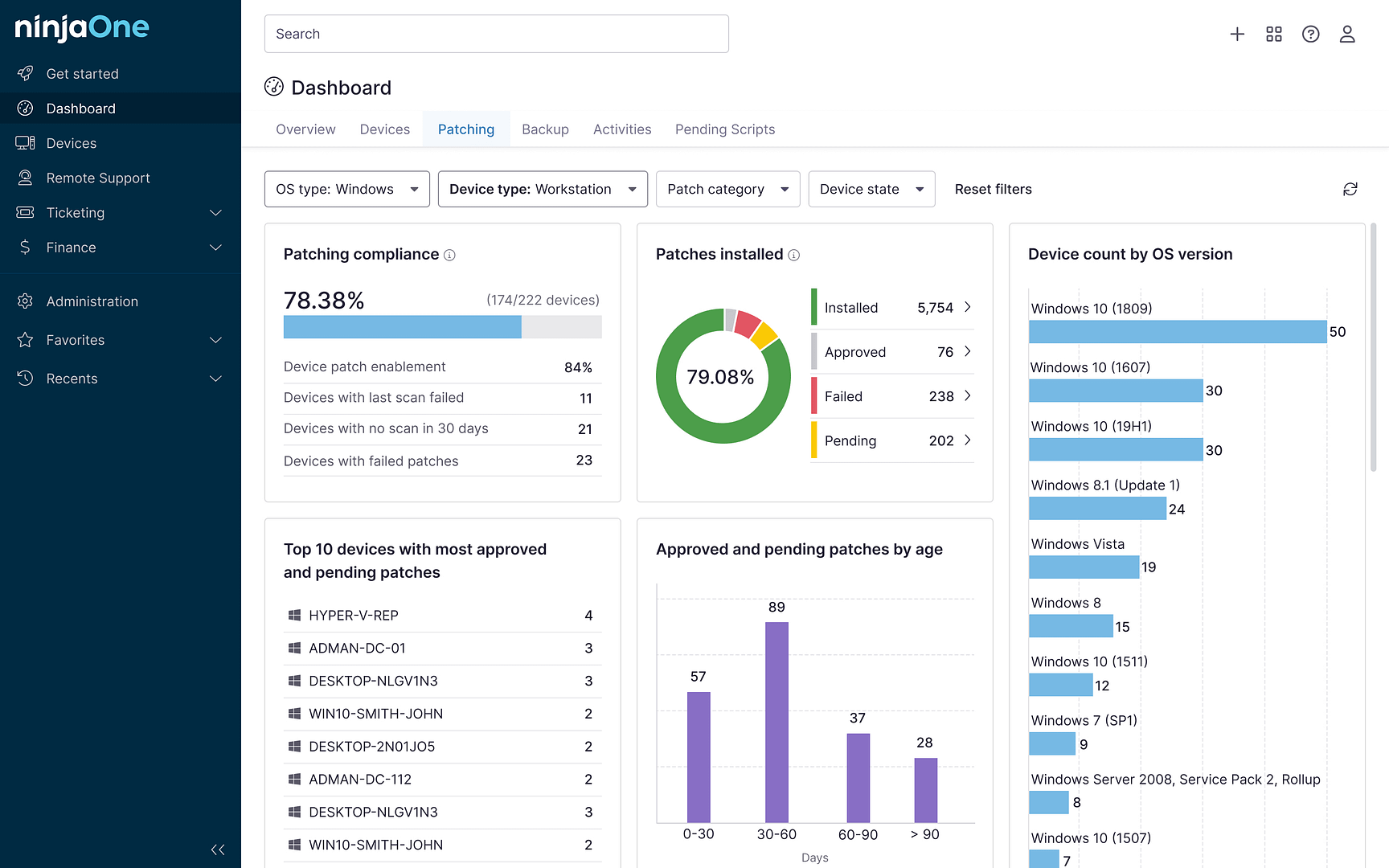
- Improve System Health Through Automation, Patch Discipline: enforce patch cycles, automate verification, and apply telemetry to prevent slowdowns.
- Align IT Efficiency with User Experience and Business Impact: Streamline helpdesk workflows and use tools like NinjaOne to sustain performance and demonstrate IT value.
Efficiency in IT is planned and measured. Scheduling major tasks during off-hours, maintaining patch health, avoiding monitoring anti-patterns, and optimizing devices using real data help make performance more consistent and reliable.
This brief turns those ideas into a program with KPIs, guardrails, and evidence.
Running an efficiency program that protects you in slowdowns
Running an efficiency program involves numerous steps, including classifying workloads, prioritizing the “big rocks,” removing structural drag, avoiding common monitoring pitfalls, tuning endpoints, streamlining help desks, standardizing management routines, building a prevention runbook, correlating efficiency, and managing exceptions.
📌 Prerequisites:
- Inventory of sites, links, backup jobs, indexing and scan tasks, and database monitoring configurations
- Baselines for CPU, RAM, disk, and network utilization by cohort and hour of day
- Owners for scheduling, patching, monitoring, help desk operations, and endpoint tuning
- Evidence workspace for monthly packets and diffs
Step 1: Classify workloads and set windows
This step classifies workloads and assigns execution windows to maintain a stable and responsive environment.
📌 Use Case: An MSP reduced performance complaints by rescheduling antivirus scans and backups to off-peak hours after identifying overlapping, resource-intensive tasks.
Catalog recurring resource-heavy jobs with their typical runtime and resource impact. Afterward, group them by priority and load, then assign each a preferred window that avoids business-hour congestion. For example:
- Business hours: Light monitoring and user-facing processes only.
- Off-hours: Schedule backups, scans, and large deployments.
Each task should have a throttle profile that defines CPU, disk, or bandwidth limits suited to the site’s capacity. Overall, this approach prevents overlap, keeps the system responsive, and creates measurable baselines for future optimization.
Step 2: Move and throttle the big rocks
This step ensures maintenance is uninterrupted while preserving responsiveness during critical business hours.
📌 Use Case: A managed service provider (MSP) identified daytime network congestion caused by overlapping backup jobs. By shifting them to overnight windows and applying bandwidth caps, daytime performance improved dramatically across all sites.
Identify your most resource-intensive “big rock” workloads. These are typically backups, antivirus scans, and indexing tasks. Afterward, shift their execution to low-traffic periods and configure backup jobs with bandwidth-optimized settings. Define business-hour caps that limit transfer rates when users are active.
Apply the same logic to antivirus and indexing tasks: schedule full scans after hours and incremental scans during the day. If your organization has constrained internet links, consider implementing stricter daytime throttles and allowing bursts overnight to complete queued jobs efficiently.
Step 3: Remove structural drag with patching discipline
This step reduces incidents and optimizes runtime efficiency by ensuring consistent patching.
📌 Use Case: An MSP discovered that outdated builds were causing slow backups and an increased ticket volume. After enforcing a regular patch cadence, job runtimes dropped and incident rates fell noticeably.
Make sure you:
- Set clear SLAs for patch cadence: Define patch frequency by device importance.
- Catch-up aging builds: Prioritize outdated devices to reduce CPU churn and memory leaks.
- Measure impact after each wave: Track metrics such as job runtime, incident volume, and resource utilization before and after patch cycles.
- Automate patch verification: Use tools to confirm patch status, recheck failed installs, and generate compliance summaries by site.
- Communicate results: Share patch performance data with stakeholders.
Step 4: Avoid database monitoring pitfalls
This step maintains high visibility without overloading systems, thanks to smart configuration.
📌 Use Case: A service provider traced recurring CPU spikes to overly granular database polling. After consolidating metrics and widening collection intervals, system load dropped and query latency improved.
To prevent monitoring tools from becoming performance liabilities, ensure you:
- Audit current monitoring queries: Identify metrics that run too frequently or return unnecessary data.
- Eliminate expensive or redundant checks: Remove deep inspection queries that gather information already collected elsewhere.
- Widen polling intervals where safe: Extend data collection intervals for stable systems to reduce the frequency of constant queries.
- Consolidate metrics: Combine related queries into broader summaries to minimize the number of database calls.
- Test before broad rollout: Implement monitoring changes on a small subset of systems first, and compare CPU, memory, and latency before scaling up the rollout.
Step 5: Tune endpoints by signal, not folklore
This step utilizes telemetry and performance signals to ensure that adjustments resolve bottlenecks rather than introducing new ones.
📌 Use Case: An MSP noticed repeated “slow device” tickets that varied by site. After analyzing telemetry, they found RAM overcommitment and browser memory leaks on specific cohorts. By targeting those issues, user slowdowns dropped sharply.
Use telemetry data to pinpoint where performance degradation occurs. Address specific issues instead of applying global changes. For example:
- Investigate and close runaway browser tabs or apps consuming excessive RAM.
- Right-size pagefiles based on observed memory utilization.
- Repair or rebuild Windows search indexes only on endpoints that show indexing-related slowdowns, rather than system-wide.
Track post-tuning performance to confirm impact. This approach reduces wasted effort, minimizes risk, and ensures optimization leads to user improvement.
Step 6: Streamline help desk to protect ops time
This step standardizes intake, triage, and self-service, enabling IT teams to resolve issues more efficiently and protect valuable engineering time during spikes.
📌 Use Case: An MSP observed that engineers were constantly pulled into minor requests during peak hours. After implementing standardized intake forms and a simple self-service catalog, ticket routing improved, and first-touch resolution rates rose by 35%.
Help desk efficiency is important when maintaining operational momentum. Establish standard intake templates for tickets that include the necessary context, thereby reducing the need for back-and-forth communication.
Afterward, implement a tiered triage system: assign quick diagnostic tiers to handle common or low-impact issues immediately, reserving escalation paths for more complex cases. Introduce a self-service catalog for repetitive requests.
Track performance using metrics such as first-touch resolution and average time to route. Review this data to refine workflows and identify areas for improvement, including potential bottlenecks.
Step 7: Standardize remote management routines
This step standardizes remote management to ensure operators can act quickly, safely, and consistently.
📌 Use Case: A service team reduced after-hours escalations by 40% by defining standard remote routines, approval points, and documentation requirements.
Apply the following practices to make remote operations predictable and efficient:
- Codify low-touch remediations: Document and script common fixes so operators can execute them quickly.
- Define approval points: Establish clear criteria for when operator action requires managerial approval, especially for high-impact configuration changes.
- Enable remote control and flexibility: Use tools that allow operators to shift workloads, defer jobs, or pause tasks remotely.
- Log every action: Record who performed it, when, and why. Maintain centralized logs with timestamps to ensure traceability.
- Review and refine regularly: Conduct audits of remote routines to identify inefficiencies and outdated steps, and update them accordingly.
Step 8: Build a prevention runbook for busy weeks
This step helps teams maintain uptime, responsiveness, and confidence even under pressure.
📌 Use Case: An MSP implemented a runbook outlining freeze windows and SLA adjustments. The result: zero major incidents and smoother ticket handling during peak activity.
To safeguard operations during busy weeks, create and maintain a prevention runbook that includes:
- Define freeze windows: Suspend nonessential deployments, updates, and configuration changes during peak periods to minimize instability.
- Raise visibility for critical SLAs: Highlight restore targets, uptime commitments, and ticket response priorities to ensure the team stays aligned on priorities.
- Pre-stage capacity and resources: Allocate extra storage, network bandwidth, or compute power in advance to handle load surges.
- Relax throttles for key systems: Adjust performance limits on critical services to prevent slowdowns.
- Document rollback plans: Specify how and when to revert temporary changes once the busy period ends.
- Review and refine post-event: Review results, document lessons learned, and update the runbook for the next event.
Step 9: Correlate efficiency to user impact
This step delivers value by grounding operational metrics in user outcomes.
📌 Use Case: After refining patch schedules and job throttles, an MSP measured a 30% drop in “slow performance” tickets. This direct correlation between backend changes and user outcomes strengthened executive confidence in their efficiency program.
Connect system efficiency data to user impact to validate and sustain operational improvements. Track user-facing indicators such as slow-response tickets and application load times. Align the changes made in scheduling, patching, or monitoring to identify cause-and-effect patterns.
Establish consistent KPIs, like a reduction in performance-related incidents. Use dashboards or monthly reports to visualize trends across sites.
When communicating the results, highlight how technical adjustments translate to measurable user benefits, such as faster logins.
Step 10: Operate exceptions with expiry and publish proof
This step provides teams with flexibility while maintaining accountability.
📌 Use Case: An MSP allowed a daytime backup for a client with limited off-hour windows. By setting an expiration date and reviewing it weekly, they ensured the exception didn’t become permanent or degrade performance.
To manage exceptions effectively and maintain operational discipline:
- Assign ownership: Identify the owner responsible for creating, monitoring, and closing every exception.
- Define reason and compensating limits: Document why the exception exists and what safeguards will minimize its impact.
- Set expiry dates: Make all exceptions time-bound with a firm end date or review checkpoint to prevent indefinite extensions.
- Review weekly: Reassess all active exceptions regularly to confirm they’re still necessary and compliant with performance goals.
Best practices to run an efficient IT program
The table below summarizes the best practices to follow when running an efficient IT program:
| Practice | Purpose | Value delivered |
| Workload windows and throttles | Keep peaks stable. | Fewer slowdowns during business hours |
| Patch SLAs on key cohorts | Remove hidden drag. | Shorter job runtimes and fewer incidents |
| Monitoring hygiene | Reduce needless load. | Lower CPU and query latency |
| Help desk flow standards | Preserve engineer focus. | Faster resolutions during spikes |
| Monthly evidence packet | Make gains provable. | Executive trust and budget continuity |
NinjaOne services that help run an efficient IT program
With NinjaOne, you can run or improve your efficiency program to protect you from peaks and slowdowns. You can use scheduled tasks to gather endpoint performance snapshots, backup job metrics, and script-based health checks tagged by site, then attach the monthly efficiency packet to QBR documentation.
Increase efficiency in IT with a practical operating model
Scheduling work wisely, maintaining system updates, monitoring effectively, improving help desk processes, and tuning devices using real data help keep operations smooth and efficient. Treating these efforts as one cohesive program with clear goals and tangible results helps mitigate issues during peak times and fosters lasting improvements.
Related topics: