
Key Points
- Cybersecurity blind spots form when visibility is incomplete, tools don’t share data, or audits are infrequent, leaving unmanaged devices and misconfigurations silently exposed.
- Continuous automated asset discovery is essential to maintaining a real-time inventory of every endpoint, application, and configuration across hybrid IT environments.
- Proactive threat hunting actively investigates anomalies in endpoint telemetry and network logs rather than waiting for alerts to surface.
- Consolidating fragmented security tools into a unified platform enables consistent policy enforcement and cross-source signal correlation.
- Eliminating blind spots long-term requires combining automated remediation, continuous monitoring, and ongoing user security awareness training.
Modern IT environments don’t stay still. Endpoints move between networks, users adopt new tools without approval, and infrastructure shifts between on-prem and cloud. As your environment changes, visibility gaps can emerge and become cybersecurity blind spots.
You don’t need a breach to know they exist. If you can’t account for every device, application, and access path in real time, you’re already exposed. Industry data reinforces this. The Verizon Data Breach Investigations Report consistently shows that misconfigurations, missing patches, and weak access controls remain the leading causes of incidents. These aren’t advanced threats, just overlooked basics.
To eliminate IT security gaps, you need to shift from periodic checks to continuous visibility, and from reactive fixes to controlled, repeatable processes.
Understanding your cybersecurity blind spots
Cybersecurity blind spots are the risks you don’t see in real time. They develop when visibility is incomplete, when tools don’t share data, or when processes rely on infrequent audits.
In a hybrid environment, this happens quickly. Devices connect remotely, SaaS applications bypass traditional controls, and teams operate across multiple systems. Over time, these small gaps accumulate into broader cybersecurity gaps that attackers can exploit.
The challenge isn’t identifying a single issue. It’s maintaining a current, accurate view of your entire environment. Without that, even well-configured controls leave you exposed to external threats.
Closing cybersecurity blind spots starts with one principle: you need to know what exists before you can secure it.
Common sources of cybersecurity gaps
Most teams know they have blind spots, but not always where to look first. These sources repeatedly introduce cybersecurity gaps and warrant ongoing attention.
Unmanaged devices and IT security gaps
Unmanaged or forgotten devices are one of the most common sources of IT security gaps. These include laptops that haven’t checked in for weeks, test systems outside your domain, or IoT devices running outdated firmware.
These systems often miss patches, fall outside monitoring, and operate with weak or default configurations. Because they aren’t tracked centrally, they create silent exposure across your network. If you can’t see every endpoint, that means you can’t enforce policy consistently.
Shadow IT and poor cybersecurity awareness
Shadow IT introduces another layer of risk. When users adopt tools or workflows outside approved systems, you lose visibility into how data moves and who can access it.
Poor cybersecurity awareness makes this worse. Users reuse passwords, install unapproved applications, or bypass controls to get work done faster. These actions create gaps that security tools alone won’t catch.
Addressing these risks requires both technical controls and user behavior changes. Without both, cybersecurity gaps can persist even in well-funded and seemingly secure environments.
Continuous discovery to eliminate IT security gaps
In modern environments, changes happen too quickly, so you can’t rely on periodic audits to maintain visibility.
Continuous discovery keeps your asset inventory accurate as your environment evolves. Instead of checking quarterly, you detect devices, applications, and configurations as they appear.
Automated asset discovery
Automated discovery tools help you identify endpoints across on-prem, cloud, and remote environments the moment they connect. This ensures your inventory reflects reality, not a snapshot from weeks ago.
As new assets appear, you can immediately flag unsupported systems, missing patches, or risky configurations. This prevents small gaps from becoming larger cybersecurity blind spots over time.
It also helps you understand dependencies. When you map how systems communicate, you can see which vulnerabilities carry the highest risk and prioritize accordingly.
Proactive threat hunting
Visibility alone isn’t enough. You also need to actively look for signs of compromise.
Threat hunting shifts your approach from waiting for alerts to actively investigating anomalies. You use telemetry from endpoints, identity systems, and network logs to identify unusual behavior, such as unexpected process activity or lateral movement.
Over time, this builds a stronger detection capability. You refine your assumptions, improve your coverage, and reduce the chance that a hidden gap becomes an incident.
Balancing security visibility with user privacy
As you increase visibility, you also need to manage how data is collected and used. You need to collect enough data to defend your environment without overreaching or creating unnecessary risk.
Start by defining clear governance boundaries:
- Set data retention limits and apply anonymization where possible
- Focus monitoring on high-risk assets, users, and workflows
- Audit telemetry regularly to ensure collection stays aligned with policy
Then document how that data is used. Align your approach with frameworks like the NIST Privacy Framework so your monitoring supports both security and compliance.
Strategies to eliminate cybersecurity blind spots
Once you identify gaps, the priority is closing them quickly and consistently.
Consolidate fragmented security tools
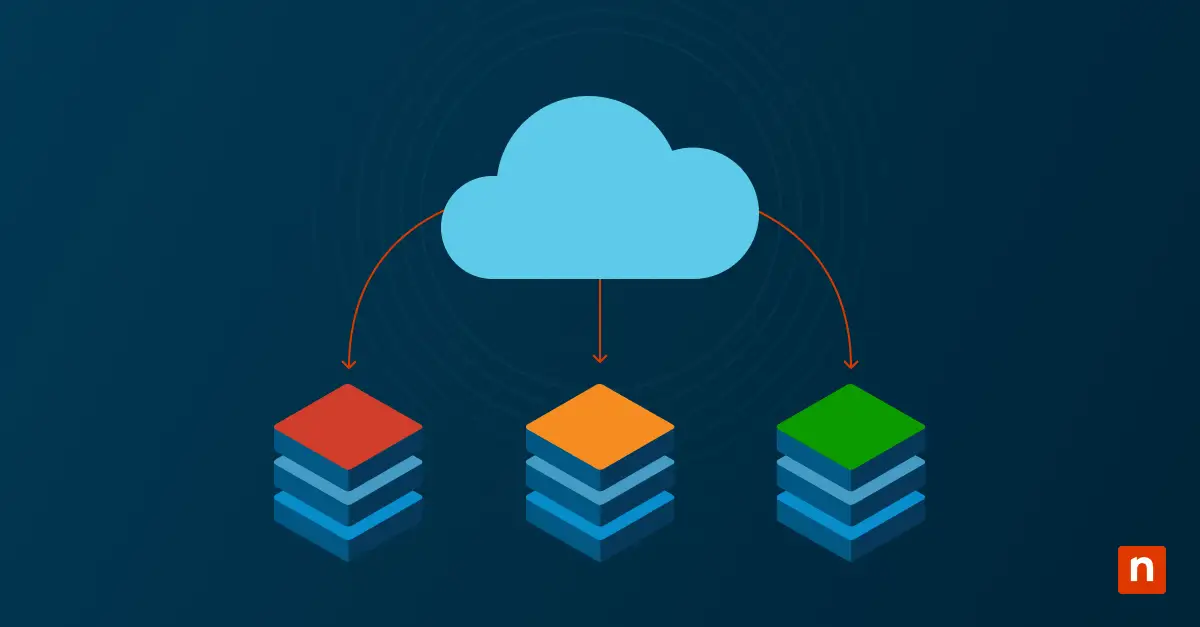
Multiple point solutions force you to hop between dashboards and reconcile inconsistent data sets. A unified security platform brings endpoint, network, and cloud visibility into one console so you can see relationships, not just alerts.
Consolidation lets you correlate signals across data sources, standardize policies, and deploy changes consistently. It also reduces operational overhead and integration work, which frees engineers to focus on higher-value analysis.
Automate remediation and compliance workflows
The longer fixes take, the longer vulnerabilities remain exposed. So, remediating issues manually can create unnecessary delays and introduce inconsistency.
Automated remediation lets you respond faster and apply changes uniformly across your environment. Instead of relying on individual actions, you enforce security as part of your standard workflow:
- Schedule and deploy patches across all endpoints automatically
- Enforce configuration changes that support least-privilege access
- Generate compliance reports continuously for audit readiness
Build in safeguards such as maintenance windows, device grouping, and rollback options to prevent disruptions to your operations. With automation in place, you reduce exposure windows and eliminate IT security gaps without adding operational overhead.
Maintain continuous monitoring and visibility
Closing a gap once doesn’t mean it stays closed. Systems change, users adapt, and new risks appear. Continuous monitoring ensures you catch those changes early. By combining telemetry with context, you can identify meaningful signals without overwhelming your team with noise.
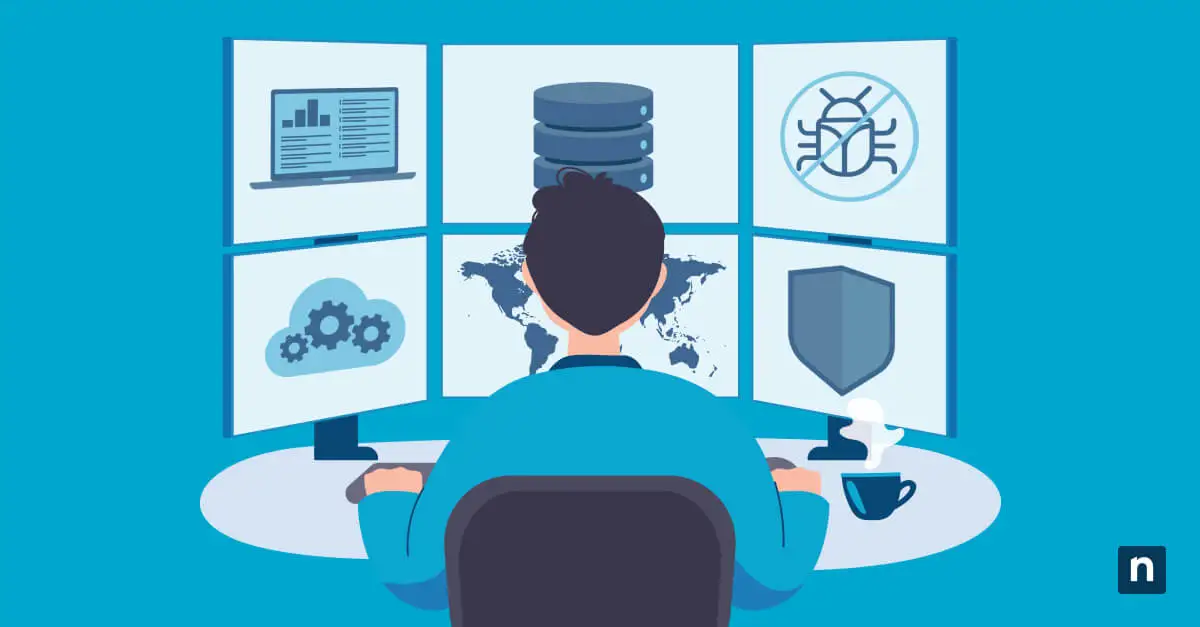
To make this effective, your tools need to work together. Integrate monitoring, asset discovery, and threat detection so they share data and enrich each other. Aggregate that insight into centralized dashboards that give you a real-time view of your security posture.
From there, define dynamic baselines that reflect normal activity across your environment. When behavior deviates, use policy-driven triggers to initiate response workflows automatically and verify that issues are fully resolved, not just acknowledged.
Building long term cybersecurity resilience
Eliminating cybersecurity blind spots isn’t a one-time effort. In fact, it should become part of how your team operates. Make sure every device, application, and access path is accounted for, then enforce access hygiene so permissions align with actual need. From there, layer in automation to handle patching, configuration, and routine remediation without relying on manual effort.
As your baseline stabilizes, shift focus to continuous improvement. Review discovery findings regularly, refine detection logic, and adjust policies as your environment changes. A simple cadence helps: review visibility weekly, assess threat patterns monthly, and update controls as needed.
Finally, address poor cybersecurity awareness. Train users to recognize risks, follow approved workflows, and understand their role in maintaining security. Reinforce this with practical exercises so behavior improves alongside your technical controls.
Close your cybersecurity blind spots with NinjaOne
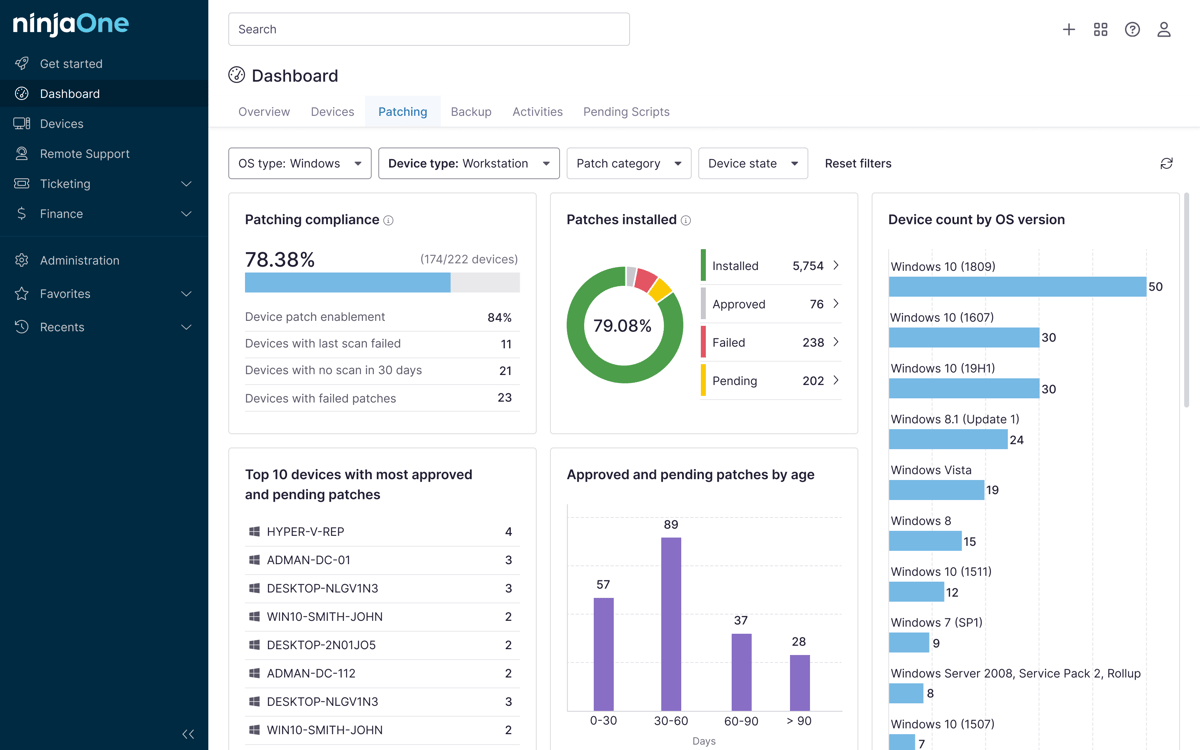
NinjaOne helps you discover and manage endpoints in real time, automate patching and configuration changes, and monitor device health from a single platform. That means fewer gaps, faster remediation, and consistent policy enforcement across all devices.
Book a demo and see how NinjaOne helps you eliminate IT security gaps, improve visibility, and maintain a strong cybersecurity posture as your environment evolves.