NinjaOne SaaS Backup for Google Workspace /
powered by Dropsuite
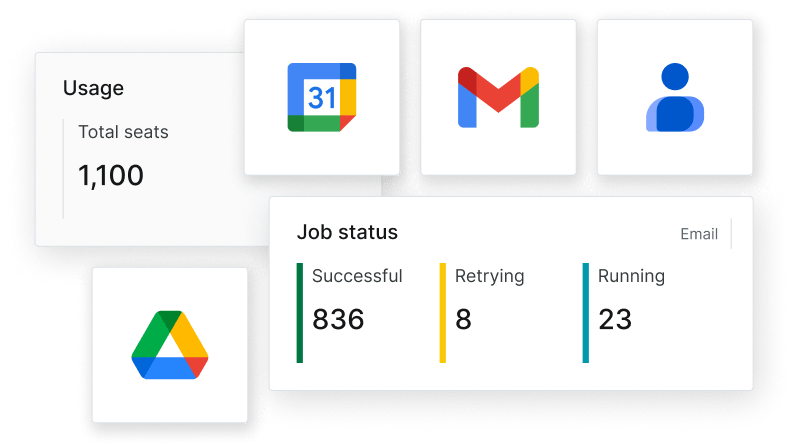
Automated, policy-driven, granular backup and recovery
Protect Gmail and Drive from everyday loss events
Workspace data can disappear fast through user cleanup, sync issues, permission changes, or malicious activity. Automated Google Workspace backups help you recover critical Gmail and Drive data confidently and maintain business continuity.
Restore emails, files, and folders
Find what you need fast and restore exactly what was lost, from a single email to a Drive folder tree. Use point-in-time recovery and item-level restore to recover quickly without overwriting good data.
Make retention predictable
Apply consistent retention rules that align with internal policy and customer requirements. Preserve historical data during employee transitions and after user deletion so you can meet governance needs without added admin overhead.
Automated, policy-driven, granular backup and recovery
Protect Gmail and Drive from everyday loss events
Workspace data can disappear fast through user cleanup, sync issues, permission changes, or malicious activity. Automated Google Workspace backups help you recover critical Gmail and Drive data confidently and maintain business continuity.
Restore emails, files, and folders
Find what you need fast and restore exactly what was lost, from a single email to a Drive folder tree. Use point-in-time recovery and item-level restore to recover quickly without overwriting good data.
Make retention predictable
Apply consistent retention rules that align with internal policy and customer requirements. Preserve historical data during employee transitions and after user deletion so you can meet governance needs without added admin overhead.
Extensive Google Workspace data defense
Gmail
Full backup of inbox, sent items, archived mail, and attachments
Drive
Protection for files, folders, and shared drives (including team drives)
Calendar
Contacts
Backup of user contact information and directory entries
Why third-party backup is critical
In today’s threat environment, a dedicated backup adds the protection Google’s Shared Responsibility Model expects, so you can recover quickly from accidental deletion, ransomware, and user error.
Automated, cloud-native protection for Google Workspace

Administration simplicity

Built-in automation
Ensure your data is protected in a way that best fits your business with customizable automation schedules and granular retention policies.

Ransomware recovery
Defend your client’s data with backups that are secured with military-grade encryption and are automatically backed up multiple times a day.

Unlimited storage and optimized restores
Save on storage costs with unlimited space and use incremental backups that only search for and back up changed files for quicker restores.

Secure restore options

Consolidated dashboard
Data backup dashboards allow administrators to manage backups and user access, monitor backup plans, initiate restores, and more.
Customers love NinjaOne
saved time on manual tasks through automation
reduced ticket volumes and resolution times
replaced 3-4 tools with NinjaOne
Data protection capabilities
| SaaS Backup | Archiving | Competitors |
|---|
Comprehensive Backup
| Incremental Backup | Automated Backup | Real-Time (Journaling) | |
| Unlimited Storage | |||
| Immutable Storage | |||
| Comprehensive Backup Workload |
Search & Restore
| Advanced Search | |||
| Search within Attachments | |||
| Granular Restore Options |
Real-Time Monitoring Alerts
| Real-Time Monitoring & Alerts | |||
| Detailed Reporting Dashboard |
Compliance & Legal
| Retention Policies | Fixed Options | Customizable | Fixed Options |
| Audit Log | |||
| eDiscovery & Saved Searches | |||
| Tagging & Alerting | |||
| Legal Hold & Data Review Process |
Discover value in 5 minutes.

NinjaOne and Vetcor partner to manage 15,000 endpoints across more than 850 clinics
This is why customers love us
100,000
Endpoints managed
“NinjaOne is a scalable solution. It’s built on a modern SaaS architecture and it’s future-proof.”

40%
More Cost Effective
“NinjaOne’s price point is 40% less than any other endpoint management tool on the market, while being more powerful and easy to use.”

10-15
Tools Replaced
“Before, I needed 10-15 different tools to execute what NinjaOne does in its centralized, single pane of glass.”

30%
Less time for patching
“We observed a 30% reduction in the time taken for patch deployments compared to our previous solution.”

2,000
Endpoints managed
“NinjaOne gives me much more flexibility and security in my work”

30%
Annual ROI
“[NinjaOne] has already shown its value in ROI…it’s at least a hundred thousand dollars annually.”

24x
Faster Endpoint Management
“Our processes have become 24x faster with NinjaOne.”

20-40
Hours Saved Each Week
“Leveraging the automations feature within NinjaOne has enabled me to save upwards of what would likely be 20 to 30 to even 40 hours per week.”

NinjaOne Integrations












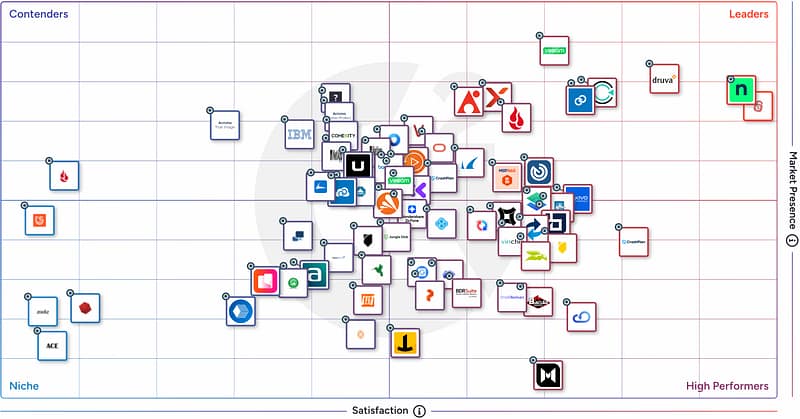
Rated #1 on G2
G2’s No.1-Rated Online Backup Software
Backup you can rely on
Customers grant NinjaOne Backup an Ease of Admin score of 9.4 and an Ease of Use score of 9.4. Both satisfaction scores indicate trust in NinjaOne to keep their data secure and appreciation for the simplicity of using one platform to manage backups for every workload.
“NinjaOne Backup has already saved one of our clients from disaster!”
Corey Petrie,
System Administrator



| NinjaOne | Average Ratings | |
| Likelihood to Recommend | 9.6 | 8.7 |
| Product Going in the Right Direction? | 9.9 | 8.6 |
| Ease of Admin | 9.4 | 8.9 |
| Ease of Doing Business With | 9.7 | 9.0 |
| Quality of Support | 9.4 | 8.7 |
| Ease of Setup | 9.4 | 8.9 |
| Ease of Use | 9.4 | 8.9 |

Resources
FAQs
What is SaaS backup?
SaaS backup is the process of protecting data stored in cloud-based applications like Microsoft 365 and Google Workspace. Since most SaaS platforms don’t offer full data protection, SaaS backup software ensures that critical business information is regularly saved and recoverable. SaaS backup and recovery tools help guard against data loss from user error, cyberattacks, or outages. Modern SaaS backup solutions provide automated SaaS backup, reducing manual work while ensuring compliance and business continuity. With SaaS cloud backup, companies can store copies of their data securely offsite. It’s an essential backup for SaaS companies looking to protect customer trust and meet regulations. Ultimately, backup and recovery for SaaS platforms is a must-have layer of protection in today’s cloud-first world.
What is SaaS recovery?
SaaS recovery is the process of restoring lost or compromised data from cloud applications after incidents like accidental deletion, ransomware, or outages. Since most SaaS platforms don’t fully protect your data, SaaS backup and recovery tools are essential. With SaaS backup software, businesses can quickly recover emails, files, or entire accounts. Modern SaaS backup solutions offer automated SaaS backup and easy recovery options to minimize downtime. SaaS cloud backup ensures data is stored safely offsite and ready when needed. For SaaS companies, having reliable backup and recovery for SaaS platforms helps maintain operations and customer trust. Simply put, SaaS recovery is your safety net in the cloud.
What is the difference between a backup and a SaaS backup?
The main difference between a backup and a SaaS backup lies in where the data resides and how it’s protected. Traditional backups involve copying data from local systems—such as servers, desktops, or on-premise applications—to another storage location like external drives or cloud/on-prem storage, providing protection against data loss. In contrast, a SaaS backup is specifically designed to protect data stored in cloud-based applications like Microsoft 365 or Google Workspace. Since these platforms typically offer limited data recovery options, businesses use SaaS backup software to automatically back up and recover their cloud data, ensuring it’s safe from accidental deletion, cyber threats, or service outages.
How does SaaS backup protect my data?
SaaS backup protects your data by automatically creating secure, independent copies of the information stored in your cloud applications — like Microsoft 365 and Google Workspace. While these platforms store your data, they often don’t protect it from accidental deletion, user error, or malicious activity. SaaS backup software fills that gap by providing regular, automated SaaS backup, storing the data in a separate, secure location (often via SaaS cloud backup). This ensures that if anything goes wrong, you can quickly restore your files, emails, or entire accounts using SaaS backup and recovery tools. It’s an essential layer of protection and peace of mind for SaaS companies relying on cloud platforms.
What types of data can I back up with NinjaOne SaaS backup solution?
- Google Workspace Applications: This includes emails, calendars, contacts, and files from Gmail, Google Drive, and Shared Drives.
- Files and Folders: You can back up critical files and folders from endpoints, ensuring that important documents are securely stored and easily recoverable.
- System Images: NinjaOne allows for full system image backups, capturing the entire operating system, applications, and data. This is particularly useful for complete system restores.
- Applications and Server Data: Beyond files and system images, NinjaOne can back up application-specific data and server information, providing a comprehensive backup solution for various IT environments.
Which SaaS applications are supported?
How often are backups performed?
Backups are typically performed on a regular schedule, depending on the system or service in use. Here’s a general breakdown:
- Daily Backups – Common for businesses that need to safeguard critical data. It ensures that any data created during the day is backed up.
- Weekly Backups – Often used for less critical systems or data, or as a secondary backup method alongside daily backups.
- Hourly or Continuous Backups – Used in high-demand environments where data is constantly changing, such as financial institutions or cloud services. This ensures minimal data loss.
- Monthly Backups – Used for long-term storage and disaster recovery purposes, often for archiving older data.
The specific frequency depends on factors like the criticality of the data, available storage, and business continuity requirements.
Can I easily restore my data if needed?
How long can I retain the backup data?
With NinjaOne’s SaaS backup solution, you can customize how long your backup data is retained based on your organization’s needs. The platform allows you to set flexible retention policies—whether you need to keep data for a few days, several years, or indefinitely. This is especially useful for meeting compliance standards or internal data governance requirements. You can also control how many backup versions to keep and whether to retain deleted files, giving you full control over storage and recovery options.