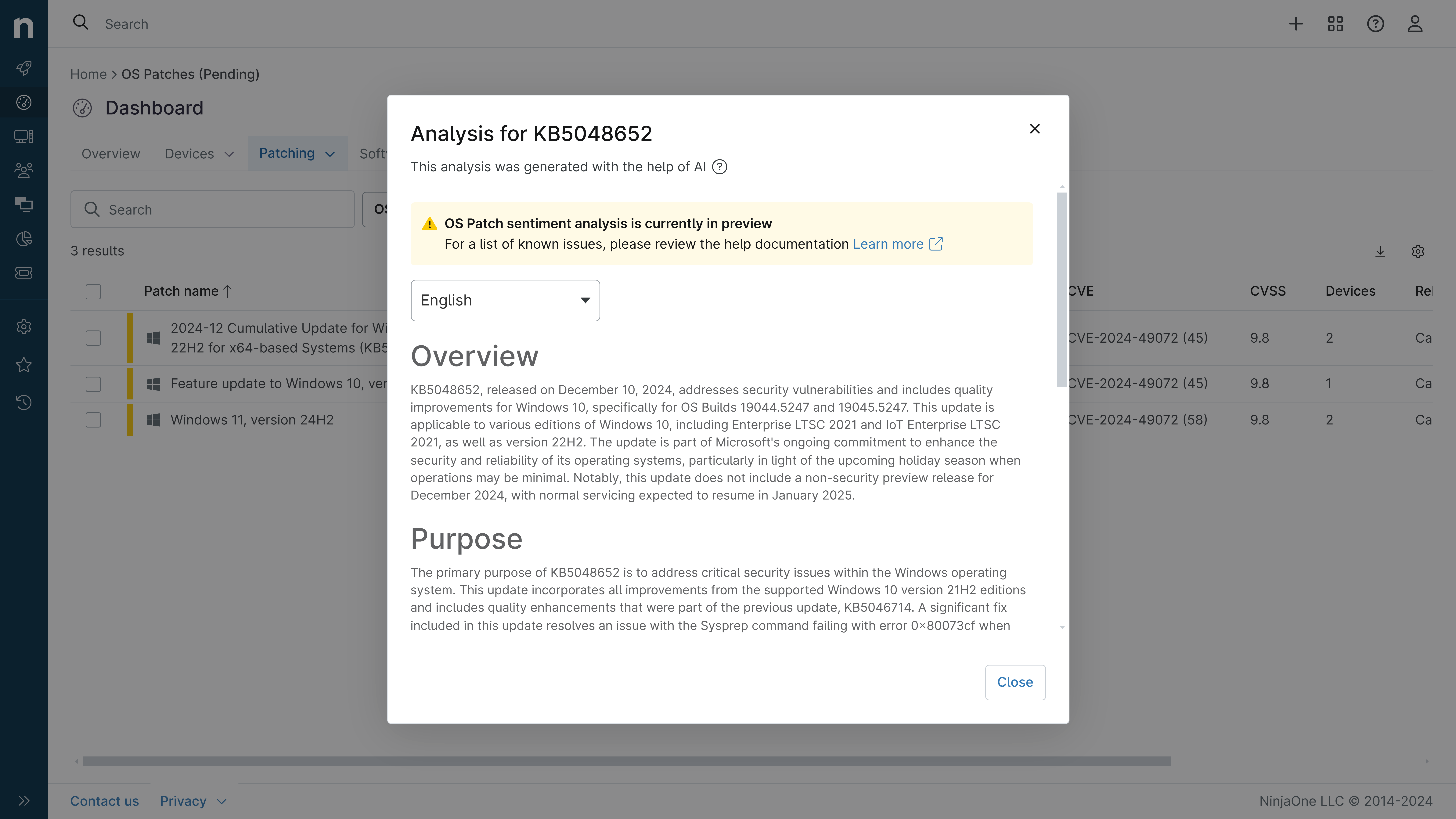
KB5087069: Overview with user sentiment and feedback

Last Updated May 14, 2026

Probability of successful installation and continued operation of the machine

0%
20%
40%
60%
80%
100%
82%
Appears Stable

Overview

KB5087069 is a cumulative security and quality rollup update for .NET Framework 4.8 targeting Windows Server 2012 R2, released on May 12, 2026. This update is part of Microsoft's Extended Security Updates (ESU) program, which provides continued security coverage for systems that have reached end-of-support status. Windows Server 2012 R2 reached end-of-support on October 10, 2023, and ESUs are available through October 13, 2026, on an annual renewable basis.

The update addresses critical security vulnerabilities within the .NET Framework runtime environment, specifically focusing on elevation of privilege issues that could allow unauthorized privilege escalation. This patch is distributed through multiple channels including Windows Update, Microsoft Update, the Microsoft Update Catalog, and Windows Server Update Services (WSUS), making it accessible to organizations maintaining legacy server infrastructure. The update requires .NET Framework 4.8 to be pre-installed and recommends installation of the latest servicing stack update (SSU) beforehand to ensure reliable deployment.

General Purpose

This security rollup delivers targeted remediation for two elevation of privilege vulnerabilities identified in .NET Framework 4.8. CVE-2026-32177 and CVE-2026-35433 represent privilege escalation risks within the framework that could potentially allow attackers to gain higher-level access on affected systems. The update modifies core runtime components including the Common Language Runtime (CLR), Just-In-Time (JIT) compiler, and various system libraries to close these security gaps. Beyond the two primary security fixes, the rollup includes cumulative reliability improvements that enhance overall framework stability. The update maintains backward compatibility with existing .NET Framework 4.8 applications while strengthening the security posture of legacy Windows Server 2012 R2 deployments. Installation requires exiting all .NET Framework-based applications and may necessitate system restart if affected files are currently in use.

General Sentiment

The sentiment surrounding KB5087069 is generally positive from a security perspective, as it addresses legitimate privilege escalation vulnerabilities in an end-of-support operating system. The update represents Microsoft's commitment to providing extended security coverage for organizations unable to immediately migrate from Windows Server 2012 R2. However, there are important contextual considerations. First, Windows Server 2012 R2 is significantly outdated, and Microsoft actively recommends upgrading to newer server versions rather than relying on extended updates. Second, the update explicitly notes a known installation limitation on Azure Arc-enabled devices, which could impact cloud-hybrid deployments. Third, the requirement to install a prerequisite servicing stack update adds complexity to the deployment process. Organizations should view this patch as a necessary interim security measure while planning migration strategies, rather than as a long-term solution. The absence of reported quality and reliability improvements beyond security fixes suggests this is a focused security release without broader stability enhancements.

Known Issues

  • Installation may fail on Azure Arc-enabled devices running Windows Server 2012 R2; requires verification that all ESU-specific network endpoints are properly configured per Connected Machine agent requirements
  • Language packs must be installed before applying this update; installing language packs after the update requires reinstalling the patch
  • All .NET Framework-based applications should be exited before installation to prevent potential file locking issues
  • System restart may be required if affected files are currently in use by running processes

Disclaimer: We take measures to ensure that AI-generated content is of the highest possible quality, but we cannot guarantee its accuracy and recommend that users do their own independent research. Generated on 2026-05-14 01:08 AM

Back to Knowledge Base Catalog