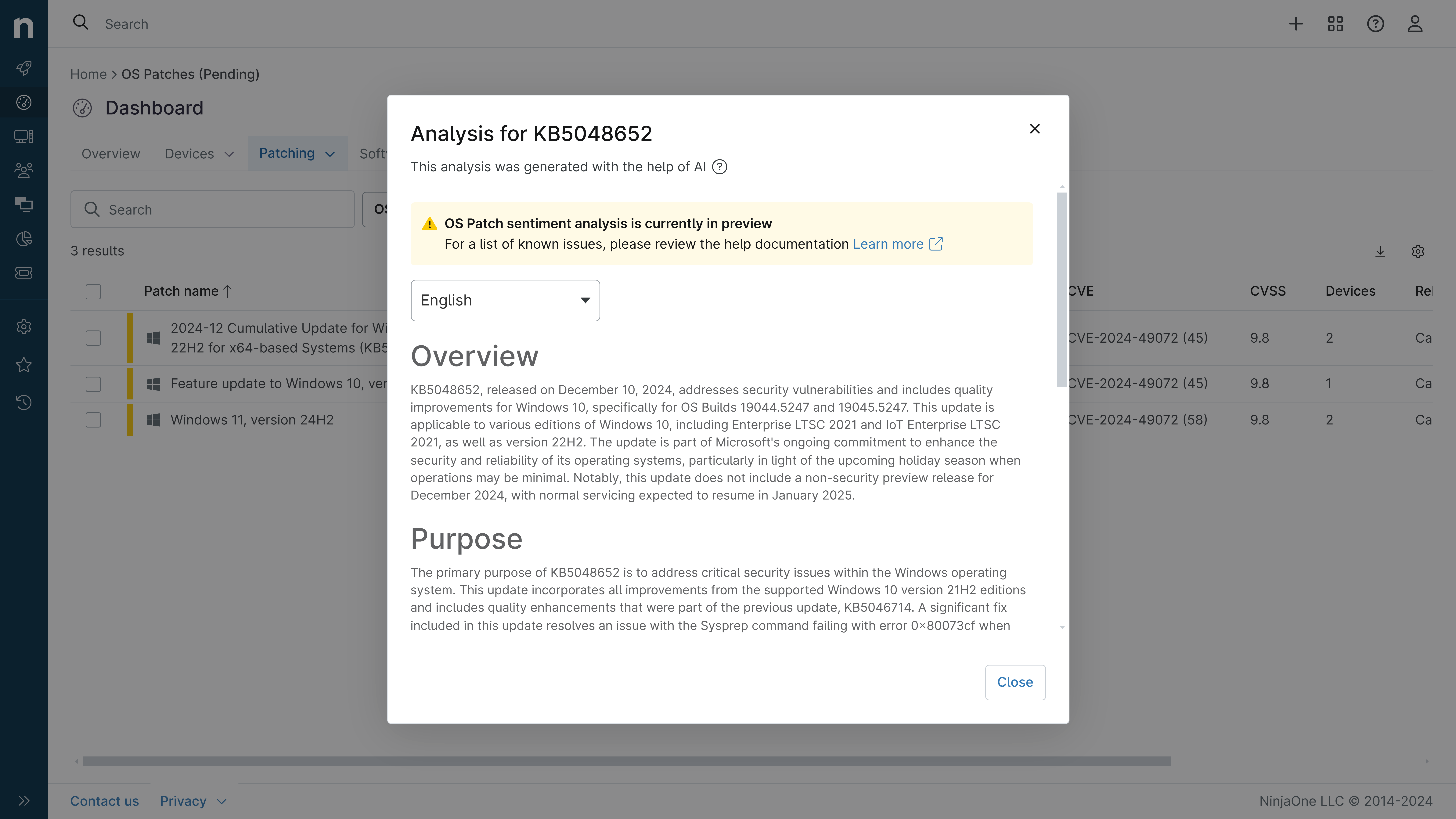
KB5087067: Overview with user sentiment and feedback
Last Updated June 12, 2026
Probability of successful installation and continued operation of the machine
Overview
KB5087067 is a Security and Quality Rollup update for .NET Framework 4.8 on Windows Server 2012, released on May 12, 2026. This update is part of Microsoft's Extended Security Updates (ESU) program, which provides continued security coverage for Windows Server 2012 following its end of support on October 10, 2023. The ESU program extends security update availability through October 13, 2026, on an annual renewable basis.
This cumulative update addresses critical security vulnerabilities within the .NET Framework 4.8 runtime environment. The update encompasses comprehensive file modifications across core runtime components, ASP.NET functionality, Windows Presentation Foundation, and Windows Communication Foundation libraries. The rollup replaces previously released updates KB5084069 and KB5066740, consolidating security improvements into a single deployment package.
The update is available through multiple distribution channels including Windows Update, Microsoft Update Catalog, and Windows Server Update Services (WSUS), providing flexibility for both automated and manual deployment scenarios. Installation requires .NET Framework 4.8 to be present on the system, and Microsoft recommends installing the latest Servicing Stack Update (KB5044413) prior to applying this rollup to ensure installation reliability.
General Purpose
This security and quality rollup addresses two critical elevation of privilege vulnerabilities in .NET Framework 4.8. The update specifically remediates CVE-2026-32177 and CVE-2026-35433, both classified as elevation of privilege vulnerabilities that could potentially allow attackers to gain elevated system privileges through the .NET Framework runtime. These vulnerabilities represent significant security risks in enterprise environments where .NET applications handle sensitive operations or run with elevated permissions.
The rollup delivers cumulative security and reliability enhancements to the .NET Framework 4.8 ecosystem, updating core runtime libraries including the Common Language Runtime (CLR), Just-In-Time (JIT) compiler, and managed framework assemblies. The update touches critical components such as ASP.NET hosting services, Windows Forms, Windows Presentation Foundation, and Windows Communication Foundation, ensuring comprehensive security coverage across the entire .NET Framework stack. While this particular release does not introduce new quality and reliability improvements beyond the security fixes, it consolidates all previous security patches into a single unified update package for streamlined deployment.
General Sentiment
The sentiment surrounding KB5087067 is generally positive from a security perspective, as it addresses legitimate elevation of privilege vulnerabilities that could impact system security. However, there are important contextual considerations. Windows Server 2012 reached end of support in October 2023, and this update is part of the paid Extended Security Updates program, which may create budget considerations for organizations. The update itself carries minimal risk as Microsoft reports no known issues post-release, and the security vulnerabilities being patched represent genuine threats that warrant immediate remediation.
A potential concern exists for Azure Arc-enabled devices running Windows Server 2012, where installation may fail if proper network endpoint configurations are not met. This represents a specific deployment scenario that requires additional validation before installation. The requirement to install a prerequisite Servicing Stack Update and to exit all .NET Framework-based applications before applying the patch adds procedural complexity to the deployment process. Additionally, if language packs are installed after this update, the update must be reinstalled, which could complicate multilingual environments. Despite these considerations, the security value of patching elevation of privilege vulnerabilities generally outweighs the deployment complexity, particularly in production environments where .NET applications process sensitive data.
Known Issues
- No known issues reported by Microsoft at time of release
- Installation may fail on Azure Arc-enabled devices running Windows Server 2012 if network endpoints for Extended Security Updates are not properly configured
- Language pack installation after applying this update requires reinstallation of the update
- Restart requirement may be necessary if affected .NET Framework files are in use during installation
Disclaimer: We take measures to ensure that AI-generated content is of the highest possible quality, but we cannot guarantee its accuracy and recommend that users do their own independent research. Generated on 2026-06-12 07:37 PM