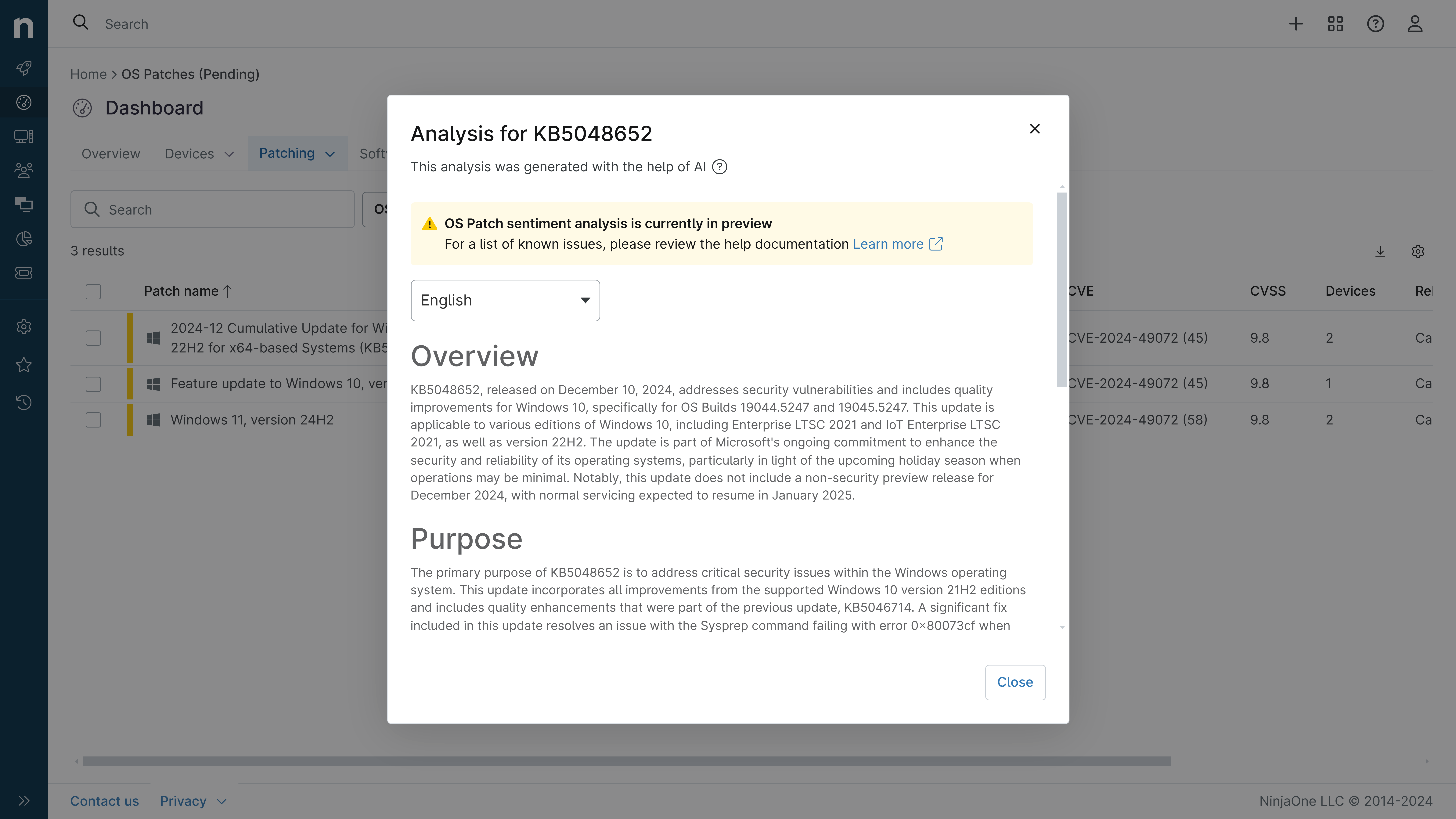
KB5082406: Overview with user sentiment and feedback
Last Updated May 28, 2026
Probability of successful installation and continued operation of the machine
Overview
KB5082406 is an April 2026 security and quality rollup for .NET Framework 3.5 on Windows Server 2012 R2. This patch addresses multiple critical security vulnerabilities within the .NET Framework runtime environment, including remote code execution risks and denial-of-service threats. The update is part of Microsoft's Extended Security Updates (ESU) program, which provides continued security coverage for Windows Server 2012 R2 beyond its standard end-of-support date of October 10, 2023. Organizations running legacy .NET Framework 3.5 applications on Windows Server 2012 R2 should consider this patch essential for maintaining security posture, particularly given the severity of the vulnerabilities being remediated.
Windows Server 2012 R2 reached end-of-support in October 2023, but ESUs remain available through October 13, 2026 on a renewable annual basis. This patch represents a cumulative security update that consolidates multiple fixes into a single deployment package. The update is available through Windows Update, Microsoft Update Catalog, and Windows Server Update Services (WSUS), providing flexibility for various deployment scenarios in enterprise environments.
General Purpose
This security rollup targets six distinct vulnerabilities affecting .NET Framework 3.5 on Windows Server 2012 R2. The most critical issue addressed is CVE-2026-32178, a remote code execution vulnerability that could allow attackers to execute arbitrary code with elevated privileges through specially crafted inputs to .NET Framework applications. Additionally, the patch remediates three denial-of-service vulnerabilities (CVE-2026-32203, CVE-2026-32226, and CVE-2026-23666) that could enable attackers to crash or hang .NET applications, potentially disrupting business operations. The update also addresses CVE-2026-26171, a security feature bypass vulnerability that could undermine existing security controls, and CVE-2026-33116, an information disclosure vulnerability that could leak sensitive data. The patch updates core runtime components including mscorlib.dll, mscorwks.dll, and various system assemblies to ensure comprehensive coverage across .NET Framework 3.5 implementations. Installation requires that .NET Framework 3.5 be already present on the system, and Microsoft recommends installing the latest servicing stack update (KB5044411) beforehand to ensure reliable deployment.
General Sentiment
Community sentiment regarding this patch appears cautiously positive, though discussion volume is relatively limited given the legacy nature of Windows Server 2012 R2. The patch addresses genuinely critical vulnerabilities, particularly the remote code execution flaw, which justifies immediate deployment in most environments. However, some considerations temper enthusiasm: Windows Server 2012 R2 is nearing the end of its extended support window, and organizations should view this patch as part of a broader migration strategy rather than a long-term solution. The requirement to install a prerequisite servicing stack update adds a minor deployment complexity. Additionally, Azure Arc-enabled devices may experience installation failures, requiring specific network configuration adjustments. While no quality regressions have been reported, the limited post-release discussion suggests either strong stability or minimal adoption among remaining users. Organizations still running .NET Framework 3.5 workloads on Windows Server 2012 R2 should treat this as a mandatory security update, though they should simultaneously plan for platform modernization to reduce ongoing maintenance burden.
Known Issues
- Installation may fail on Azure Arc-enabled devices running Windows Server 2012 R2 unless all required endpoints for Extended Security Updates are properly configured in the Connected Machine agent network settings
- Language pack installation after applying this update requires reinstalling the patch to maintain consistency
- System restart may be required if any affected .NET Framework files are currently in use by running applications
Disclaimer: We take measures to ensure that AI-generated content is of the highest possible quality, but we cannot guarantee its accuracy and recommend that users do their own independent research. Generated on 2026-05-28 07:27 PM