KB5082404: Overview with user sentiment and feedback
Last Updated May 31, 2026
Probability of successful installation and continued operation of the machine
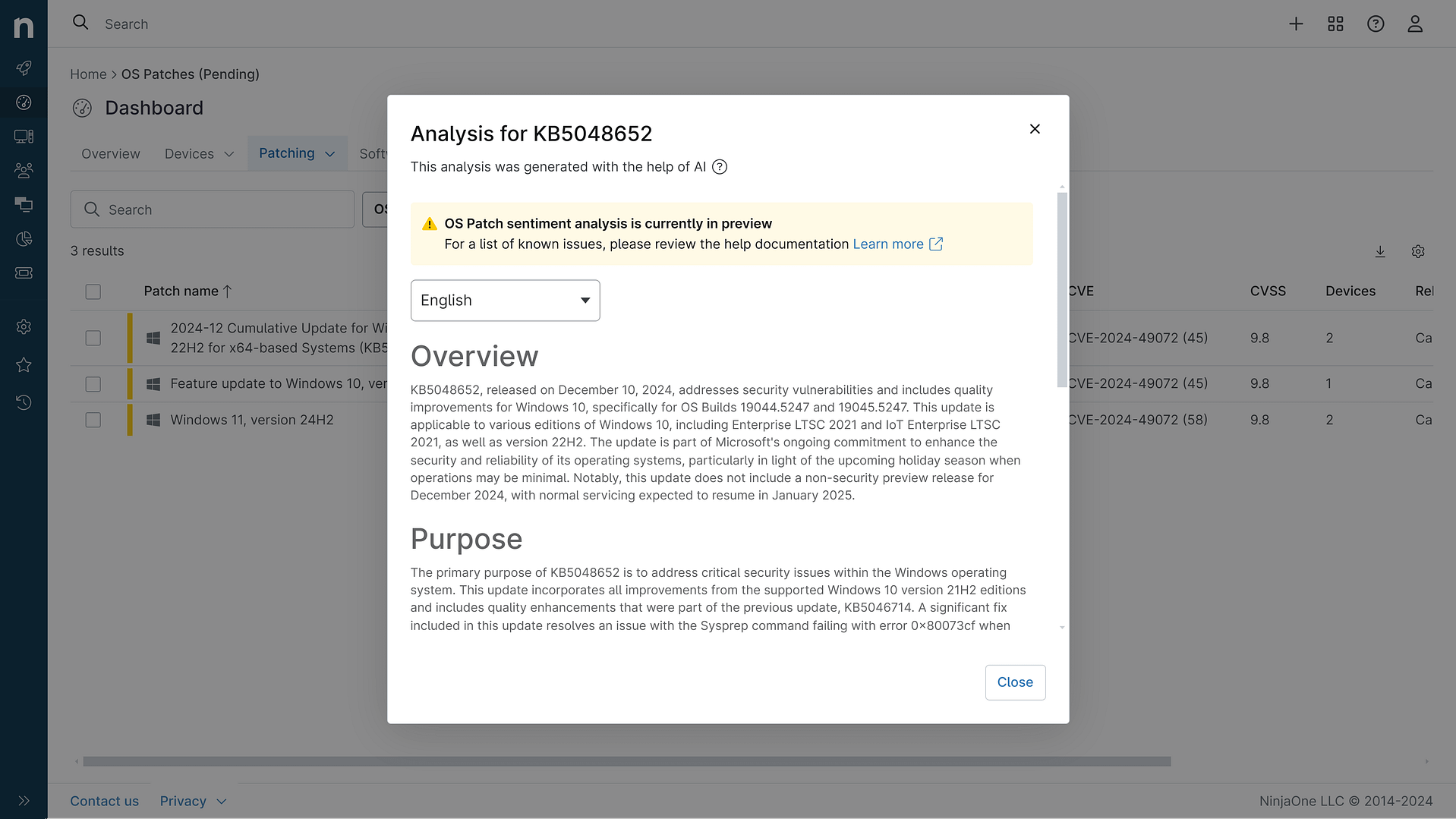
Overview
KB5082404 is an April 2026 security and quality rollup update specifically designed for .NET Framework 4.8 running on Windows Server 2012 R2. This cumulative update addresses multiple critical security vulnerabilities while also delivering reliability enhancements to the .NET runtime environment. The patch is part of Microsoft's Extended Security Update (ESU) program for Windows Server 2012 R2, which reached end of support in October 2023 but continues to receive security patches through October 2026 for organizations with active ESU licenses.
The update encompasses six distinct security vulnerabilities ranging from remote code execution to information disclosure issues, along with quality improvements focused on ClickOnce deployment verification. Organizations running legacy .NET Framework 4.8 applications on Windows Server 2012 R2 infrastructure should carefully evaluate this patch as part of their security maintenance strategy, particularly given the critical nature of the remote code execution vulnerability being addressed.
General Purpose
This security and quality rollup addresses six security vulnerabilities in .NET Framework 4.8. The most significant fix involves CVE-2026-32178, a remote code execution vulnerability that could allow attackers to execute arbitrary code through specially crafted inputs. Additionally, the patch resolves three denial-of-service vulnerabilities (CVE-2026-32203, CVE-2026-32226, and CVE-2026-23666) that could disrupt service availability, a security feature bypass vulnerability (CVE-2026-26171), and an information disclosure vulnerability (CVE-2026-33116). Beyond security fixes, the update includes quality improvements to the .NET runtime, specifically enhancing ClickOnce deployment verification logic to support SHA384 and SHA512 cryptographic algorithms, modernizing security standards for application deployment scenarios. The patch replaces two earlier updates (KB5066741 and KB5065960), consolidating fixes into a single cumulative release.
General Sentiment
The sentiment surrounding this patch is decidedly positive from a security perspective. Microsoft explicitly states no known issues exist with this update, which is a favorable indicator for deployment confidence. The patch addresses genuinely critical vulnerabilities, particularly the remote code execution flaw, making it a necessary security measure for organizations maintaining Windows Server 2012 R2 infrastructure. However, some considerations warrant attention: the target environment (Windows Server 2012 R2) is end-of-life hardware, and Microsoft actively recommends upgrading to newer server versions rather than continuing to patch legacy systems. Organizations should weigh the security benefits against the long-term viability of maintaining aging infrastructure. The update does include an important caveat regarding Azure Arc-enabled devices, which may experience installation failures if proper network endpoint configurations are not met. For standard deployments, the absence of reported issues and the critical nature of the security fixes create a generally favorable assessment, though deployment should be preceded by standard testing in non-production environments.
Known Issues
- Installation may fail on Azure Arc-enabled devices running Windows Server 2012 R2 if all required endpoints for Extended Security Updates are not properly configured according to Connected Machine agent network requirements
- Language packs must be installed before applying this update; installing language packs after this update requires reinstalling the patch
- Computer restart may be required if any affected .NET Framework files are actively in use during installation
Disclaimer: We take measures to ensure that AI-generated content is of the highest possible quality, but we cannot guarantee its accuracy and recommend that users do their own independent research. Generated on 2026-05-31 01:43 PM