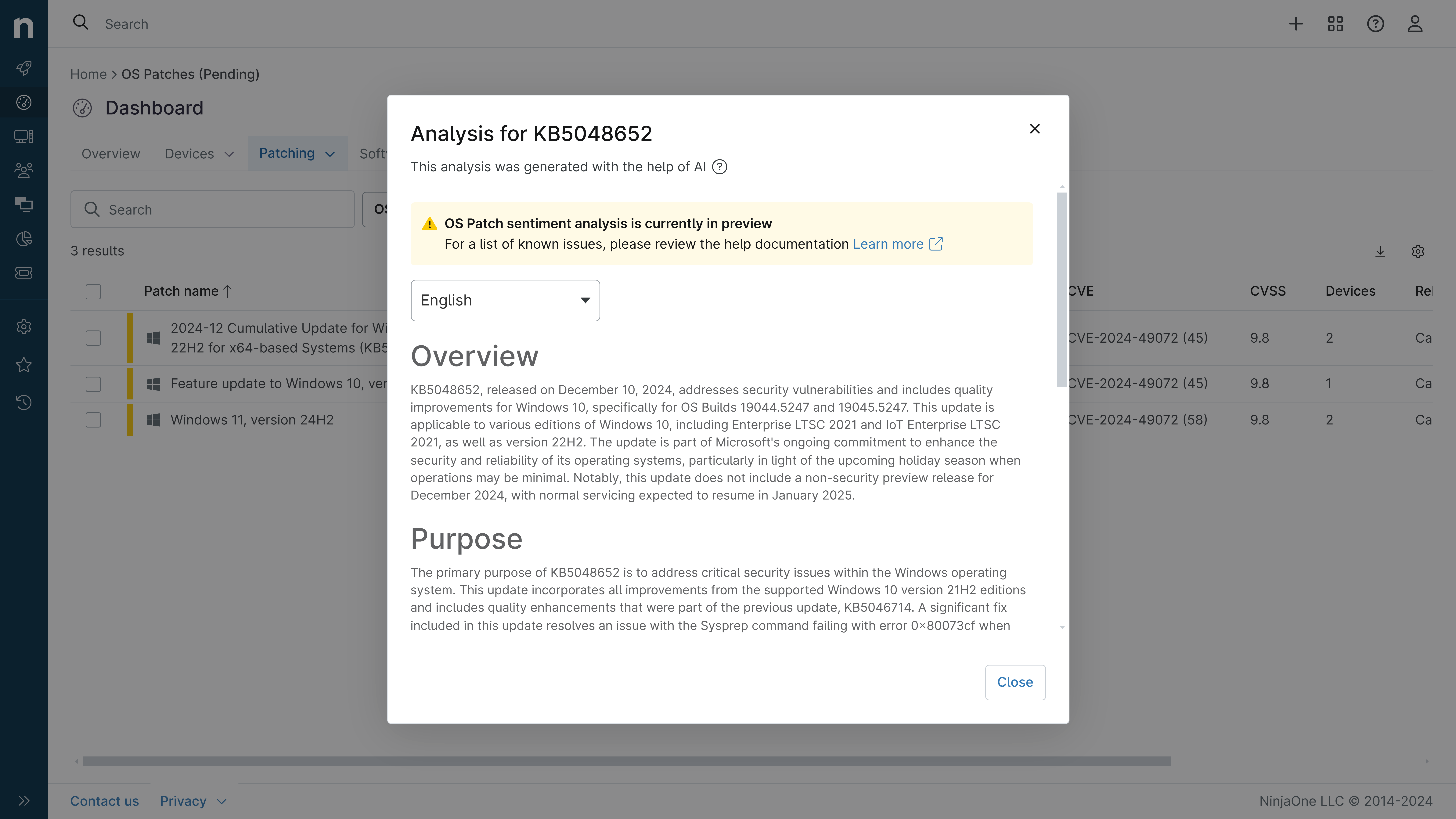
KB5082052: Overview with user sentiment and feedback
Last Updated May 30, 2026
Probability of successful installation and continued operation of the machine
Overview
KB5082052 is the April 2026 cumulative security update for Windows 11 version 23H2, released on April 14, 2026 with OS Build 22631.6936. This update represents Microsoft's monthly Patch Tuesday release, combining the latest security vulnerabilities fixes with quality improvements and non-security updates from the previous month's optional preview release. The update is mandatory as it contains critical security patches for vulnerabilities discovered in previous months and is distributed through Windows Update, Microsoft Update, and the Microsoft Update Catalog.
The update addresses multiple system components including Secure Boot certificate management, networking reliability, Remote Desktop security enhancements, and sign-in functionality. Additionally, it introduces the Windows 11 servicing stack update KB5086307 (version 22621.6937), which ensures a robust and reliable servicing infrastructure for future updates. The release includes improvements across various features such as Narrator, Smart App Control, Settings interface, File Explorer, Display handling, and system file checking utilities.
General Purpose
KB5082052 delivers comprehensive security hardening and quality improvements across Windows 11 version 23H2. The update introduces enhanced Secure Boot certificate management with visual status indicators in the Windows Security app, though these enhancements are disabled by default on commercial devices. It improves networking reliability by enhancing SMB compression over QUIC to reduce timeouts and ensure more consistent performance. The update strengthens Remote Desktop security by implementing phishing protection that displays all connection settings before establishing connections, with each setting disabled by default and a one-time security warning on first use. Additionally, it resolves a critical sign-in issue where users experienced false "no Internet" errors when accessing Microsoft services and apps like Microsoft Teams, even with active connections. The update introduces security hardening through a vulnerable driver blocklist that adds known vulnerable kernel drivers to Microsoft's protection mechanisms. It also includes improvements to Narrator for rich image descriptions on Copilot+ PCs, allows Smart App Control to be toggled without requiring a clean installation, and enhances the Settings interface with improved device information cards and refined account management options.
General Sentiment
Community sentiment regarding KB5082052 is decidedly mixed, with significant concerns overshadowing the positive security improvements. While the update addresses important security vulnerabilities and introduces useful features like improved Remote Desktop protection and Narrator enhancements, the discovery of critical known issues has generated substantial frustration among users and IT professionals. The BitLocker recovery key issue, which forces affected systems to enter recovery mode on first restart, represents a particularly disruptive problem that contradicts Microsoft's stated commitment to stability. However, it should be noted that this issue affects only a limited subset of systems with specific unrecommended BitLocker Group Policy configurations, primarily impacting enterprise-managed devices rather than consumer systems. The vulnerable driver blocklist, while improving security, has caused backup application failures for users relying on older drivers, requiring application updates to maintain functionality. Community discussions reveal skepticism about Microsoft's quality assurance processes, with users pointing to recurring patterns of problematic updates. Conversely, some users acknowledge that the security fixes are necessary and that the affected scenarios are relatively narrow in scope. The availability of documented workarounds and Microsoft's proactive communication about issues has provided some mitigation, though the need for workarounds at all remains frustrating for system administrators.
Known Issues
- BitLocker Recovery Key Requirement: Devices with unrecommended BitLocker Group Policy configurations may be forced to enter BitLocker recovery mode on first restart after installation. This only affects systems meeting all of the following conditions: BitLocker enabled on OS drive, Group Policy "Configure TPM platform validation profile for native UEFI firmware configurations" configured with PCR7 included, System Information reporting Secure Boot State PCR7 Binding as "Not Possible", Windows UEFI CA 2023 certificate present in Secure Boot Signature Database, and device not already running 2023-signed Windows Boot Manager. Recovery key entry is required only once; subsequent restarts will not trigger the recovery screen if group policy configuration remains unchanged.
- Remote Desktop Warning Display Issues: Security warnings that appear when opening Remote Desktop (RDP) files may not display correctly on systems using multiple monitors with different display scaling settings (e.g., 100% and 125%). Affected users may experience overlapping text or partially hidden buttons, making messages difficult to read or interact with. This issue is addressed in KB5087420.
- Backup Application Failures: Applications relying on blocked vulnerable kernel drivers may experience failures when attempting to mount or manage disk images. Error messages may include "The backup has failed because Microsoft VSS has timed out during the snapshot creation" or VSS_E_BAD_STATE. Affected users must update to newer application versions using drivers with required security protections.
- Secure Boot Certificate Expiration Alert: Important notification that Secure Boot certificates used by most Windows devices are set to expire starting in June 2026, which may affect device boot security if not updated in advance.
Disclaimer: We take measures to ensure that AI-generated content is of the highest possible quality, but we cannot guarantee its accuracy and recommend that users do their own independent research. Generated on 2026-05-30 01:51 PM