Key Points
How to Show the Business Value of IT Security Spending
- Build a risk cost baseline to quantify incident costs and create urgency.
- Map security spending to ‘avoided risks’ and show ROI in financial terms.
- Use dashboards and executive-ready reports to link security outcomes to leadership priorities.
- Embed value in renewal discussions with past results, future goals, and clear ROI.
- Use NinjaOne metrics to automate and support business value reporting.
Small and Medium-sized Businesses (SMBs) often view IT security spend as an expense with unclear returns. Without context, leadership may resist renewals, underinvest in critical protections, or focus only on upfront cost.
Reframing security as a business enabler allows Managed Service Providers (MSPs) to link spend to reduced downtime, compliance, and revenue continuity. It also shows financial impact and strengthens renewal conversations with clear ROI. This guide outlines the steps to demonstrate the business value of security spending.
Strategies for showing SMBs the business value of IT security spend
Before starting, make sure you have the following:
📌 General prerequisites:
- Historical incident/ticket data (e.g., downtime hours, ransomware attempts blocked)
- Business impact metrics (cost per downtime hour, regulatory fine exposure)
- Defined KPIs tied to security posture (patch compliance %, phishing test pass rates)
- A standard reporting template for QBRs or renewal conversations
Strategy 1: Calculate the cost of security incidents for SMBs
SMBs need to view security as a business enabler, not as an expense that can be trimmed. This strategy sets the foundation for that shift. You quantify the financial impact of security incidents, proving that inaction costs more than action. It also creates urgency.
📌 Use Case: Building a business case for security investment.
Steps:
- Calculate downtime cost per hour.
- Formula: lost revenue + staff idle time
- Factor in breach recovery costs.
- Include digital forensics, data restoration, PR crisis management, and legal fees.
- Add compliance penalties.
- Identify relevant regulations (HIPAA, PCI, DSS, GDPR).
- Estimate fines based on data type, volume, and severity.
- Include reputational and opportunity costs.
- Account for loss of customer trust, canceled deals, and supplier hesitation.
Deliverable
A Risk Cost Baseline Report tailored to the client’s industry. It should include:
- Estimated cost of a breach.
- Breakdown by category (downtime, recovery, compliance, reputation)
- Visual summary (chart or table)
Strategy 2: Map security spend to avoid business risks
Once you’ve shown the cost of incidents, the next step is to connect security investments directly to avoided risks. This positions spending as financial protection and business continuity insurance, not as a sunk cost.
📌 Use Case: Evaluating ROI of current security tools.
📌 Prerequisite: A risk cost baseline (from Strategy 1).
Steps:
- Identify key security controls.
- Example:
- Firewall
- Patch management
- Backup validation
- Multi-Factor Authentication (MFA)
- Example:
- Connect each control to the business risk it mitigates.
- Example:
- Firewall – Prevents downtime from ransomware.
- Patch management – Avoids exploit-based breaches.
- Backup validation – Ensures recovery after incidents.
- MFA – Reduces credential theft risk.
- Example:
- Translate technical measures into financial terms.
- Example:
- “Firewall and patch management prevented X hours of downtime = ~$Y avoided cost.”
- “Validated backups protected $X in client revenue.”
- “Phishing training reduced successful attempts by 40%, mitigating $X in potential brand damage.”
- Example:
Deliverable
A Security Spend-to-Outcome mapping table that shows the value of each investment. For example:
| Security control | Risk mitigated | Estimated loss avoided | Investment cost | Business value delivered |
| Firewall + Patching | System downtime | $25,000 | $2,000 | 12 hrs revenue protected |
| Backup validation | Data loss | $50,000 | $3,000 | Client trust preserved |
Strategy 3: Create a business value dashboard
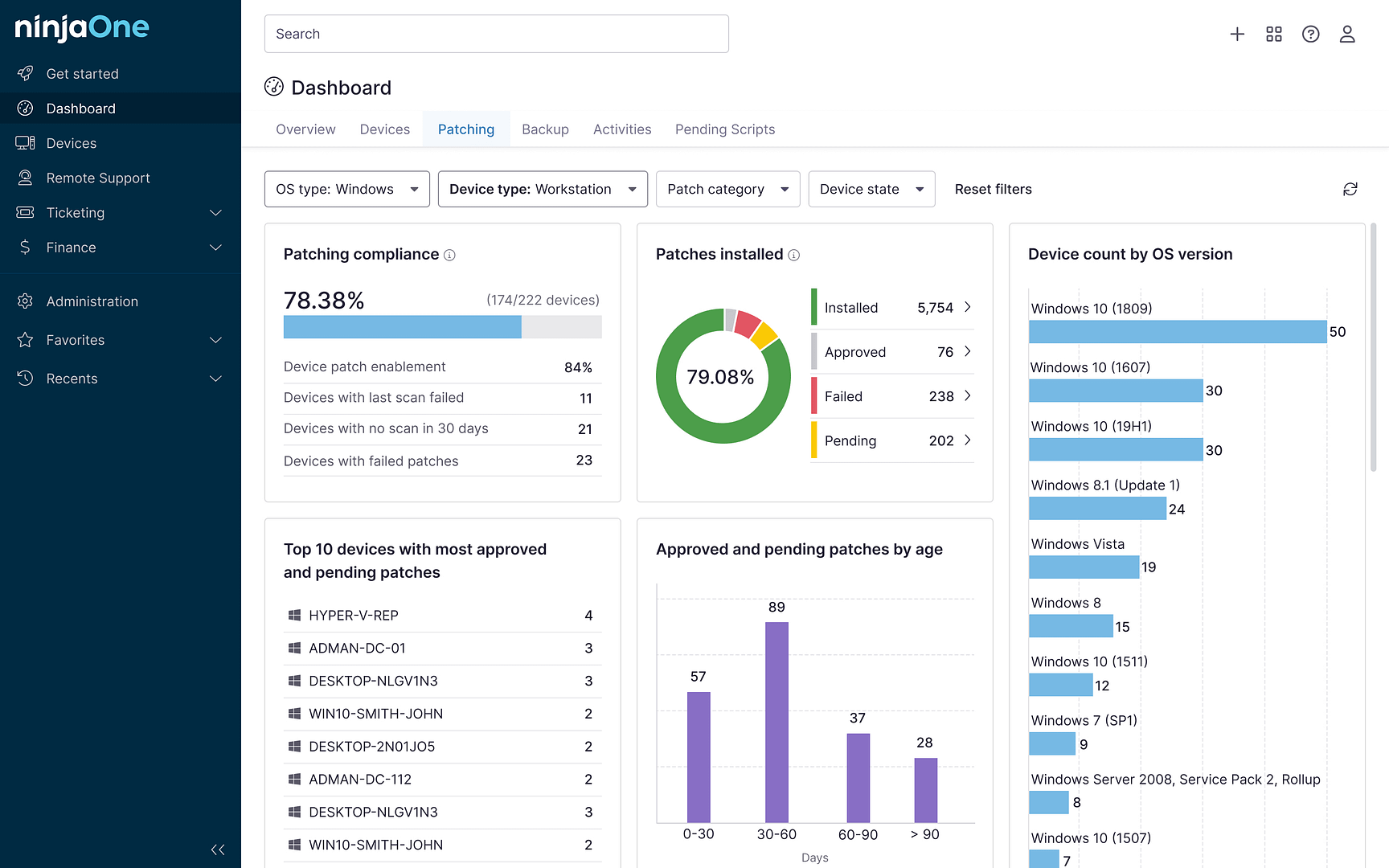
Once all the numbers are available, the next step is to visualize them. This strategy helps you create a business value dashboard that translates technical metrics into business-relevant insight. The goal is to convey the understanding without requiring technical context.
📌 Use Case: Presenting QBRs to clients
Steps:
- Define metrics that matter to SMB leadership.
- Service Level Agreement (SLA) adherence
- Vulnerabilities remediated vs. open
- Incidents prevented or detected early
- Business outcomes: downtime avoided, compliance maintained, customer data protected
- Choose a format.
- One-pager PDF for QBRs
- Interactive dashboard
- Slide deck summary
- Visualize the data.
- Use simple charts, graphs, or color-coded indicators to convey information effectively.
💡 Tip: Keep jargon minimal so non-technical stakeholders can follow easily.
Deliverable
A Business Value Dashboard or One-Pager that summarizes:
- Security performance
- Business impact
- Risk reduction
- Compliance status
Strategy 4: Align security reporting with SMB leadership priorities
Even the best dashboard fails if it speaks only in technical terms. Remember, leadership is concerned with outcomes tied to business goals. In this strategy, you reframe security reporting to show value in terms of what leaders value most: revenue, productivity, compliance, and reputation.
📌 Use Case: Presenting security reports in board or leadership meetings.
Steps:
Frame security in terms of leadership priorities:
- Revenue protection
- Show how security prevented downtime and customer churn.
- Productivity
- Highlight how security minimized disruption to staff and operations.
- Compliance
- Emphasize how security maintained regulatory compliance and avoided costly fines and audits.
- Reputation
- Stress how security protects customer trust and brand integrity.
Delivery
An Executive-Ready Summary that highlights:
- Business outcomes of security efforts.
- Alignment with leadership priorities.
- ROI and strategic impact.
Strategy 5: Embed security value into renewal discussions
After presenting a strong case for security investment, you must also justify continued or increased investment. In this strategy, you use dashboards and business impact reports in renewal discussions. This way, SMBs see security as a long-term asset that protects revenue, enables growth, and supports business goals.
📌 Use Case: Justifying continued or expanded security budgets during renewals.
Steps:
- Include the dashboard and business impact report in renewal packages.
- Show results from the past year: uptime maintained, fines avoided, staff hours saved.
- Use “with vs. without” scenarios to justify ongoing or expanded spend.
- Compare the current state with a hypothetical no-security scenario.
- Tie security improvements to next year’s strategic goals.
- Link investments to growth initiatives (e.g., opening new markets, passing compliance audits, and securing customer trust).
Deliverable
A Renewal Justification Report linking spend directly to outcomes. Include:
- Business impact summary
- “With vs. Without” comparison
- Strategic alignment with future goals
- Visuals and ROI metrics
Best practices summary table
This table summarizes the five strategies and their purpose. Use it as a quick reference when presenting IT security spend and value to SMB leadership.
| Component | Purpose and value |
| Risk cost baseline | Quantifies what’s at stake and sets urgency |
| Spend-to-outcome mapping | Shows ROI of security investment |
| Business value dashboard | Makes reporting executive-friendly |
| Leadership alignment | Links IT security to business priorities |
| Renewal integration | Uses past results and future goals to justify continued or expanded spending |
Automation touchpoint example
Automation helps you show security value with minimal manual effort. Here’s a sample script you can use to demonstrate patching completeness during QBRs.
📌 Use Case: Include in QBRs to show patching completeness and connect it to reduced breach risk.
Patch compliance export (PowerShell +CSV)
Get-WmiObject -Class Win32_QuickFixEngineering |Select CSName, HotFixID, InstalledOn |Export-Csv "PatchCompliance.csv" -NoTypeInformation |
NinjaOne integration
NinjaOne can strengthen this process by automating key reporting tasks and embedding security value into client conversations.
| NinjaOne services | How NinjaOne supports this framework |
| Patch management | Exporting patch compliance, backup, and monitoring data for dashboards |
| Vulnerability management | Automating vulnerability reporting to highlight avoided risks |
| Documentation | Hosting security ROI templates in NinjaOne Docs for client conversations |
| Reporting | Embedding reports into QBR workflows to support renewals |
| Automation | Using automation metrics (tickets prevented) as proof of reduced downtime risk |
Quick-Start Guide
Financial Impact of Cyberattacks
– Direct Costs: Include expenses such as ransom payments, data recovery, legal fees, and regulatory fines.
– Indirect Costs: Consider lost revenue due to downtime, damage to reputation, and loss of customer trust.
Compliance and Legal Requirements
– Highlight the importance of adhering to industry regulations (e.g., GDPR, HIPAA) to avoid penalties and maintain customer confidence.
Competitive Advantage
– Emphasize that robust security measures can differentiate your business in the market and attract partners and customers who value data protection.
Risk Mitigation
– Discuss how proactive security investments can prevent breaches that could lead to significant financial losses and operational disruptions.
Case Studies and Statistics
– Use real-world examples and statistics to illustrate the potential consequences of cyberattacks and the benefits of effective security practices.
By focusing on these aspects, you can effectively communicate the business value of security spending to SMBs.
Show SMBs the business value of IT security spend to protect revenue and compliance
Security spend should not be framed as a cost. It is a measurable investment in continuity and resilience. Document risks avoided and translate security results into business outcomes to show clear ROI and strengthen trust with SMB clients.
Related topics: