Key Points
- Device attestation is the process of screening a device or fleet of devices in an organization to ensure they are authentic, secure, and compliant before granting access to the system.
- Device attestation validates trust factors such as hardware authenticity, boot integrity, secure boot status, OS legitimacy, device encryption posture, and modification detection.
- When implementing device attestation, organizations must define clear device integrity requirements, segment devices by risk category, apply attestation outcomes to access controls, establish remediation workflows for failed checks, and monitor attestation trends.
As threats become more sophisticated over time, they now have more intricate ways to infiltrate systems. If not secured properly, endpoints are some of the most vulnerable entry points bad actors can use to initiate attacks. This is where device attestation plays a significant role in endpoint security.
Device attestation is a process that allows organizations to verify first if the device is authentic, secure, and compliant before being granted access to the system. This follows the Zero Trust approach, avoiding trust assumptions overall by continuously validating devices to ensure they’re meeting security standards.
In this blog, we will look deeper into the significant part that device attestation plays in strengthening endpoint security.
What device attestation validates
As mentioned, device attestation ensures that before endpoints are given system access, they should be authentic, secure, and compliant. These criteria encompass the following trust factors:
- Hardware authenticity: Checks if the device is not spoofed or counterfeited
- Boot integrity and secure boot status: Verifies if the device boots using an authorized firmware
- Operating system integrity: Ensures that the device is running on an OS that has not been altered, compromised, or untrusted
- Device encryption posture: Guarantees that full-disk or device-level encryption is enabled and properly configured to protect data at rest.
- Modification detection: Confirms if the device is not tampered, rooted, or jailbroken
How Android device attestation works
When Android devices are manufactured, they are embedded with hardware-backed keys and secure components used for later attestation. Here’s the typical procedure for how Android device attestation works:
1. Device collects integrity signals
When an app or service requests an attestation token, Android checks and gathers signals about the device’s current state using its hardware‑backed secure components.
2. Hardware-backed proof is generated
Android creates a cryptographic proof by utilizing secure components such as a Trusted Execution Environment (TEE). This proof serves as a validation that the data originates from the device without going through any kind of tampering or manipulation.
3. Attestation service verifies the data
The data gathered will then be verified through a service or a management solution that checks whether the device meets predefined security policies.
4. Access decisions are enforced
If the device is compliant based on the predefined security policies, it is granted access. Otherwise, the device is blocked.
Device attestation in a Zero Trust model
Zero Trust follows the principle “never trust, always verify,” enforcing continuous device compliance validation. The framework does this by:
- Evaluating device posture: Tests are run on devices before granting application access
- Revalidating device integrity: A confirmation of device integrity that is done during policy checks
- Triggering conditional access: Detection and notification of needed restriction enforcement when posture changes
- Logging attestation outcomes: Records that are used for audit reviews and analytics
Operationalizing device attestation at scale
If an organization is implementing device attestation models to ensure robust endpoint security, it should:
- Define clear device integrity requirements: Set policies that standardize your organization’s requirements when determining the parameters of device integrity.
- Segment devices by risk category: Organizations should also have a specific way of grouping devices based on risk levels. This helps in ensuring that security controls are properly applied to each category.
- Apply attestation outcomes to access controls: Once attestation results are produced, organizations can integrate them into access control systems. For example, only devices that pass checks can access resources, and those that don’t are blocked.
- Establish remediation workflows for failed checks: Organizations can also create an automated procedure that guides users if their devices fail checks.
- Monitor attestation trends: Continuously look over attestation patterns across device fleets to detect emerging risks.
Cross-platform considerations
While Android uses hardware-backed attestation rooted in secure keys, other platforms implement similar concepts differently.
- Apple devices rely on Secure Enclave and platform attestation mechanisms
- Windows devices use TPM-based attestation and device health signals
If your organization is managing mixed device fleets, you should:
- Align attestation requirements across platforms
- Standardize trust levels and enforcement thresholds
- Avoid platform-specific blind spots
- Document attestation behavior for compliance review
NinjaOne integration
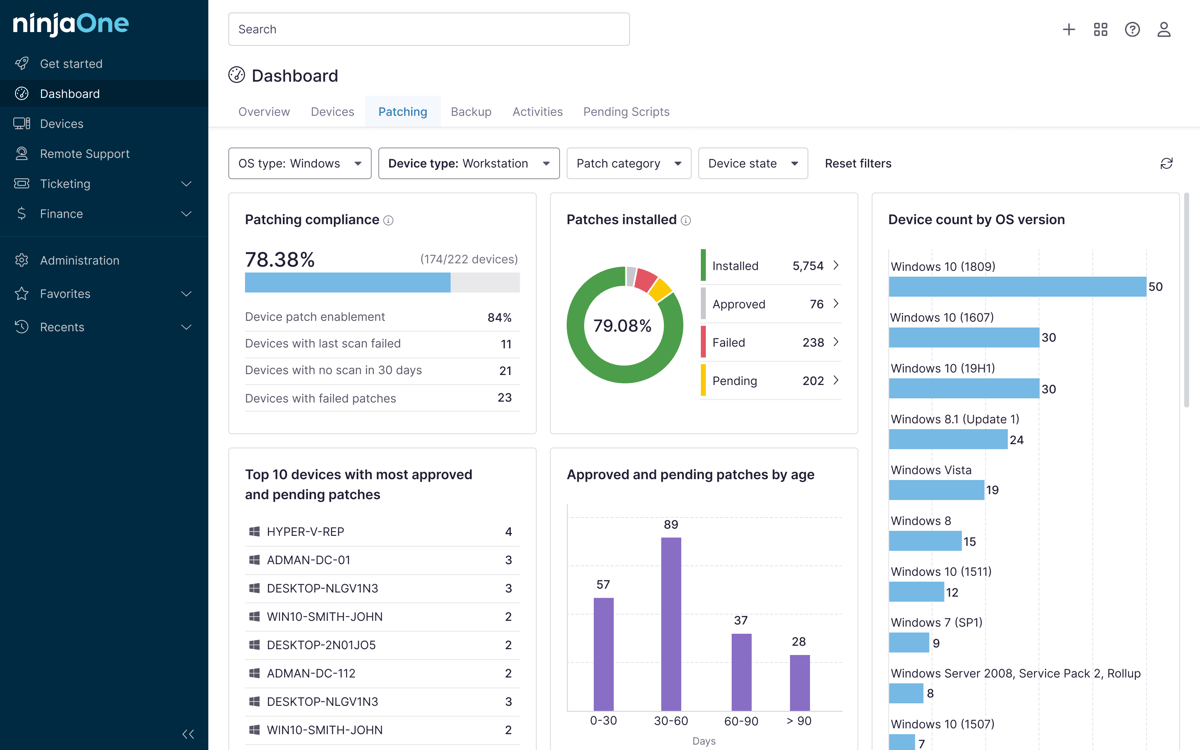
NinjaOne remote monitoring and management (RMM) can help with optimizing device attestation through verification of device authenticity, integrity checks, and compliance assurance.
The significance of device attestation in endpoint security
Endpoints are some of the most accessible entry points for perpetrators, making them risk-susceptible assets in an organization. Device attestation helps mitigate cyber threats that target an organization’s device fleets. The process is done by validating trust factors such as hardware authenticity, boot integrity, secure boot status, OS legitimacy, device encryption posture, and modification detection. These checks help ensure that devices are authentic, secure, and compliant before they are given access to the system.
Related topics: