Key Points
- Scaled Windows Storage Hygiene: MSPs can go beyond single-device disk cleanup by using policy-driven automation, endpoint classification, and evidence-based reporting.
- Automate Disk Cleanup and Capacity Recovery: Utilize automation for cleanups using Windows Storage Sense, scheduled cleanup tasks, and standardized maintenance policies per endpoint type.
- Use Routines to Maintain Performance: Maintain storage performance by applying drive-type-aware routines, including HDD defragmentation and SSD trim operations on appropriate devices.
- Ensure Compliant Decommissioning: Log all cleanup actions, create pre-cleanup snapshots, and perform secure drive wipes to protect user data.
Full disks result in slowdowns and backups that may never complete. Consumer how-tos, such as those explaining Windows 11 disk cleanup, are helpful for a single device, but Managed Service Providers (MSPs) must rely on policies, automation, and evidence across multiple endpoints.
This article will walk you through the steps to operationalize Windows storage hygiene at scale.
Operationalizing Windows storage hygiene at scale
Operationalizing Windows storage hygiene means getting a clear view of your endpoints, enforcing regular cleanup, finding and removing space hogs, maintaining healthy disk performance, and securely wiping and decommissioning drives.
📌 Prerequisites:
- Endpoint inventory with OS, form factor, and drive type
- Approved GPO or MDM pathways to set Storage Sense, power, and disk policies
- Script library for Disk Cleanup, cache purges, and app uninstalls
- Backup or snapshot policy before bulk changes
- Reporting space for artifacts and monthly KPIs
Step 1: Baseline and classify the fleet
This step creates a target list that highlights where to act first and how to measure success.
📌 Use Case: An IT admin wants to identify which endpoints are running low on disk space and prioritize cleanups across the organization.
Collect key storage data points like free space percentage, total drive capacity, drive type, and Self-Monitoring, Analysis, and Reporting Technology (SMART) summaries. Doing so establishes a baseline for each endpoint’s condition. Afterward, tag the endpoints into health tiers:
- Critical: less than 10% free space
- Warning: less than 20% free space
- Healthy: more than 20% free space
Record the last cleanup date and check the Storage Sense status to see which systems have automated cleanup disabled.
Step 2: Enforce policy-driven cleanup
This step keeps systems performing smoothly while freeing technicians from repetitive manual cleanups or end-user tickets.
📌 Use Case: An IT administrator wants to prevent storage-related incidents by automating cleanup tasks and reclaiming space in a predictable, low-touch way.
- Enable Storage Sense on Windows devices with standardized defaults. Configure it to remove temporary files and empty the Recycle Bin after a specific period.
- Schedule disk cleanup using silent switches to clear Windows Update caches automatically.
- Remove unused optional Windows features and preinstalled applications to reduce wasted space.
- Where policy allows, turn off hibernation to reclaim the hiberfil.sys footprint.
Step 3: Remove space hogs safely
This step aims to reclaim substantial space without disrupting users or critical applications.
📌 Use Case: An IT administrator wants to free up significant storage on endpoints and servers by targeting extensive, low-value data.
Audit large directories
Audit large directories, such as Downloads, Videos, and application cache folders. Use tools to sort by size and apply age-based cleanup rules to remove files that haven’t been used in a defined period.
Review cloud sync configurations
Review cloud sync configurations, such as OneDrive, Dropbox, etc., to ensure they use Files On-Demand instead of maintaining complete local copies to preserve accessibility while reducing storage use.
Maintenance routines
Include browser caches and temporary installer directories in your maintenance routines. These can accumulate gigabytes of data over time.
Coordinating with application owners
Coordinate with application owners before modifying or clearing proprietary or application-specific caches. Some software relies on cached data for performance, which means deletion may disrupt workflows.
Step 4: Maintain disk performance and health
This step ensures long-term disk performance and reliability.
📌 Use Case: An IT administrator wants to sustain the health of endpoints and server storage by combining automated maintenance with early detection of drive wear or faults.
Schedule defragmentation and verify TRIM
Schedule defragmentation for Hard Disk Drives (HDDs) to maintain optimal read and write performance. For solid state drives (SSDs), avoid defragmenting but ensure TRIM is enabled to allow the operating system (OS) to inform the drive of unused blocks.
Monitor SMART metrics and drive health
Track SMART attributes, temperature, and error counts to detect signs such as reallocated sectors, I/O errors, or abnormal heat levels. Incorporate these metrics into dashboards or alerts.
Investigate uncontrolled log or telemetry growth
Identify and work on excessive log generation or runaway telemetry processes that may refill drives. Persistent log growth may indicate misconfigured software or background issues that require root cause analysis.
Step 5: Make it auditable and reversible
This step ensures teams have a documented path to restore data and a system state with little disruption.
📌 Use Case: An IT administrator must perform large-scale disk cleanups across endpoints and servers while ensuring all changes are traceable, recoverable, and compliant with internal or regulatory policies.
Snapshot or back up before cleanups
Create system snapshots or backups before mass deletions or automated cleanups to ensure a quick and reliable way to roll back changes if essential files are removed.
Log every cleanup event
Maintain logs of what was removed, when it happened, and which policy, script, or automation performed the action to provide transparency.
Store proof artifacts
Retain before-and-after evidence such as free space metrics, SMART health reports, and change ticket references.
Step 6: Drive-wipe and decommissioning
This step ensures devices are disposed of or repurposed securely, eliminating any risk of data leakage or unauthorized recovery.
📌 Use Case: An IT administrator is preparing to retire or repurpose hardware and needs to ensure that all data is permanently erased, verified, and documented according to organizational and compliance standards.
- Use approved data wipe methods: Perform data sanitization using approved wiping tools or techniques. Afterward, generate and store a certificate of sanitization for audit and compliance tracking.
- Securely handle drives with errors: For drives that fail SMART checks, follow the policy for secure physical destruction. This may include crushing to render the drive permanently unreadable.
NinjaOne services that help operationalize Windows storage hygiene
The following NinjaOne services can help operationalize Windows hygiene at scale:
Automated cleanups
NinjaOne offers policy-based automation for tasks. It also has scripting capabilities for custom cleanup tasks that you can schedule and track through tickets and dashboards.
Health monitoring
You can monitor disk space and healthy status, while setting alerts and conditions for thresholds.
Drive-type aware actions
MSPs can target HDDs with defrag jobs and verify SSD TRIM settings through policy checks.
Evidence and reporting
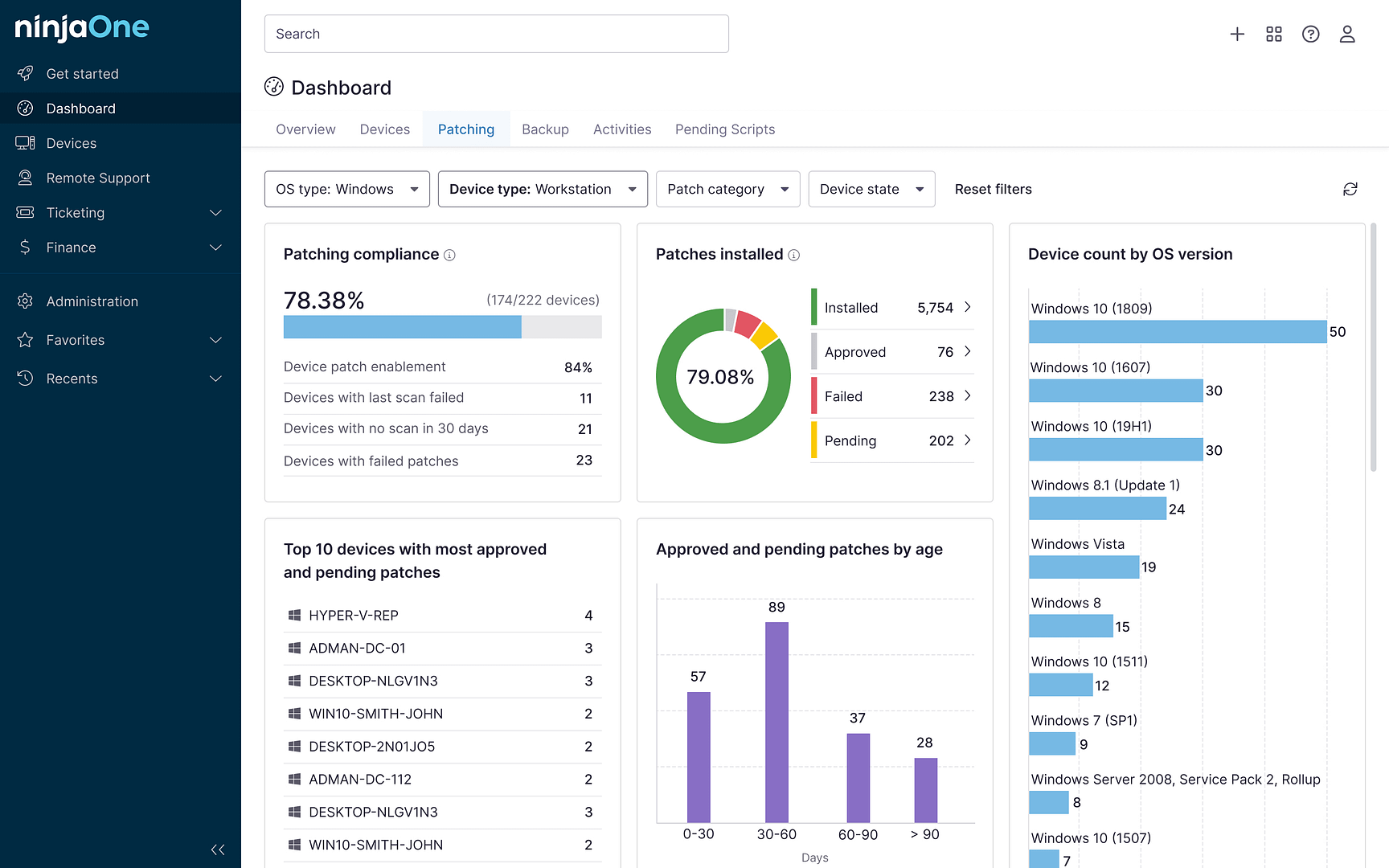
NinjaOne has comprehensive dashboards for device health. It can also attach snapshots to tickets and export them to CSV for custom analysis.
Operationalize disk cleanup for MSPs
Storage hygiene works best when you automate it and set up policies for routine cleanup tasks. Regular health checks help you spot problems early, and tracking results shows what’s improving. Maintain HDDs and SSDs differently based on their unique needs, and share a few KPIs that matter most to your clients and auditors.
Related topics:
- How to Automatically Free Up Space in Windows 10 and 11 with Storage Sense
- How to Free Up Disk Space in Windows 10
- How to Check the Reserved Storage Size in Windows 10
- How to Use Disk Cleanup in Windows to Optimize Your System
- How to Script Automatic Clean-Up of Temporary Files and Old User Profiles on Remote Machines