

Key Points
- Enterprise data security fails when there is no clear ownership, leaving sensitive data free to move beyond intended boundaries without anyone noticing.
- Policies erode over time when governance is not actively maintained, turning temporary exceptions into permanent vulnerabilities.
- High visibility into security events is meaningless if the people monitoring them do not understand the data they are supposed to protect.
- Adding more tools or meeting compliance minimums does not close the gaps created by misaligned people and processes.
- Without executive support and sufficient resources, security measures fall behind, and organizations are left responding to threats rather than preventing them.
- Tech teams and MSPs must maintain structural alignment across people, processes, and technology in all data security initiatives.
Tech teams and managed service providers (MSPs) that are responsible for enterprise data security must maintain structural alignment in their data security initiatives. This involves establishing clear ownership, avoiding policy drift, and closing visibility gaps – without overloading technicians and users with additional tools and controls.
This guide explains how you can ensure that your IT operations remain in alignment with your enterprise data protection strategy, from governance to technology.
What is enterprise data security?
Enterprise data security is the protection of data from hacking, accidental disclosure, unauthorized access, misuse, and other detrimental acts. This broad term covers the technologies, organizational policies, protections, and processes involved.
It is a critical IT security process handled by internal IT teams and MSPs. Data loss and breaches – accidental or malicious – can threaten business continuity and lead to reputational as well as potential legal or financial pain, especially when data security is a compliance requirement.
What is the difference between cybersecurity and enterprise security?
Cybersecurity is just one aspect of enterprise data security. Beyond technological measures, organizational protections and safeguards must be in place. This covers everything from physical security of IT assets to prevent unauthorized access (for example, ensuring Ethernet ports are not publicly accessible), to staff training so that they are aware of how to deal with threats such as social engineering.
Why you need an enterprise data protection strategy
Effective enterprise data protection cannot be performed ad hoc.
A pre-planned, comprehensive data protection strategy is necessary for the protection of critical and sensitive data. Identifying and classifying data, choosing the hardware and software technologies to protect it, implementing access controls, crafting policies and processes, and finally enacting and documenting your infrastructure, all require coordination and forethought, and should be assessed for compliance before any investment is made.
Ongoing monitoring also requires planning, from what to monitor to who to alert when threats to data security are detected.
Why coordination matters as much as controls
Technical measures deployed for data protection purposes include encryption, access control, and monitoring. These provide the foundation for protection, however organizational processes are also required to ensure these technical measures are effective.
These include clear roles, ownership, and boundaries so that all data has oversight, defined policies for data handling and accountability, coordination between teams, and continuous review of the enterprise data protection apparatus as a whole to identify potential exposure pathways.
How enterprise environments amplify data risks
The goal of every business is to grow – and as your business scales up, so will the volume and value of data that it generates.
Distributed teams, hybrid on-premises, cloud (and multi-cloud) infrastructure, third-party SaaS, managed and BYOD devices, and a growing variety of hardware and software assets make protecting proprietary information, client confidentiality, and meeting regulatory obligations an ever-increasing challenge.
The number of moving parts and people involved greatly increases the risk of sensitive data moving beyond intended boundaries. This can only be solved with centralized visibility and controls, enabled by keeping policies, protections, and user behavior in alignment.
The hidden problem of policy drift
Policies must evolve with the data protection requirements unique to every organization. Over time, access permissions and scopes expand, data is stored in new locations, temporary exceptions become necessities, and shadow IT proliferates. Without active governance involving regular reviews and subsequent updates to policies (and the measures taken to meet them), data security weakens.
Visibility versus context and understanding
High visibility into your data protection is worthless if no one’s watching, or those who are don’t realize when something’s amiss.
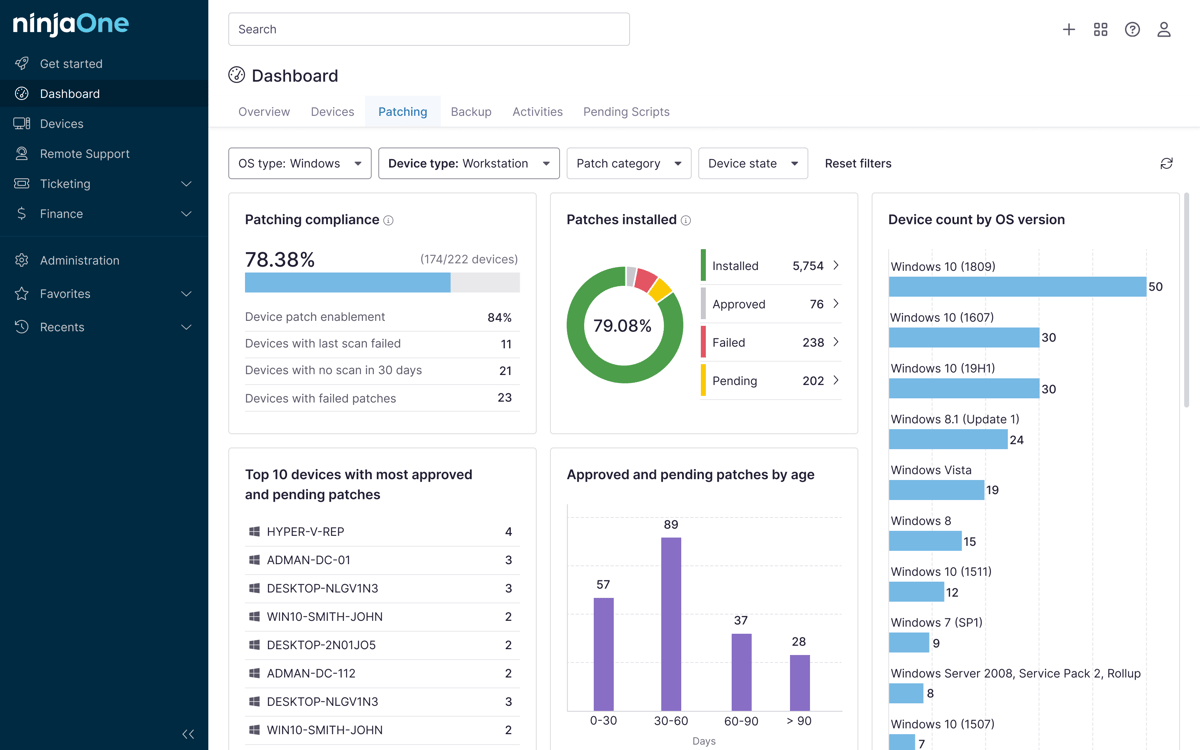
Dashboards showing device status, patch levels, and security events look impressive and convey competence, but technicians must know the data they are charged with protecting to effectively guard it. This includes:
- Which data sets are most sensitive
- Where sensitive data is stored and backed up
- Who should have access to the data
- The purpose of the data
While security information and event management (SIEM) and data loss prevention (DLP) tools can monitor for and alert on suspicious activity, a responsible stakeholder who understands the purpose of the data must review and weed out false positives, ensure the correct automated action was taken, and rectify mistakes.
Data security governance and enterprise data risk management
Risk can never be entirely eliminated. IT risk management involves assessing what risks are acceptable for an organization.
This involves setting appropriate policies for data retention, backup schedules, compliance (including customers’ rights to amend data), and other governance factors. The goal of IT governance is to keep IT in alignment with business goals – and ensuring that security measures meet the present real-world threats, as well as legal and practical requirements, is key to this.
The role of leadership in enterprise data security
Mature enterprise data security that meets internal and external challenges requires investment and ongoing effort. Data security should be prioritized at the executive level and assigned the necessary resources to implement effective technical measures and organizational processes. IT leadership should ensure their teams continuously leverage documentation and helpdesk platforms to ensure issues and the inherent risk are clearly communicated to stakeholders and recorded for future reference.
Defined escalation pathways help make sure that incidents reach the technician who is best positioned to resolve them as quickly as possible in the least time. This is critical when dealing with data security: cybersecurity threats that make it through your defenses cause less damage when they have less time to act.
Without leadership that recognizes the importance of enterprise data security and the authority to assign sufficient resources, protection measures lag, and processes become reactive and ineffective without continuous validation, adjustment, and improvement.
Limitations to be aware of when assessing data security structural alignment
Enterprise data security is not achieved through a single framework or platform. Every business exists in a unique environment, mixing different regional and industry regulatory requirements, with different outcomes, customer expectations, and end-user behavior. Because of this, the ‘human factor’ must be considered at every step of planning, implementation, and review.
Treating enterprise data security as a deployment milestone renders it ineffective. Keeping data security in line with business goals and compliance requirements means constantly evolving the tools and processes involved, and training staff to be aware of these changes and their responsibilities. Security is as much cultural as it is technical, as it requires the constant awareness and enforcement of measures pertaining to both.
Enterprise data security common misconceptions
Common mistakes that tech teams make when planning their enterprise data protection include:
- More tools equal better protection: Throwing more tools at a problem doesn’t improve outcomes unless they are in alignment with your goals and able to integrate effectively.
- Compliance guarantees security: Compliance defines the minimum standard you must meet, however meeting this does not guarantee security. You should assess your additional requirements and what other tools and processes can be sensibly implemented to improve your security posture.
- Encryption prevents data loss: Encryption prevents data from being read by unauthorized parties – it does not protect it from loss (accidentally or otherwise).
It is commonly the businesses’ responsibility to confirm that third parties they work with and share data with are also compliant with the data protection and privacy regulations that apply to them.
Enabling and maintaining enterprise data protection structural alignment with NinjaOne
NinjaOne unifies the IT support, monitoring, and security toolchain for centralized oversight that helps you keep the components of your enterprise data security in alignment, even as your unique business circumstances and your cybersecurity landscape evolve.
With built-in asset discovery, documentation, and automation, you can make sure security events are mitigated and escalated to the right engineer, and that compliance reports are readily available for stakeholder review and audit. NinjaOne streamlines security processes, integrates with popular security products like CrowdStrike and SentinelOne, and helps maintain visibility by coordinating and consolidating workflows, for flexible coverage and accountability that stays aligned with your business and security goals.