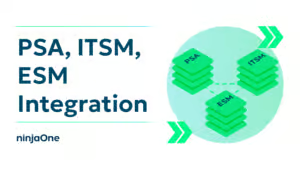
Disconnected service platforms create delays, duplicated work, and poor visibility across IT operations. In this video, learn how MSPs can use PSA ITSM integration and ESM alignment to build a unified service model. We’ll cover how connecting PSA, ITSM, and enterprise service management platforms improves ticket flow, automation, reporting, and cross-department collaboration. Discover practical ways to streamline operations and deliver more consistent service experiences.
Read the full blog on How to Connect PSA, ITSM, and ESM for a Unified Service Model
View video transcript
How to connect PSA, ITSM, and ESM for a unified service model. Many MSPs and IT teams still operate with disconnected PSA, ITSM, and ESM platforms. The result is inconsistent reporting, duplicated effort, billing gaps, and limited visibility across service operations. In this video, we'll walk you through how to connect these systems into a unified service model that aligns service delivery, operational workflows, and financial data. Before we begin, be sure to subscribe to NinjaOne's IT Video Hub and our YouTube channel for more tech content like this. How to connect PSA, ITSM, and ESM. Map current tools and workflows. The first step is understanding how your existing platforms interact. Inventory every PSA, ITSM, ESM, and RMM system currently in use. Then, document where data overlaps, where ownership changes hands, and where workflows break down. This process typically reveals issues like duplicate tickets, inconsistent SLAs, or billing records that never reconcile properly. The goal is to create a clear map of your environment that identifies ownership, dependencies, and integration readiness before introducing integrations. Define integration objectives and data flows. Once your systems are mapped, define how information should move between them. For example, alerts and requests may enter ITSM for triage while associated tickets and time entries flow to PSA for billing, and KPI metrics feed back into reporting for review. You should also define responsibilities, approvals, and review checkpoints so every team understands how service data flows through the organization. Identify which non-IT departments, such as HR, finance, and facilities, will participate as ITSM processes are extended into ESM. Connect and normalize data. Integrating systems is only effective if the data itself is consistent. Shared fields like asset names, client IDs, service categories, and billing codes should follow standardized naming conventions across all platforms. For example, if a device is labeled differently in PSA and ITSM, reporting and automation quickly become unreliable. Normalization helps prevent duplicate records and improves visibility across service and financial operations. Extend ITSM processes to ESM teams. After IT workflows are stable, extend the same service management structure to departments like HR, finance, and facilities. This means applying standardized request handling, approval paths, SLAs, and reporting across the organization. Doing this creates consistency between IT and non-IT services while giving leadership a unified view of operational performance. Automate ticket and billing reconciliation. One of the most valuable integrations is connecting ticket resolution directly to billing workflows. When a ticket closes in ITSM, it should trigger the appropriate PSA workflow to reconcile associated time entries and, where applicable, generate or prepare billing data according to predefined approval and billing rules. Scheduled synchronization and exception reporting should also be implemented to identify mismatches early. Unmatched entries should be reviewed to determine whether the associated work was billed, credited, excluded, or requires correction. Govern with regular reviews. Finally, establish a recurring governance process to maintain alignment across systems. Monthly reviews should evaluate SLA performance, backlog trends, billing accuracy, and cross-department service metrics. Combining data from PSA, ITSM, and ESM into centralized dashboards or evidence reports helps maintain accountability and supports continuous improvement over time. When systems, workflows, and reporting are aligned, organizations gain better visibility, more accurate billing, and a more scalable approach to service delivery. For more information, check out our official blog post on how to connect PSA, ITSM, and ESM for a unified service model, linked in the description below.
How to Connect PSA, ITSM, and ESM for a Unified Service Model
- Publish date: November 18, 2026
-
CJ Ledesma
- by CJ Ledesma
Never miss a NinjaOne video!
in this video
- Recent
- From the series
- Network Management